Lillian Huang
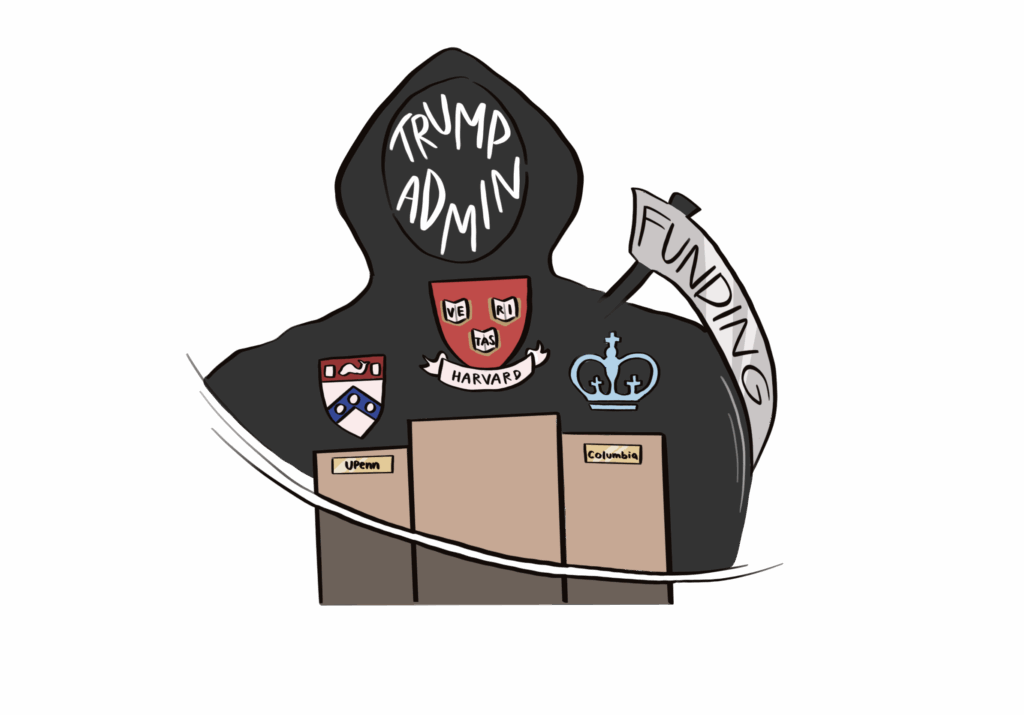
In his first 100 days as president, Trump has threatened to revoke a combined $12 billion in government funding from some of the top American universities. The money at stake comes most often in the form of grants that go towards valuable research that includes cancer research, drug testing and more.
On March 20, Trump issued an Executive Order calling for the end of the Department of Education, a federal agency that is primarily responsible for the management of the Free Application for Federal Student Aid program that provides prospective and current college students with grants, work-study programs, loans and more. The largest impact this department’s dismantlement would likely bring would be on Title I schools and funds allocated for the Individuals with Disabilities Education Act because the funding for both are currently managed and distributed by the ED.
Additionally, Trump has attacked education in the form of threats to top universities. On March 7, Trump threatened to withdraw $400 million from Columbia, and on April 11, his administration sent a letter to Harvard with various demands should they wish to maintain a “financial relationship with the government.” Trump’s reasoning has been broad, but he has claimed that universities have fostered antisemitism on their campuses. However, Trump has also vocally been against policies encouraging diversity, equity and inclusion policies — policies that many of the top universities currently being targeted have implemented in the past. In late March, Columbia University gave in to Trump’s demands, including improved internal security and formally adopting a definition of antisemitism on campus.
“[These grants are] funding things like cancer research that are really beneficial for the American public,” said junior Erin Finn. “[Trump is] putting these programs at risk. If [universities have] to pour all of their money into these research programs in order to keep them going, then they’re going to have to remove money from things like art programs and extracurriculars that are really what helps make the [college] experience for a lot of people. I’m worried about things like band programs and ‘less important’ research topics. They all have value, but you have to think about what will be prioritized if this [grant] money is cut.”
Harvard has refused to comply with the demands Trump has outlined for the university. In retaliation, Trump threatened to revoke the university’s tax-exempt status. Harvard has since filed a lawsuit arguing that the Trump administration’s attempts to freeze their research funding if they fail to comply with demands violates the university’s First Amendment rights to free speech.
“On the surface, [Trump’s actions] seem like an overreach of power,” said Johnathan Felder, Advanced Standing Modern World History teacher. “ The idea that a university is able to have its own principles, stand by those and pursue them, makes a lot of sense because they’re basically independent institutions. Mandating [demands], and backing them with threats is a fairly hostile and pretty unproductive approach and it’s more likely to just lead to conflict.”
Harvard’s response sets a precedent for other universities: should they not want to, they do not have to give in to the threats of the Trump administration in order to keep their federal funding. While Trump makes efforts to suppress academic freedom through his threats and demands, the repercussions of these actions are still unknown.
The cutting of research would harm more than just universities and those conducting the research and students may have concerns about pursuing higher education in the future.