Quinn Shirley – Soccer
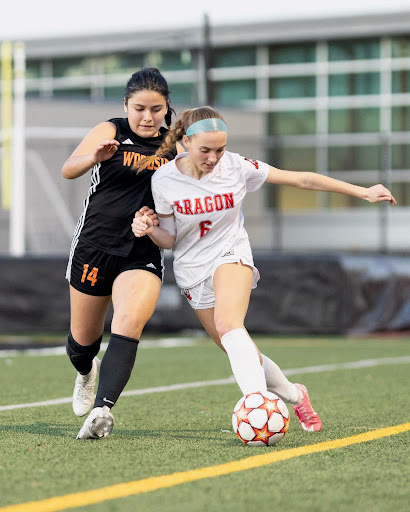
Wellesley College
Why did you choose Wellesley College?
I really connected with the coach when she called me. She sounded really enthusiastic about having me on the team, so that was a big motivation for me, because I wanted to go somewhere where I felt welcomed. Also, on my visit, I loved the campus, and I really loved the team dynamic. The girls were super welcoming from the start, so it just seemed to be a really fun place to spend the next four years.
What did the recruitment process look like?
I always knew I wanted to play in college, but I started taking it seriously in freshman year. I started reaching out to coaches; obviously going to showcases and ID camps. I started getting traction, though, my sophomore and junior year. Then, Wellesley reached out at the end of my junior year spring. So I got on call with the coach … after I went and visited the school … we were talking for a while, and then she actually gave me the verbal offer.
What were some of the challenges you faced?
The recruiting process was really stressful, and it takes the fun out of the sport sometimes. When you’re writing all these emails and then maybe not getting responses, or not getting the response that you were hoping for. But I just found my time on the actual field to just be motivating in every practice. It reminded me why I was doing the process and why I wanted to play another four years.
What are some of the things that help you become the player you are right now?
COVID actually really helped because when I was home with nothing to do, me and my friend would get on FaceTime and we would just touch the ball and play for like two hours a day. Also, treating every practice as an opportunity to get better and push myself and always striving to be the best I can, both on and off the field—other than in the actual game. Always giving my best effort, or before a game, preparing a good night’s sleep.
Does playing the sport help you in any way outside of the sport?
On the field, I can let go of a lot of worries and stress. It’s a space where I get to just be with my teammates and have a good time and not have to worry about school or anything else going on in my life. It’s always been an escape from problems and stress.
Who has supported you the most?
My family. From the time I was in second grade, I’ve been going to travel tournaments for soccer. So the constant traveling, and driving me to games and practices three times a week. Throughout the recruitment process, they were there to help me navigate emailing coaches or getting on the call.
Lina Cruz Parada – Track & Field and Cross Country
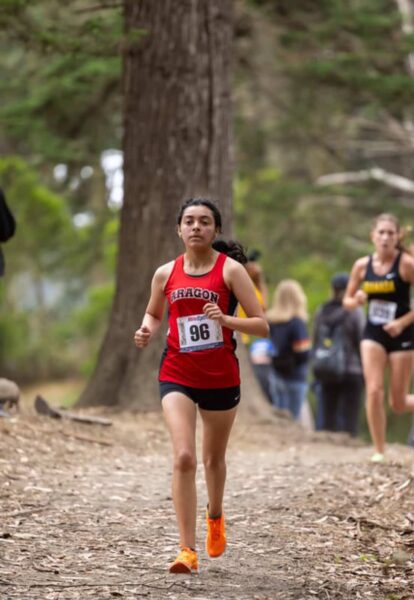
Bluffton University
Why did you choose Bluffton University?
The coach told me that it’s a very small community and that is what I look for in a college. Also, since it’s a small school, my times are very similar to the other people’s times currently at Bluffton, so [the transition] can be easy for me.
What is your favorite memory in your career?
The award ceremony that we always do at the end of every season. It brings another goal of joy and memories and we look back on all the hard work we’ve put through throughout the season. Giving out awards shows how hard work is paid off.
What were some of the challenges you faced?
There were times where I didn’t feel confident in myself, and I doubted my abilities as a runner. To overcome that, I talked to my coach. He was very honest, and gave me a lot of advice and pointers on what I should do to become a better athlete overall. Recently, I talked to him about … how I wasn’t getting good enough times … struggling this season to PR. He basically told me to not put pressure on myself, especially since this is my last season. [How] I should just do what I do and compete.
Who has supported you the most?
So my mom always supports me with everything. Whenever I tell her that I’m having a hard time, she’ll encourage me and cheer me up. She goes to every meet, so she’s always there, cheering me on.
Jordan Kiaaina – Baseball
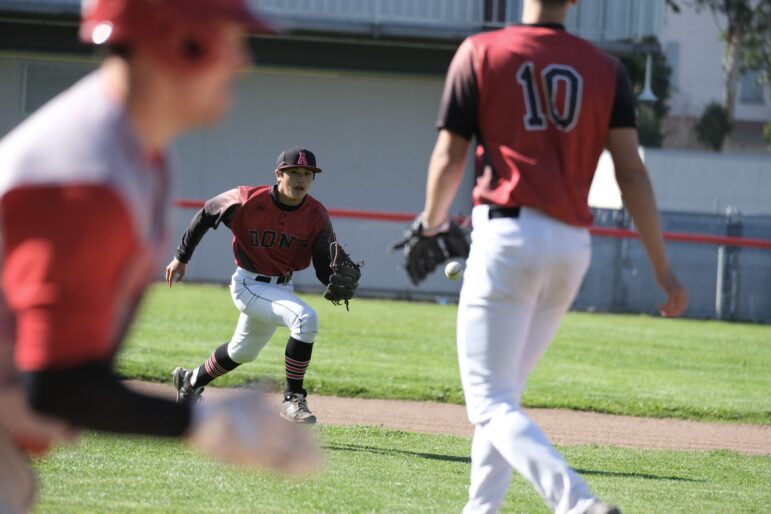
San Diego Mesa College
What is one message to anyone that wants to be like you?
Go all in, chase your dreams and don’t let anyone else tell you what you can and can’t do. Because if you let someone else tell you what you can or can’t do you’re gonna limit yourself. At the end of the day only you can tell yourself what you can and can’t do.
What are some of the things that helped you become the player you are right now?
Committing my time to the sport a lot. I was lifting four times a week, throwing every day, hitting every day, before and after practices for a club, even high school too. Also, just being disciplined, not taking days off when I know I don’t have time because this game goes by pretty fast. Just committing my time to the sport and putting in lots of hard work is what separates me.
Who has supported you the most?
My parents. They were always there for me when I was struggling, and they always encouraged me to keep going, to never give up. They say [how] once you give up, that’s when you really fail. They’ve always supported me in my journey, and inspired me to go play college baseball. They realized that that was what I wanted to do, and they put all their effort into helping me achieve my dream.
What are you looking forward to in your college career?
Making memories because baseball comes and goes, but those lifelong friendships, those will last forever. Those would be my best friends for life and right now it is. Because you don’t always remember every play, but you remember all the memories you make and all the bonds you create. So that’s something I look forward to.
What were some of the challenges you faced?
A lot of adversities. It’s baseball. You’re gonna fail a lot, and just knowing how to handle that failure is something I try to pride myself in. Some challenges are being inconsistent with my hitting. Hitting has always been my biggest weakness. It’s probably why I’m not playing at a four-year right now, and it’s something that I will always have to overcome. I’ll never have a perfect swing. I just have to keep battling every day, keep finding ways to improve.
What is your favorite memory in your career?
I had a home run off Rob G [from] rival [school] Hillsdale, and we won that game 1-0 because of my home run. I blacked out after the hit, so I don’t remember what happened after, but all I know is I was losing my mind. I was so excited.
Ava Goh – Diving
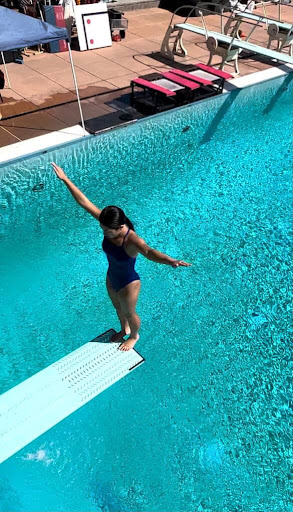
UC Davis
What did the recruitment process look like for you?
After the [California Polytechnic State University San Luis Obispo] team got cut, I didn’t think any colleges would be able to take me because it was so late. So, I reached out to all the old colleges that I talked to before and asked if they had any open spots. There were a few others who had some spots, but Davis was probably my favorite in terms of academics and diving, so [the coach] was able to give me a spot.
Why did you choose to do diving?
I mainly got into diving because I quit gymnastics. All my friends who quit gymnastics went diving because it’s easy to translate. [However,] it was [still] a big switch for me because I did gymnastics for a long time. I wasn’t used to trying something new, and it is very different in a way—more of an individual sport—but I liked how it was a little more relaxed and more fun.
What are some of the things you did to become the player you are right now?
I was enjoying learning new things every day, like practicing. Also not rushing at the same time, so trusting the process and trying to progress consistently.
Who has supported you the most?
My teams were the most important, because when I joined, they’ve all been diving for a really long time, so they were able to help me walk through [the transition process] and made [it] a lot easier.
Does playing this sport help you in any way outside of the sport?
It just helps me stay responsible in terms of managing my time and also being on a team. [It] helps you to work with people and be supportive of others.
Sierra Troy – Soccer
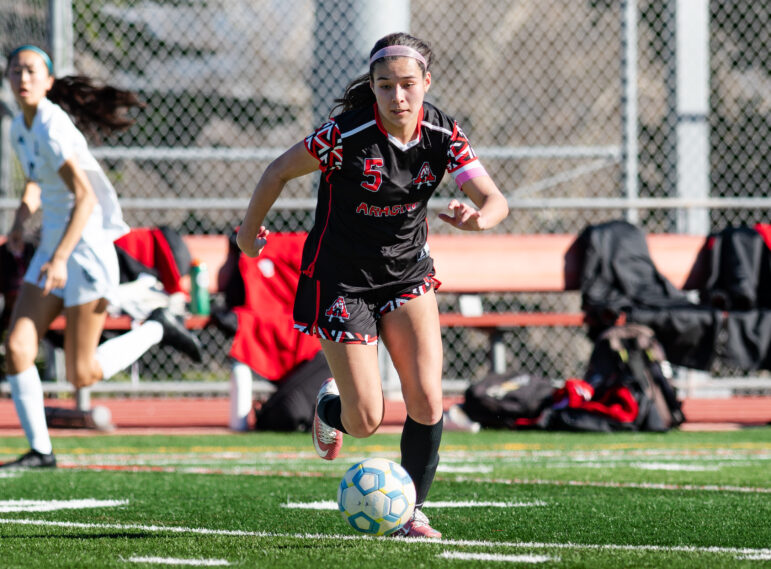
Claremont McKenna College
Why did you choose Claremont McKenna College?
I was talking to a couple different schools, but after going on a visit there and realizing how prestigious their economics and accounting program was, and meeting the team and seeing how welcoming and inclusive they and the coaching staff were, I realized that it was the right fit for me.
What were some of the challenges you faced?
During recruitment, there was a lot of pressure when you know that a coach is at one of your games and they’re watching you from the sidelines—you want to play your best, but in those situations I would just remember that I love playing soccer and it’s not about always playing my absolute best in front of the coaches and just having fun.
What other colleges were you interested in/looking at during the recruiting process?
I went to a lot of tournaments and showcases, and I also did a couple school specific camps, where I got to meet a lot of the coaching staff. I was talking to John Hopkins and I did a visit there, and then I was also talking to a lot of other D3 schools. MIT, I did a visit there, and then I was talking to Washington University in St. Louis for a little bit.
What are some of the things you worked on that helped you become the player you are today?
During COVID, I feel like that’s where most of my development happened; I would go out on my own every single day, get almost a thousand touches on my soccer ball in my backyard, and I would practice different skills and touches every day and try to improve each one. And then I saw that when I went back to soccer games, it really helped me improve my footwork and technical skills when on the field, which I think helped me become a better player.
Josh Jacobs – Baseball
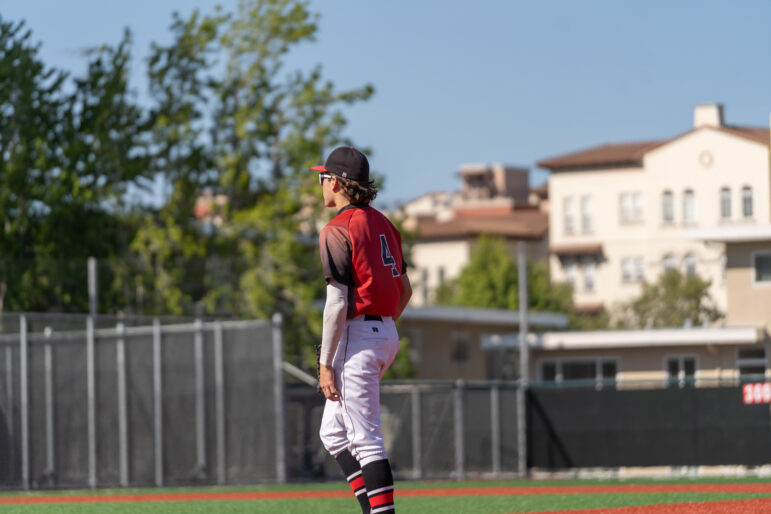
Claremont McKenna College
Why did you choose Claremont McKenna College?
Claremont has a lot of good academic opportunities in terms of resources and good facilities, and also job opportunities after college—they really help you with that and prioritize that throughout your college career. And then also the opportunity to play baseball that they gave me, which was awesome.
When did you decide that you wanted to play college baseball?
I didn’t really know if I was gonna play college baseball until maybe junior year, because I wasn’t the best, but something clicked for me going into that year, and I was like, ‘I wanna do this’. I would say it started in spring of last year, at the start of the season, just emailing coaches—most of them don’t show interest in the spring, but during the summer, it was in full swing.
What did the recruitment process look like?
It started off with a lot of emails to coaches and I went to a lot of showcases to meet them. I got a few looks and interests, but there were only a few colleges where I was able to pursue and reach out. There were a lot of things in the unknown, and it was pretty stressful, actually. I ended up seeing the Claremont coach at a showcase and we were already in contact before that just from an email; him seeing me play in person solidified his interest in me, and I learned about the college a little more, got a little interested in it and then things just took off from there.
What is your favorite memory from your career?
This summer, the moment between me and my parents in the coach’s office when he offered, it was kind of like a dream come true. Just getting the offer, knowing somebody wants me and that I have a secured spot to play in the future.
Who has supported you the most?
I would say mainly my dad. Aside from taking me everywhere and paying for all of this, he has supported me, going to the cages with me and helping me practice as much as he can. When I ask him to, he never says no. And my coaches were really prevalent during my younger years; they gave the foundation for the player I am today.
What are your plans after college?
My goal is to play as long as I can—it’s really hard to play after college, not a lot of people do it, but I’m not closing the door on it. I’ll play however long I can and whatever that means, I’ll do it.