Ian Wang
Their names are Romulus and Remus: the story-tale twin brothers who founded the millennia-enduring empire of Rome. But they are the last thing one would expect: a pair of snow-white pups, already measuring almost 80 pounds, about 25% larger than the average wolf pup at only seven months old. Their howls are the first howls of the dire wolf to break the silence of over 13,000 years of extinction.
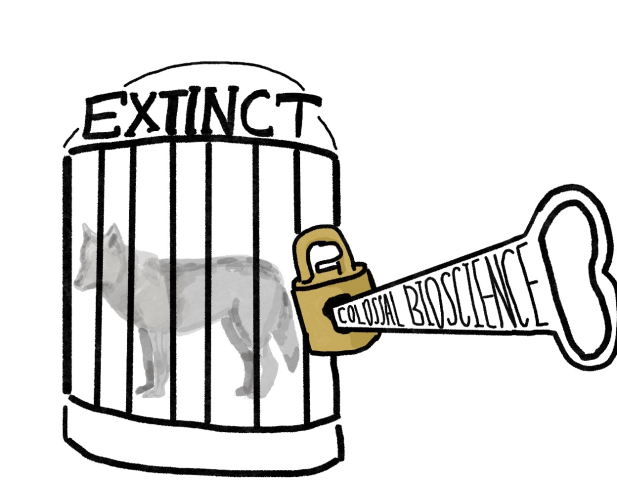
In April, Colossal, a Dallas-based biotechnology company, publicized their birthing of Romulus, Remus and their four-month-old sister Khaleesi from grey wolf surrogates. Colossal insists that they are not creating one-to-one genetic copies of dire wolves. Using CRISPR gene editing technology to isolate and tweak certain grey wolf genes, the company has created modified grey wolves that will live in the same habitat and hunt the same prey as the dire wolf did. While it may be just an opportunity for scientists to play God with the idea of fantasy television series “Game of Thrones”-inspired beasts, the science has serious implications in fields of environmental conservation. The company plans to do the same with the woolly mammoth and the dodo, emphasizing the potential of these species in restoring biodiversity to their previous habitats.
The premise is certainly promising — in the Arctic, woolly mammoths and dire wolves were once keystone species, species that have a significant positive effect on their ecosystems disproportionate to their population size. For instance, the mammoths’ trampling behavior allowed for a more diverse host of grasses to sprout in the flattened patches while also tightly packing together snow to keep the permafrost from thawing and releasing the carbon trapped in the frozen decay.
However, it’s unlikely we can even sustain a healthy and independent population of mammoths or dire wolves. Our current ecosystems are a far cry from the Ice Age biomes they thrived in over 12,000 years ago, and introducing new species to an ecosystem requires delicate planning that rarely results in a healthier ecosystem. For example, the carefully monitored return of the grey wolf to Yellowstone National Park in 1995 is heralded as a wildly successful conservation effort. The reintroduction of an apex predator restored the ecosystem’s biodiversity through a chain reaction of trophic interactions. However, many other well-intentioned species introductions, such as the cane toad to Australia in the 1930s and the Asian carp to the Great Lakes in the 1970s, spelled ruin as the species became invasive and began to overrun the local ecosystems, threatening native species by outcompeting them for resources. Whether or not these long-extinct species will be welcomed back as pests or saviors is still unclear.
Furthermore, our capacity to protect revived populations is also dubious, considering the current scale of conservation efforts. Colossal recognizes that well over 30,000 species go extinct every year, and it’s common knowledge that many of these extinctions are and will be caused by human activity. Focusing on species revival as a one-size-fits-all conservation solution will only act as a treatment for the symptoms of the issue, not the cause of human disturbance.
These are just a few concerns with the techno-optimism sparked by the revival technology used to bring forth Romulus and Remus, which presents itself as a tempting technological Band-Aid to the scars we have inflicted upon ecosystems worldwide. However, there are still many reasonable applications to this kind of technology. For species that have only recently gone extinct, reviving them in the context of existing habitat restoration and conservation efforts will provide second chances that are concretely backed. In fact, this was explored back in 2003; Celia, the last Pyrenean ibex, died in 2000, and scientists implanted DNA from her cell samples into the eggs of domestic goats. Tragically, the only ibex that was successfully born died three minutes later from a common symptom of animal cloning — lung collapse.
But the return of the dire wolf is still an assuring testament to the feasibility and potential of revival techniques. Like the grey wolf surrogate used to birth the pups, conservation organization Revive and Restore has used surrogate cloning with much success in restoring the endangered black-footed ferret population. Their first clone, birthed from a domestic ferret surrogate, Elizabeth Ann, became a mother to two in June 2024, marking history for conservational biotechnology.
Similar to how Colossal changed the gene for fur color in grey wolves to white for the dire wolf, scientists have isolated genes in coral that are responsible for heat tolerance. Coral is especially sensitive to changes in temperature and the heat-resistant coral developed in 2020 could be the next step to undoing the effects of climate change.
Although reviving extinct species is an exciting topic of the present, our focus should be on preventing more human mistakes from causing environmental harm as of now and leave the extinct past to the eventual future when we are to undo our mistakes.