This is art. Really.
To the casual observer, it may look like nonsense. In 2019, “Comedian” was exhibited at Art Basel Miami Beach. It immediately drew attention online, becoming a meme and, subsequently, a massive joke. While the piece may be unrecognizable by title, many have probably heard about the modern artwork that was, quite simply, a banana duct-taped to a wall.
After news spread that it sold for $120,000, it sparked outrage, particularly among skeptical parents who claimed their children could produce better art. But the thing is, they probably can’t.
“Comedian” is an exceptional example of the underestimation of modern art. At its core, “Comedian” is a satirical statement about the absurdity of the art market, with its selling price serving as the perfect punchline. And while many called it the “death of real art,” it successfully provoked emotion and conversation, which is exactly what art is meant to do.
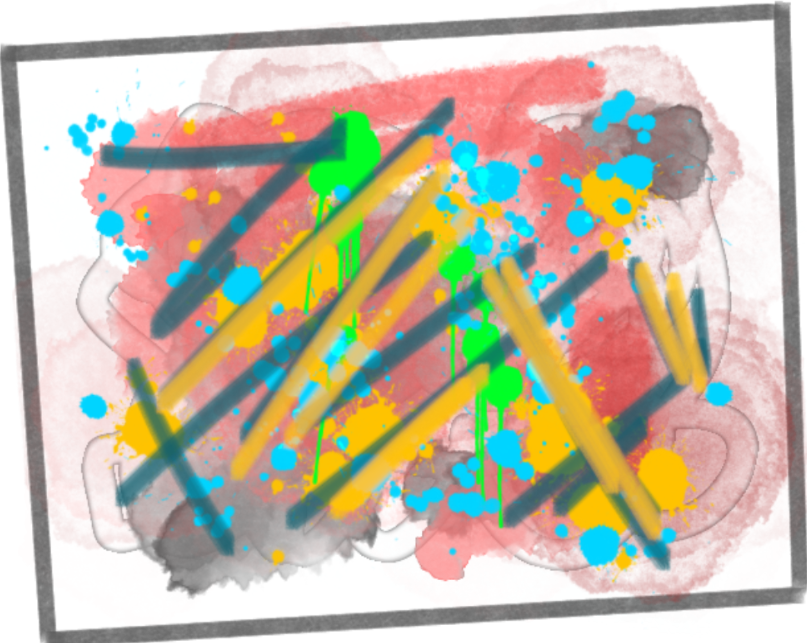
Modern art emerges when an artist begins to create things that hold symbolic meaning, rather than just painting objects or scenes they see in real life, and often lean into the abstract. It blatantly rejects realism and instead favors the artist’s point of view. Instead of faithfully copying what one sees, modern artists interpret experience. They convert memories, emotions and identity into visual form. This allows abstract shapes, bold colors and unexpected materials to carry significance, instead of being mere decoration.
Take, for example, Yayoi Kusama’s polka dots. Internationally, people view Kusama’s dots as iconic, even though they are straightforward. They are widely interpreted as having hypnotic and immersive qualities, symbolizing infinity or obsession.
Despite their success and praise, Kusama’s dots still receive criticism for being examples of “concept over craft.” And it’s true: Kusama’s work is highly conceptual.
But the common criticism that modern art lacks real skill overlooks the fact that true artistry extends beyond traditional technique. Creativity itself is an artistic skill — and a defining theme of modern art.
Furthermore, the absence of objective standards in modern art is often seen as a weakness. But in reality, it’s a strength. It allows art to become subjective, inviting many interpretations rather than enforcing one.
“No matter who the receiver is, I want people to understand my art from their own personal experiences,” said junior and artist Baron Zhang. “Everyone should be seeing different things. Some [art] I do for competitions or assignments, but others I just do for myself.”
Like many artists, some of Zhang’s work is not made for the viewer — it’s a product of his own internal drive. Unlike traditional art that often focuses on standards of beauty which have been admired by many, modern art exists as an authentic creation, indicating that the artist’s own preferences are at play rather than striving to gain audience approval. This creates artwork that has been untouched by external influences. It doesn’t need validation to be a legitimate form of art.
“To me, anyone can be an artist,” said freshman Juanita Gonzalez. “People hate modern art because they don’t get it, but that’s the whole point. You’re not supposed to ‘get it’ right away.”
While it may differ from more classical styles, modern art merely takes a different form. Real art doesn’t need to resemble a Renaissance painting to be considered authentic. Even as it faces hate and speculation, modern art reflects a bright future, not just an imitation of the past.