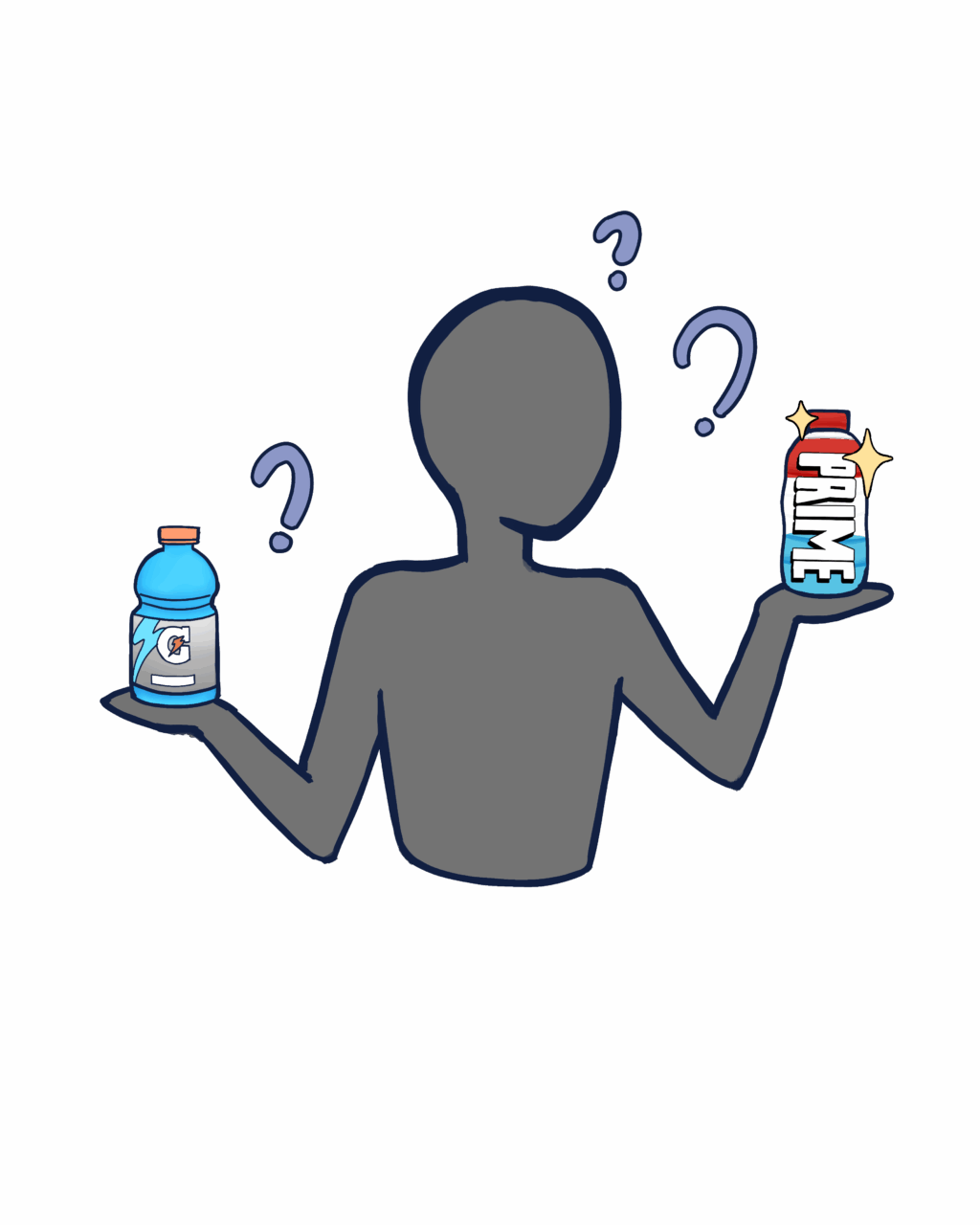
After seeing a product endorsed by an influencer while doomscrolling, many suddenly have the urge to run to their nearest store and purchase it. But when they arrive, there’s a dilemma: buy the product made by the influencer with flashy packaging for the first time, or buy their every day, high-quality name brand item. The enticing marketing of the product is meant to suck the consumer in, despite the dangers of the product’s quality and the hefty price, just because of the celebrity’s face on the packaging. To prevent consumer exploitation, celebrities should stop creating brands.
Brands these days are learning to use the media to their advantage and puppet viewers. From high production television ads, to pop-ups personalized to one’s liking, finding something to fuel one’s shopping addiction is as easy as it gets, especially when social media apps like Instagram and TikTok have gained an insurmountable number of users over recent years. This has created a lot of incentive for celebrities and influencers to camouflage expensive, basic and unoriginal products by using their fame.
“I’ve actually seen videos that were leaked of Mr. Beast trying to [get people to] review [the product], and [when] they didn’t give a satisfactory review, he deleted those videos,” said freshman Arya Karimi. “It’s all just campaigning only positive stuff, [and] not showing anything negative … [Similarly,] the reason people wanted to drink [Prime, a brand owned by Logan Paul and KSI, was] not because it was good … it’s because there are certain people campaigning for it, which makes it really interesting for people our age.”
Moreover, products made from celebrity-owned brands are commonly poor quality, relying on the celebrity’s image to sell. Within the packaged meal industry, Lunchly, a brand owned by influencers Logan Paul and KSI, is inconsistent with its products’ quality. Targeted towards pre-teen and teen audiences, Lunchly emphasizes how it has more electrolytes and potassium than its competitor in the industry, Lunchables. However, Lunchly lacks food that provides actual nutrition to teenagers.
“Lunchly can be good [but] there’s some flavors and different box variations that can be bad,” said freshman Felix Gosselin. “But overall, it’s not the best quality of food and product.”
According to Consumer Reports, Lunchly products tested positive for containing harmful metals and lead in their food. In response, the company claimed that heavy metals are “naturally occurring and are often in a variety of foods.” But this is not true, as the U.S. Food and Drug Administration states that “by law, food manufacturers have a responsibility to significantly minimize or prevent chemical hazards when needed.” Lunchly continues to not take accountability for their food containing harmful metals, using its image of being owned by celebrities to gain attraction despite lacking in actual quality.
While most celebrity brands consist of the same negative traits, some have managed to become successful because of their high quality products. However, celebrity brands overcharge compared to similar products on the market. SKIMS, a women’s clothing brand by reality TV star, Kim Kardashian, was founded in 2019 and became a four billion dollar business as of 2023. It also became a direct competitor with brands like Lululemon and other yoga and sportswear brands for women. However, the prices of SKIMS are far higher than Lululemon’s prices. For example, the price of the “High-waisted legging” from Skims is still about 30 more dollars than the “Align no line high rise pant” from Lululemon, with the only difference being a material called viscose.
“If it were the same product, but manufactured or designed by somebody without as much fame, I don’t think most of them would be very popular,” said freshman Joel Levitt. “The reputation of the celebrities often is the primary driver of their product sales because most of these celebrity products are minor innovations on things that already exist … [This] is unfair to small businesses who don’t have the means of getting in there with lack of financial support.”
Consumers should be able to depend on the product itself, not an assortment of ads or paid reviews. From exploiting consumers’ hard-earned money in exchange for the brand’s low-quality products and immense cost, celebrities should stop creating brands.