Winona Reif
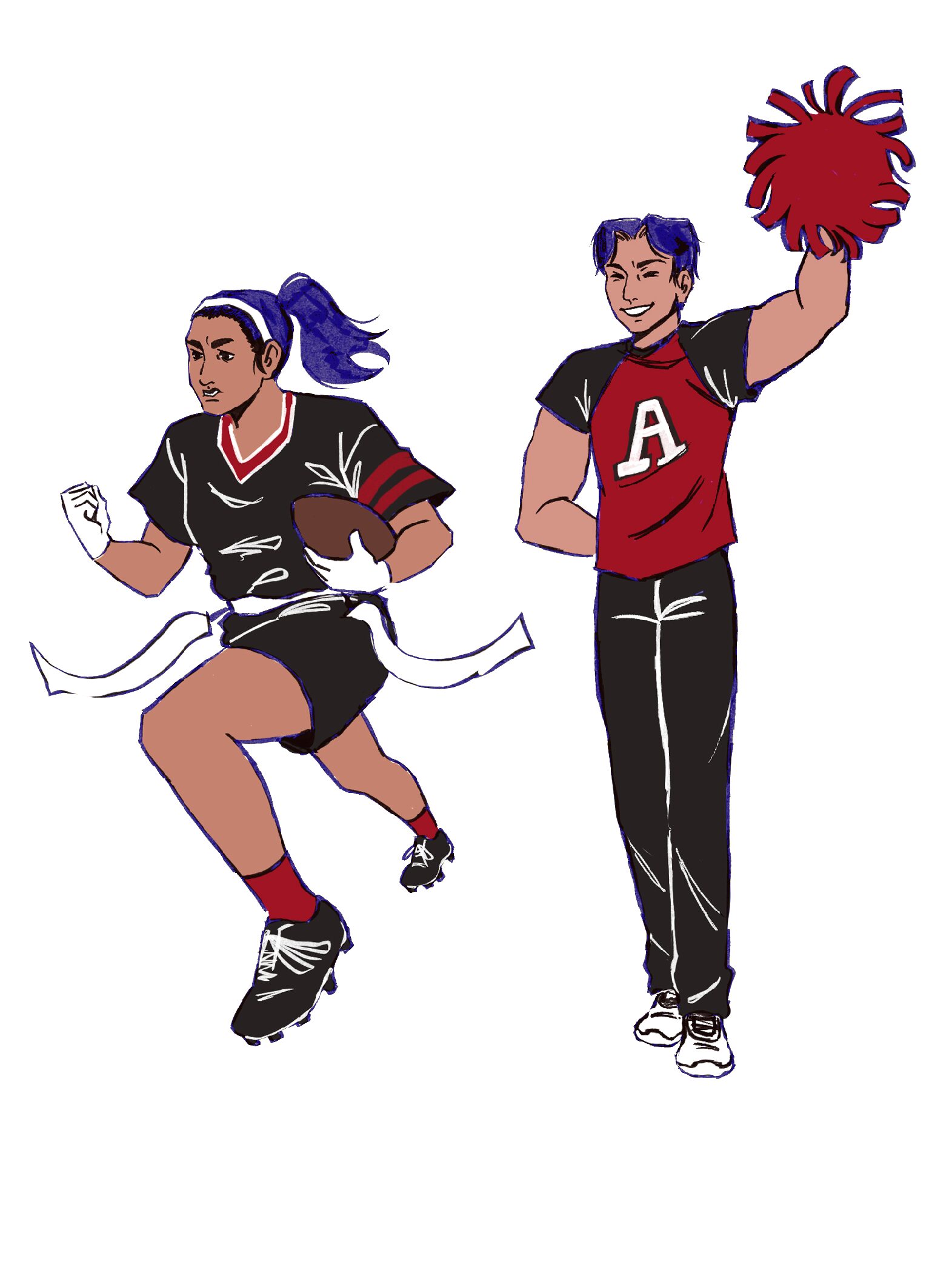
| Sports have always been inherently gendered — most are split literally into female and male leagues. With that comes implicit biases. For example, the stereotypical male physical dominance and female weakness has shaped the basis of gender inequality in sports; the gender-based roles in sports are all in some way caused by our society’s perception of and expectations about gender. Much of society’s current perception of sports originates from historical ideas about gender. Since ancient times, expectations for men and women have differed fundamentally. The Victorian era had one of the most major influences on the spread of traditional gender roles. Men were expected to earn money for the household and emphasize their independence, boldness, strength and aggressiveness. Women were taught to be more submissive, nurturing and emotional. They were also discouraged from doing strenuous physical exercise due to the belief that their bodies were too fragile. These social norms were implanted at a very young age, and their impacts resulted in the exclusion of females from most sports. In fact, it wasn’t until the early 20th century that women’s athletic clubs began to gain traction and popularity. In recent years especially, an increase in protests and campaigns has been bringing attention to gender stereotypes and inequality, not just in sports, but also on a broader spectrum. These issues are undoubtedly very important to focus on as they result in many unfair disadvantages in opportunities, pay, media and abuse. “Female athletes should have 100% the same opportunities that male athletes have, “ said physical education teacher Michael Flynn. “There’s no reason to limit or change rules or do anything like that just because of gender, and I think that they want the opportunity to play the sport just like their male counterparts do.” Additionally, a narrow interpretation of sports that are considered mostly single-gender often cause other important skills to be overlooked. “I’ve done both cheerleading and football, and I feel like there’s obviously very big differences between them, and cheerleading is a quote, unquote girls sport, and I feel like [people] see it as, oh, do your hair, do your makeup, cheer for the crowd and look the best and present the best for the [crowd].” said sophomore Kara Lau. “But also, you’re literally lifting another human above your head … that’s hard.” However, Aragon’s athletic program tries to ensure that such gender stereotypes have little influence on athletes’ opportunities and participation in sports. It emphasizes inclusivity and bases its judgements on ability rather than gender, age and other factors. “What has to happen is that student athletes would show interest in participating in a sport, and then based upon their ability and level of effort and dedication, they should be able to participate in the sports of their choice,” said boys JV football coach Steven Henderson. “Gender shouldn’t be a reason why someone’s excluded from participation.” In our history, there have been many examples of athletes breaking gender barriers and stepping across limits set by gender perception. “Here at Aragon, we’ve had a handful of CCS wrestling champions that were girls, competing and mixing on boys teams, and so I’m proud of that legacy,” Henderson said. “There are a number of boys that have been involved in cheer, competitive and sideline cheer in recent years and everyone has been respectful of those kids and their choice to participate if that is their chosen sport, so I’m incredibly proud of the fact that we as a school stand behind that.” Gender continues to heavily impact sports across many domains. Society’s perception of gender and traditional roles has been the root cause as to why males and females are being treated differently in sports. Although in recent decades the gender equality movement has been more prominent and powerful than ever, there is still much work to do regarding athletes’ pay, governing bodies, media, among other matters. |