Eden Kwan
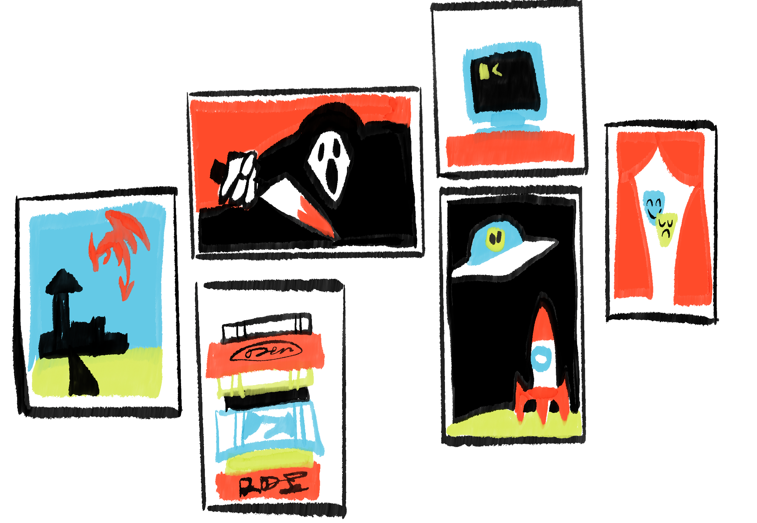
Before learning to read, children learn to listen and watch. The stories children are exposed to during childhood are not just entertainment; they shape one’s perception, personality, and identity. They become silent teachers — guiding how children imagine their place in the world. Whether it’s a cartoon character showing kindness or a villain evoking fear, their actions affect each child’s thoughts, feelings and connections with others.
In different families, different types of media were enjoyed — from light hearted movies to educational documentaries. Each individual grew up with different experiences, shaping the uniqueness of each person.
“[My family was] really supportive of books,” said sophomore Allison Newman. “When I was little, a big part of my childhood was being told stories [and] reading books. All [of the] media I consumed taught life skills, critical thinking and decision making, because there’s a lot of topics about right versus wrong. They helped my perception of empathy. [For example,] I really enjoyed the Magic Tree House series, which is about history, and it inspired me to learn new things and be more confident.”
Conversely, early exposure to more disturbing genres like horror shape students differently.
“[When I was a child, I watched] a bunch of R-rated stuff, like horror movies,” said sophomore Bryan Sandoval. “Because of the stuff I see in horror movies, sometimes I [say] a bad word when I’m not supposed to and then I get in trouble … I used to be scared of the dark [or] being left alone. [But] the more I watched horror movies, the more I got used to the scary stuff.”
The media that students consume is not just limited to movies or books; some also enjoy listening to music.
“When I was little, I went to the San Francisco Symphony a lot with my dad,” said sophomore Gabriel Asadov. “It really got me into the music kind of scene and it’s probably what impacted me the most about joining the band at Aragon.”
Educational media, like documentaries, offers a way to see the world as how it is, through real stories and footage that go beyond everyday experience.
“I usually watch [BBC documentaries about] marine biology and planets,” said junior Tiffany Wang. “Since I was young, I liked to get in touch with nature. I’m taking photography class right now, and I like to take videos about nature.”
Being exposed to multiple genres of media also allow for many skills to be developed at the same time.
“I also like to watch anime,” Wang said. “It’s a way of thinking about human life in different ways because we have learned from anime about how to live. From stories about those anime, I know how to deal with some of the conversations or some of the relationships.”
Likewise, skills learned can also include language development.
“[M]y parents spoke their respective languages to me so that I would grow up knowing more languages, [so] I primarily watched DVDs that were like in either German or Chinese,” said senior Cecilia Bode. “[It helped me become] fluent in both languages.”
However, not every student grew up with unlimited access to online media. For some, it was carefully filtered. These restrictions didn’t just limit what they could watch; they shaped how they saw the world.
“My parents were very against internet use when I was younger, so I mostly watched DVDs,” Bode said. “It was generally pretty positive life lessons. The media I consumed, because my parents were so specific about what I consumed, [only had] a positive impact on me.”
Moreover, childhood media consumption also paved the way for careers.
“I want to go into advocacy work as my larger career goals.” Bode said. “And definitely having that foundation of wanting to help people and having this positive outlook on life definitely can be attributed to the positive programming I watched as a child.”
For some, exposure to media helped them bond with other classmates, connecting them based on shared interests.
“A lot of kids liked this one TV show, and we all talked about it or we dressed up for Halloween as these characters,” Newman said.
No matter the genre or medium, the media consumed during childhood continues to affect people. The media may change, and students may grow up, but the stories that they grow up with will continue to impact them, shaping their identities and perspectives.