Reporting by Madeleine Sah, Roy Kong, Angela Nguyen and Zack Li
Takahashi Market (Roy Kong)
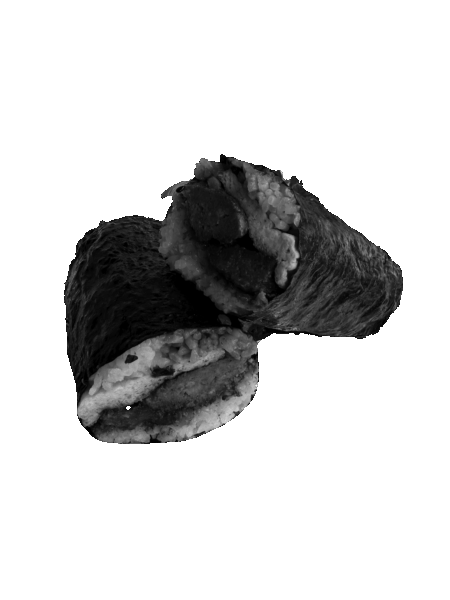
A Japanese-Hawaiian market has been building its reputation since 1906: Takahashi market, founded by Tokutaru Takahashi, a Japanese immigrant. The family-owned Takahashi market first started as a market to serve Japanese-speaking people in San Mateo in 1906. Because of large Pacific Islander and Asian immigration in the 1950s, the market turned from Japanese to a Hawaiian-Asian market.
We purchased the loco moco musubi for $10.95, which is a hefty price for one log of musubi. The loco moco musubi comes in a foil wrap, but where it lacks in presentation, it makes up for in flavor and aroma: it consists of a layer of soft, steaming egg above a tender beef patty surrounded with white rice enhanced by a savory sauce, wrapped in seaweed. In addition, it comes with a large portion of extremely rich gravy, which significantly adds to the flavor and inherently completes the dish, making it worth your while.
Because of the quality musubi, Takahashi is deserving of five stars out of five stars.
Nursel Central Asian and Russian Cuisine (Zack Li)
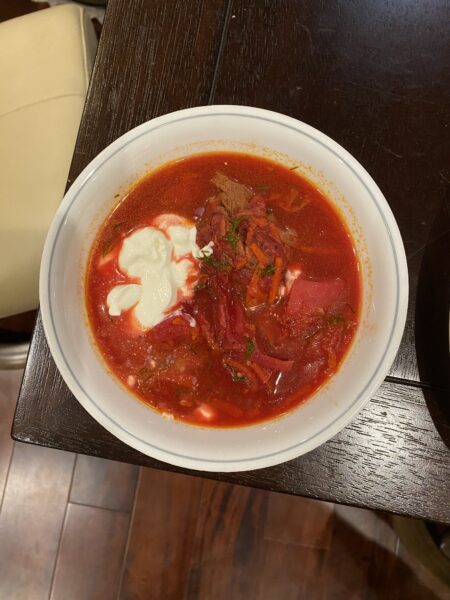
Nestled in the homely suburbs of San Carlos is Nursel Central Asian and Russian Cuisine.
I had their borscht and vareniki. Before taking in the vibrant red-purple soup and the heaping plate of dumplings, the aroma strikes first — bright but earthy, a preview to the generously sprinkled dill atop either dish. The vareniki were simple Ukrainian dumplings stuffed with potatoes. The wrapping was tender, and the mashed potato filling was pillowy, well-seasoned and had an addictive dill taste. For $22, it came with a lot of vareniki, enough for the price to be reasonable, but the dumplings are simple almost to a fault. On the other hand, I was blown away by the borscht; seasoned to perfection, the soup was pleasantly sour without overpowering the sweet or savoury flavors, and it left a satisfying peppery mouthfeel. It’s served with a side of sour cream, the creaminess and tangy taste of which gave every bite an interesting texture. It had just the right consistency: not too watery, but not too thick. It contained shredded cabbage, carrots, beets and large chunks of tender potato and meat. For $16, it is a good portion of soup, but still a bit on the expensive side.
Nursel’s authentic flavors truly shine, making it worthy of a glowing five stars out of five.
La Piñata (Angela Nguyen)
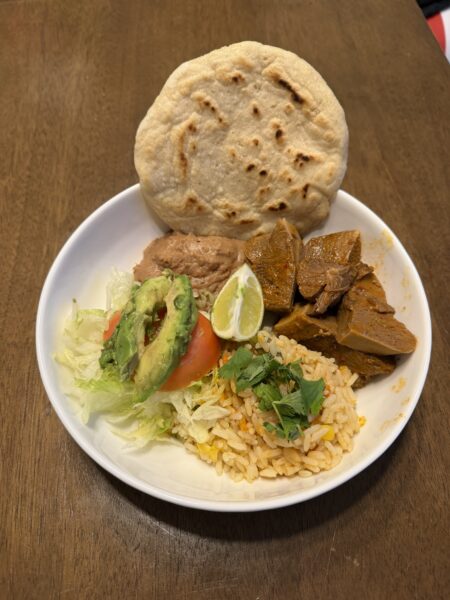
La Piñata stands out with its bright yellow building and the delicious aroma coming out of the restaurant. Specialized in El Salvadorean food, La Piñata boasts itself with unique and traditional food. From Salvadorean enchiladas to beef free soup (sopa de pata), the restaurant has it all.
We ordered the El Salvadorean beef tongue in tomato sauce (lengua en salsa). It came with a side of lettuce salad, a sliced piece of tomato and some avocado. Although the addition of the salad was nice, the avocado was a bit overripe. It also had a small side of refried beans, which were extremely creamy and very delicious. It also had a big portion of rice in tomato sauce, mixed with some corn and carrots. However, the rice was a little too soft for my liking. But the star of the show has to be the beef tongue. It was just cooked enough to keep the smooth texture of the side of the beef tongue and the velvety top of the tongue. The beef was very flavorful because it was infused with a broth-like tomato sauce. The beef tongue also had lime pieces, cilantro and cucumber, all adding to the flavors of the dish.
But one of the best factors at La Piñata is definitely the joyful service that staff had there.
Overall, La Piñata is a wonderful place to get authentic El Salvadorean food, making it worthy of four stars out of five stars.
Sweet Honey Dessert (Madeleine Sah)
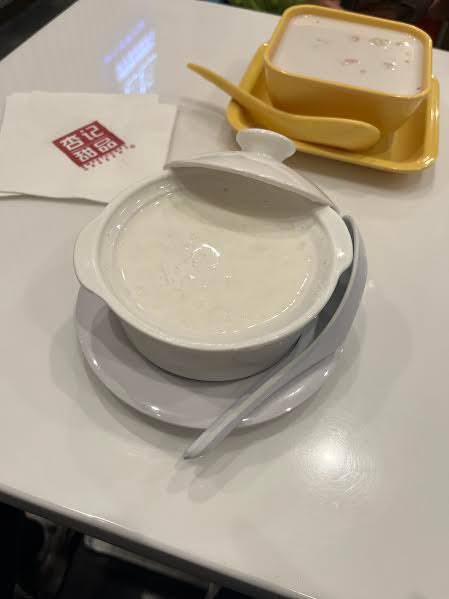
Sweet Honey Dessert glows with a warm, golden charm that immediately draws you in. The menu seems endless, offering an impressive range of traditional Cantonese desserts, but the most interesting one has to be the bird’s nest soup.
Bird’s nest soup comes from the hardened saliva of small birds called swiftlets that build their nests high up in caves. People in southern China started eating it over 400 years ago because they believed it helped with health, especially for the lungs and skin. It’s still seen as a delicacy today.
The moment the dessert arrives, there’s a smell of milk and sweetness. The first spoonful is warm silky, smooth, slippery and slightly sweet, with soft, gelatin-like bits floating in the foamy surface. The flavor feels light yet rich, simple yet refreshing. It’s not overly sugary or artificial.
Though the prices lean on the higher side, the quality, presentation, and delicate flavors make it worth it. Every bite feels carefully made, with a balance of flavor that’s both savory and sweet. Sweet Honey isn’t just a dessert shop. It’s a little pocket of Cantonese tradition reimagined for a modern, trendy crowd, making it worthy of five stars out of five.