Dahlia Selig
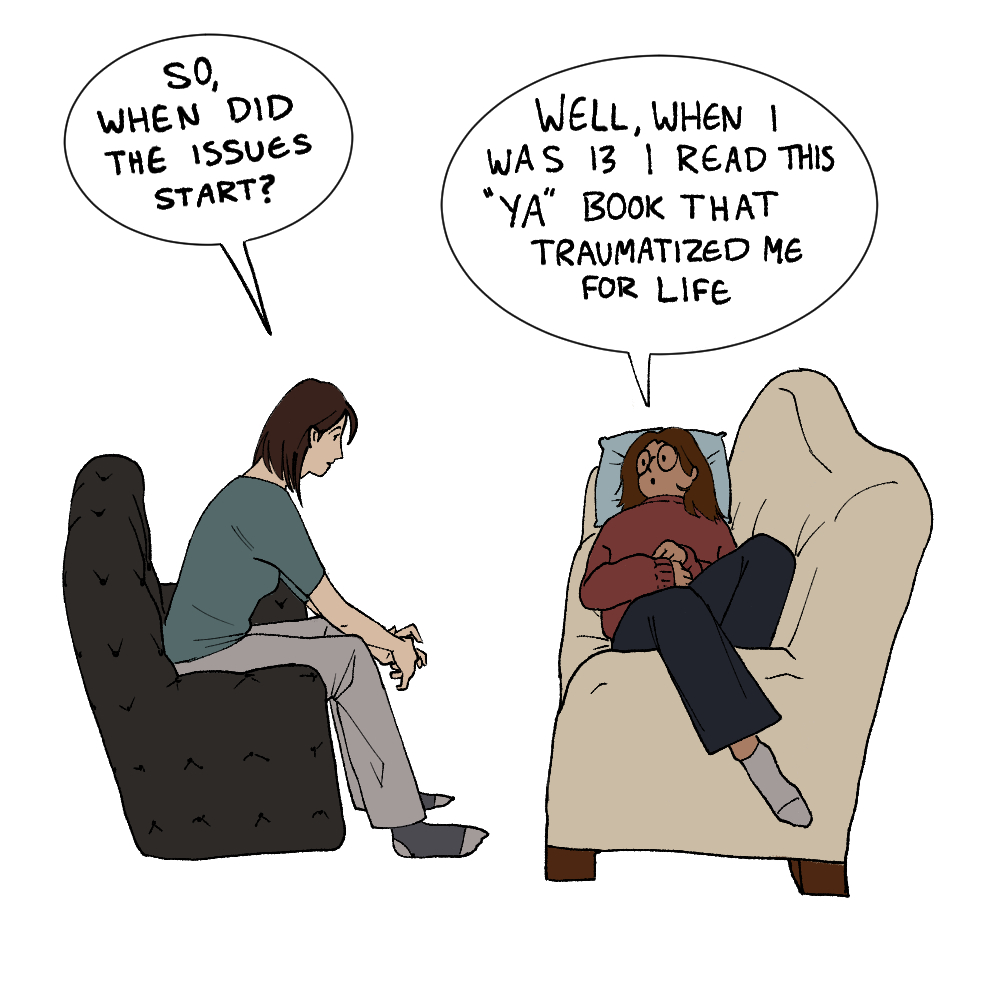
Strolling down the aisles of Barnes and Noble, it is the eye-catching art or familiar author names that draw readers in. Rarely, however, do readers find themselves equally interested in content warnings or reader age recommendations. The combination of a reader’s unawareness about differences in genre labeling and a lack of novel genre transparency has led to the lines between young adult and new adult books blurring.
Traditionally, young adult books have been identified as fiction written primarily for and about teenagers, typically aged 12 to 18, focusing on themes like high school life, first love and identity discovery. New adult novels, on the other hand, target readers between 18 and 25, bridging the gap between young adult and adult fiction. Many NA novels explore more mature experiences, such as college life, early careers and complex relationships. They often tackle heavier themes and sometimes include more explicit content.
Both genres share coming-of-age themes. But differences in content, author intention and reader perception make categorizing them difficult.
“They can be similar because you can say that they’re similar in age group,” said sophomore Hayley Chong. ”Most topics can interchange with one another, like young adults and new adults dip into some of the deeper topics without going in depth about them.”
That being said, some differences do separate the two genres. The boundary between YA and NA isn’t just defined by the age of the protagonist or reader. Instead, it is shaped by themes, maturity of content and how readers engage with the work.
“Adult genres can contain more adult language, and they can be a little bit more in depth compared to [young adult genres],” said sophomore Sofia Cabrera.
For example, “They Both Die at the End” is labeled as YA and centers on coming-of-age and identity discovery. Yet many readers feel it leans more NA because of its heavy themes of death and existential dread. In contrast, “A Court of Thorns and Roses” by Sarah J. Maas, an NA novel, addresses trauma and political manipulation, but later installments prioritize romance, which tends to lean more YA. Themes and depth can blur genre lines.
An author’s intention also plays a role in shaping a book’s audience. Writers like Bridget Collins, who write for both young and new adult audiences, focus on making their stories compelling rather than fitting a specific age category. This approach can result in YA authors producing books that feel more mature than the intended audience.
“[Mislabeling book genres] is bad because it’s not [in] your age range,” said sophomore Emily Tawn. “It all depends on the person. Some people might be more mature, so they like that stuff, but other people might not, which is why content warnings are important so you know what you’re getting yourself into.”
Because of these variations, some authors choose to categorize by content and theme instead of by age alone. Readers mature at different rates, and some books include darker themes even with young protagonists.
Meanwhile, authors like Hannah Grace, known for novels popularized online such as “Wildfire” and “Icebreaker,” are careful not to expose unprepared teens to explicit content. On her website, she notes, “My work is only suitable for adults. All my books include on-page sex, as well as other mature themes that are not suitable for a younger audience. Please be aware that buying my work in a bookstore isn’t the only way your teen could access it.”
However, how many people actually check an author’s website before picking up an interesting book? Most readers don’t pay close attention to genre distinctions. Even when content warnings exist, they are rarely highlighted in advertisements and can easily be skipped, often appearing as a simple list of words on a page. Grace’s novels also often feature cartoony covers, therefore leading readers to believe the books are on the tamer side without doing a deep dive into the actual book.
“I read a few [books] that have content warnings,” Chong said “I honestly tend not to really look at them too much. I already had a preview of what I’m getting into.”
Readers and authors alike are responsible for content. While readers can simply put down a book if they find the content is offensive or isn’t what they expected, authors should feel the need to more clearly articulate recommended age ranges and content warnings to prospective audiences of their novels.