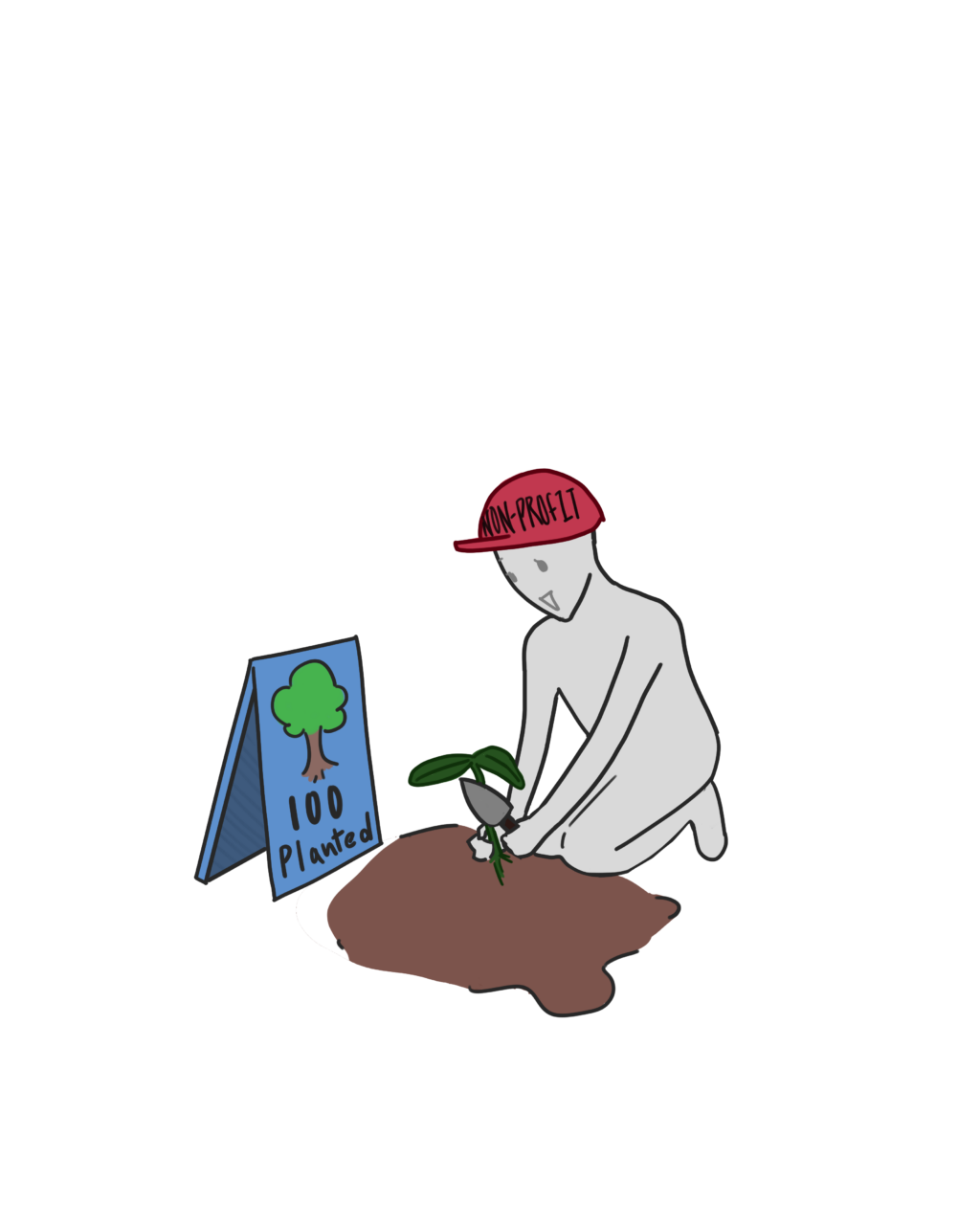
While some may dismiss high school nonprofits as performative or resume-padding, they’re actually a powerful tool of expression for student ambition, creativity and civic engagement. Even when imperfect, they represent a young generation trying to make meaning in the world.
Some initiatives start with vague missions or flashy branding, and some may fade after graduation. But even when the spark is wanting to stand out on college applications, the act of building something forces students to learn skills no classroom can teach: leadership, communication and organization. Even a “performative” nonprofit requires showing up, solving problems and working with others.
This is especially significant in high school, where most leadership roles are exclusive and where most assignments follow strict rules. Creating an initiative requires students to take charge and contribute to the community, something they rarely get to do elsewhere.
Even if a student begins a nonprofit or initiative with college applications in mind, the work they put in still creates an impact.
Junior Brandon Lin created a nonprofit called Precious Plastic, which recycles plastic bottle caps to make clipboards and gives them to nurses.
“I don’t think it’s wrong, because college is really important, and you’re still making an impact,” Lin said.
Additionally, being a part of these organizations teaches participants life lessons, such as serving one’s community or the importance of recycling. Many students also find their interests shift over time. What may have started as opportunities to stand out can evolve into something meaningful once they see firsthand how their work can affect others, .
Senior Matthew Wang started an organization with his friends to play music at senior homes. Over time, he has gotten more comfortable interacting with others and has learned more about people he would normally not be able to interact with.
“Hopefully, it brightens [the seniors’] days a little bit,” Wang said. “I would say it’s gotten more fun over time … as we’ve gotten to know the people over there.”
One thing that Wang has learned from this experience is his own ability to serve in the community, something he realized just by playing music with his friends. Projects like this reveal that they can connect different generations, allowing students to get exposure to topics they wouldn’t normally encounter.
“There’s a lot of uses for your skills that you might not be necessarily aware of before,” Wang said. “To go out and look for these things should be something that everybody should do.”
Lin discovered both technical and personal growth through recycling plastic.
“I’ve learned a lot more about plastic and sustainability,“ Lin said. “In a way, it helps other people be more mindful, not just with the physical impact just plastic being recycled, but also a mindset.”
High school initiatives may begin with mixed motives, but their value lies in what they learn and create. These projects teach students how to lead and collaborate, while also serving communities in many ways. Whether it’s recycling or sharing music, the outcomes prove that ambition can result in a big impact.
Student-led nonprofits are less about their initial ambition or goal and more about a generation learning to experiment and act in order to make a difference. For many, these attempts to create change become the foundation of how they will contribute long after high school, whether they intended to or not.