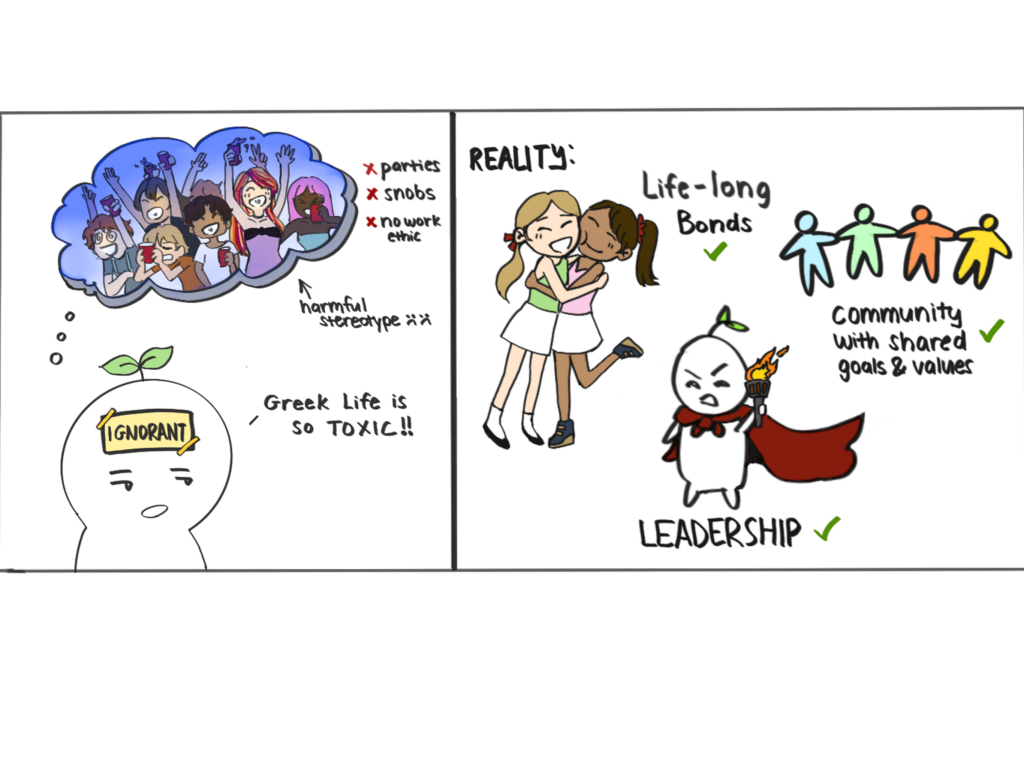
Ask most high schoolers what they think about sororities and fraternities, and the responses are fairly similar each time: “It’s all partying,” “The hazing scares me,” “They don’t do any work.” Despite having such negative stereotypes, Greek life remains popular, usually having multiple chapters on college campuses.
Although stereotypes often characterize sororities and fraternities as shallow or academically disengaged, the experiences and perceptions of past or present Aragon members reveal a different reality: one in which Greek life offers great community bonding and leadership opportunities, while still including the issues of hazing or exclusivity.
“Our [sorority] house had one of the highest GPAs,” said English teacher Victoria Daniel. “It looked like being surrounded by a bunch of really smart, interesting women, where we would gather for dinner, study together, live together and [go] through life together.”
Greek life for women almost always comes with assumptions of being unintelligent and wanting to party instead of taking classes seriously.
“When the [honors thesis class] group found out that we were in a sorority … the shift in their behavior was palpable,” Daniel said. “They started to look down on us as intellectually inferior.”
Sororities are organizations for female college students to take on sisterhood, academic achievement and community service. They also prioritize philanthropy to serve the community. Each sorority chooses one main cause and does numerous activities for them, including fundraisers and volunteer work.
“Something special about Tri Delta[‘s philanthropy] is that at St. Jude’s Hospital … there is something called Tri Delta place,” said Aragon alumna Eliana Rose. “We donated a lot of our fundraising [as a national chapter], … [making] the biggest single donation Shane Street has ever received.”
Even with the great aspects of sororities, there exists less glamorous sides. Sororities often pride themselves in being very inclusive and welcoming, and they can be, but they have been exclusive and discriminatory. This can create an aristocratic environment and start to become extremely cliquey. But with these negative stereotypes, they have impacts on students’ choices to join sororities in college.
“The stereotypes have influenced my choice by steering [me] away from it,” said senior Sienna Shehadeh. “I wouldn’t want to jeopardize my future if something went wrong in that sorority, so I wouldn’t want a bad title [in] the future if I’m applying for a job.”
Frats are a whole different topic, where members can gain social connections, leadership skills, or personal development. They can create life long friendships from a sense of “brotherhood” and make a large university seem smaller and more genuine.
“One stereotype of a frat is that they party a lot,” said history teacher and former frat member Will Colglazier. “And that one’s quite true. But where that misses the mark is [dismissing] the times when you’re just walking to class with a frat brother, or you’re relaxing after class.”
Frats host many events, including formals or parties, that help provide extensive social outlets and memorable experiences. And while rushing, the process of being recruited into the sorority, you are given the task to help host parties and such, which gives great leadership opportunities that can be very useful later on.
However, the initiation rituals, or pledging, can be very dangerous and demeaning when it comes to frats. The hazing can include forced binge drinking, sleep deprivation and sometimes verbal abuse. This environment can take a serious toll on someone’s health, with potential for alcohol poisoning and addiction. The commitment to rushing for a frat is also majorly time consuming, and the hazing is on 24/7. The day after day unpleasant tasks and pranks can be very degrading and tiring to handle.
“At my school, another fraternity was kicked off the campus because of serious hazing they did to one of their potential members,” said Aragon alumnus Tom Rose. “They got the guy really drunk, and he was walking around campus when security found him.”
With these negative reputations, there are many efforts to “break the stigma” of these stereotypes that have risen. This phrase refers to efforts done by fraternities and sororities to combat the negativity surrounding them and promote important causes, most notably mental health awareness. For example the National Alliance on Mental Illness is partnering with sorority Sigma Gamma to help promote resources for an individual or a community’s health.
As high schoolers transition into college, Greek life may come up as one’s first sign of welcome at an unfamiliar place. Despite negative stereotypes, the experience of being a part of a sorority or frat can leave core memories and shape one’s college experience through forming friendships that will last a lifetime.