Dahlia Selig
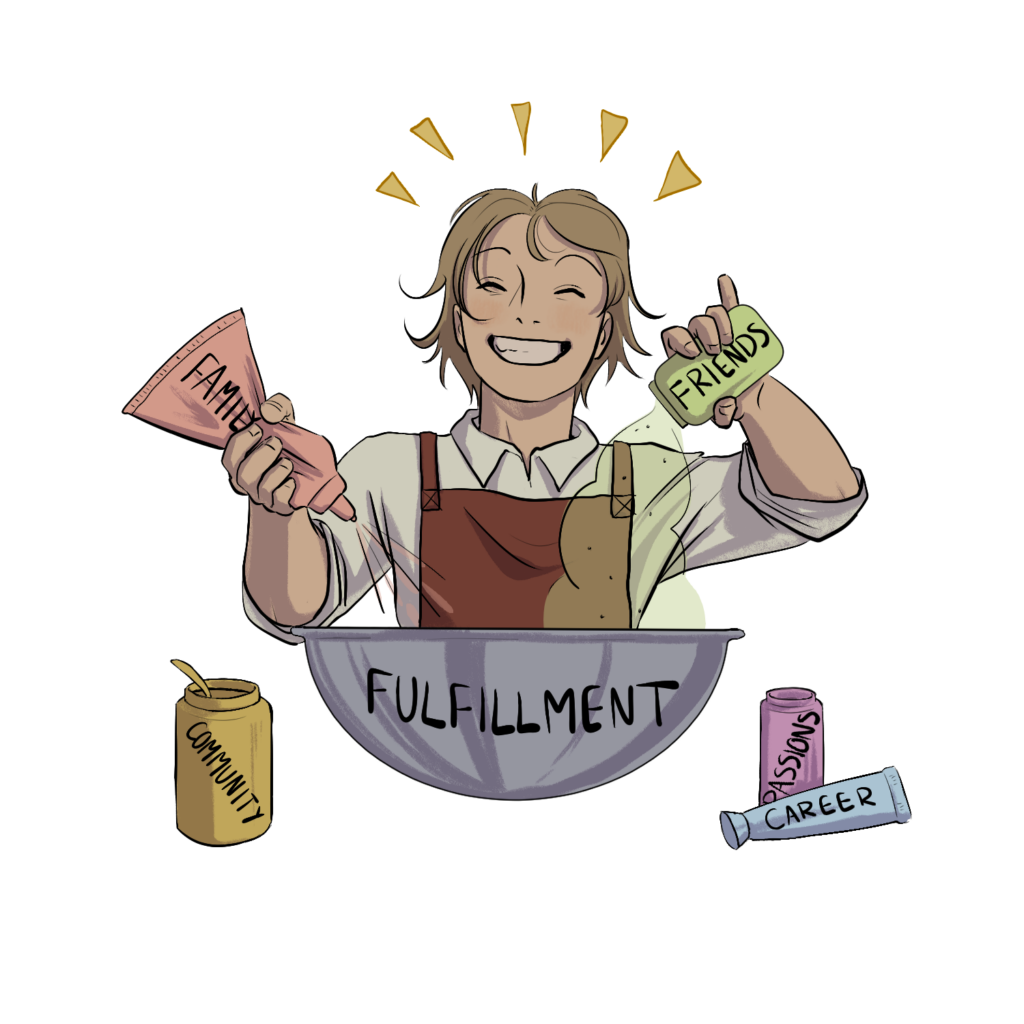
Society often treats romantic love as the ultimate goal, something everyone is expected to want or eventually achieve. Comments like “you’ll find someone someday” or the ideas of “love at first sight” and “happily ever after” make the message evident: being single is seen as temporary, and lifelong partnership is viewed as a key marker of success. But this definition of fulfillment may overlook many other ways people build meaningful, happy lives. Friendships, family and personal passions can provide just as much connection and passion as romance.
“[Romance] might be [overvalued] overall,” said junior Jake Chan. “Because it’s that whole American idea of the perfect family, the nuclear family, of having a wife [or] a husband and then one or two kids.”
Valentine’s Day, a holiday focused around love and romance, reinforces the idea that romantic love is crucial for human connection, overshadowing self-love and friendships. Marriage is often seen as a milestone. Weddings emphasize proof of love’s triumph, prioritizing a single event over an ongoing relationship, often motivated by social media ideals. Meanwhile, being single is phrased as being lonely
or something to eventually “fix.” People who are single get asked presumptuous and invasive questions about their love life, even if they are certain on where they are at the moment. The overemphasis on romance can make those who don’t want a relationship still feel left out or incomplete, even when
they are not.
However, fulfillment does not come from romance alone.
Many people find satisfaction through strong friendships, close family bonds, careers and personal growth. Friendships, in particular, offer emotional support and shared experiences. Chosen families provide stability and love that last for decades. Additionally, being single can allow people to focus on independence, self-discovery and goals that would be harder to achieve and prioritize with a romantic relationship. These sources of fulfillment are all valid, even if they are often overshadowed by society’s focus on dating and marriage.
Nontraditional family structures also make romance seem unnecessary for a full life. Families do not necessarily look like two parents and a kid. Single parents by choice, for example, create families without romantic involvement but still offer nurturing environments for their kids. Strong communities, or someone who has friends as their source of happiness proves that there are numerous ways that love and care in one’s life can be achieved.
Still, there remains a stigma attached to the concept of remaining single forever. Society tends to believe that remaining single for an extended period of time can result in feelings of loneliness, sadness, regret or dissatisfaction. However, being alone doesn’t mean being lonely. Feeling lonely is related to feeling disconnected, not specifically isolation from romance. One can feel as much loneliness while in a relationship as they would alone. If being single is an individual choice, it can lead to empowering oneself to standards for success, apart from what society has planned for them.
Therefore, is it wrong to live single all one’s life? That depends on who gets to decide what is “right.” Romantic relationships can be an important part of someone’s life, and there is nothing wrong with that desire. However, that doesn’t have to be the standard against what is measured and found lacking. A good life is not based on relationship status but is based on happiness and having meaningful relationships of any kind.
“There’s been lots of people who have lived happy, meaningful lives without romantic partners,” said senior Sophia LaCarrubba. “It all depends on how you define happiness in your own life.”
Regardless of whether oneself chooses to live in a relationship, single life or somewhere in between, all have equal value. Living single does not mean failure it simply is one of many ways to live a whole life.