Eva Ludwig
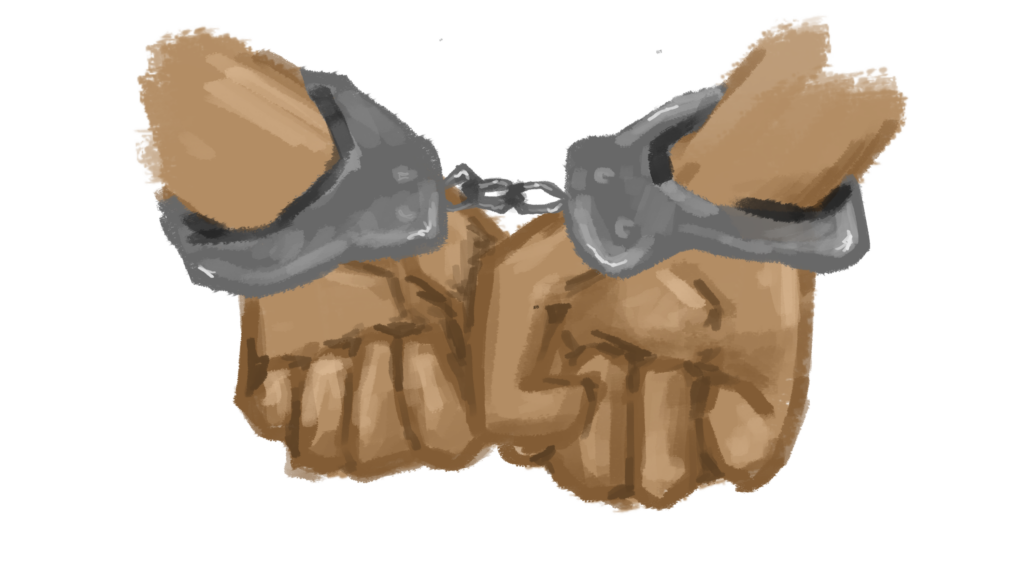
Is kidnapping back in style? Yes. That is, if you plan on capturing South American oppressors.
Nicolás Maduro is the president or, if you’re the U.S. government, “dictator” of Venezuela, who now resides at the Metropolitan Detention Center in Brooklyn, New York. The capture of Maduro has been controversial: the Secretary-General of the United Nations said he is “deeply concerned that the rules of international law have not been respected.” However, this issue is more complicated than just international law, and may be justified by looking at impact rather than intent.
Before anything else, I would like to appreciate why capturing Maduro has or will likely help Venezuelan citizens.
As The London School of Economics and Political Science puts it, “[Venezuela’s] economic collapse was largely due to mismanagement and Mr. Maduro’s ‘kleptocratic cronyism,’ an arrangement where state power is hijacked for the personal enrichment of the ruling elite.”
On top of this, Maduro has been labeled a narco-terrorist by President Donald Trump’s first administration and Joe Biden’s administration for his involvement in the production and spread of drugs.
Furthermore, the average Venezuelan has suffered under Maduro, evidenced by the 7.9 million who fled. Therefore, ridding Venezuela of such an oppressive and parasitic leader is a humanitarian benefit.
The main pieces of international law critics claim the U.S. violated are Article II Section 4 of the U.N. Charter, which states that countries shall refrain from the “use of force against the … political independence of any state” as well as Article II Section 1 which stresses “the principle of sovereign equality.”
“It depends on what the person you’re doing violence towards has done in the past,” said junior Liam Harris. “Let’s say Hitler was around today, would it be wrong to go and grab him and make sure that he doesn’t … oppress people like Maduro [is]? I feel like what we did was right.”
Although comparing Maduro to the ‘H’ man is a stretch, I hope readers can appreciate the extrapolation: is limiting ourselves with international law worth the moral high ground if adversaries wouldn’t do the same?
“Technically, yes, it is a violation of international law,” said junior Jason Lao. “But regardless, Maduro has committed human rights violations against his own people.”
Additionally, the U.S. and other nations such as Canada and the European Union view Maduro as an illegitimate president. This charter, which is meant for legitimate states, is not applicable to a predatory government.
With over 750 military bases in over 80 countries and territories, the U.S. has the responsibility of dealing with international conflicts of national interest. Maduro’s capture continues the ideas presented in the Truman Doctrine: the U.S. will provide political, military and economic assistance to all democratic nations under threat from authoritarian forces. While political circumstances today don’t tightly match those of 1947, when the Truman Doctrine was declared, the precedent for U.S. intervention is clear. The fact that this action rids Venezuelan people of an oppressive dictator is an indicator that international law has limits and shouldn’t be applied to protect predatory leaders.
“[Capturing] Maduro is essentially a step … towards [safeguarding] U.S. [national] interests, and also giving the Venezuelan people, who have already suffered so much, an opportunity to rebuild and … regain the wealth that they have lost under 27 years of socialism,” Lao said.
Another key aspect of this capture is competition with China. Soft power, the ability to influence a country without coercion, is one of the biggest weapons of large players such as the U.S. and China. China has historically constructed key infrustructure in some countries to increase their soft power in those places. For example, in Pakistan, through China’s “Belt and Road” initiative, China now controls the strategic Gwadar Port, extensive energy projects and major transportation networks connecting Xinjiang to the Arabian Sea.
Venezuela is currently billions of dollars in debt to China, which they have been paying back in oil. While Venezuela will likely not default on this unless the U.S. forces it to, Chinese companies have developed extraction infrastructure and helped develop other sectors, “including agriculture, power generation and transmission, ports and water,” according to U.S.–China Economic and Security Review Commission. China’s influence has been undeniable and stopping China’s soft power is part of the bigger picture.
Although disrespecting a foreign sovereignty may damage American soft power, this also makes foreign compliance with U.S. policies smoother. As important as soft power is, hard power, the nation’s ability to use force to influence other countries, is the end goal, which can be obtained through negotiations; this successful military action signals credible enforcement to threats Trump has made.
Ultimately, there are many factors at play, many of which I can’t cover, such as Venezuela’s sovereignty, U.S. international relations — not just with China, but Cuba, Colombia, the EU and Canada — oil and the U.S.’s sphere of influence. The intent of Maduro’s capture appears to be securing national interests and oil, with the bonus of helping Venezuelan citizens.
Whether or not U.S. oil companies will reap the benefits or Venezuelans will see a real democracy, only time will tell, but U.S. intervention has been a step in the right direction.