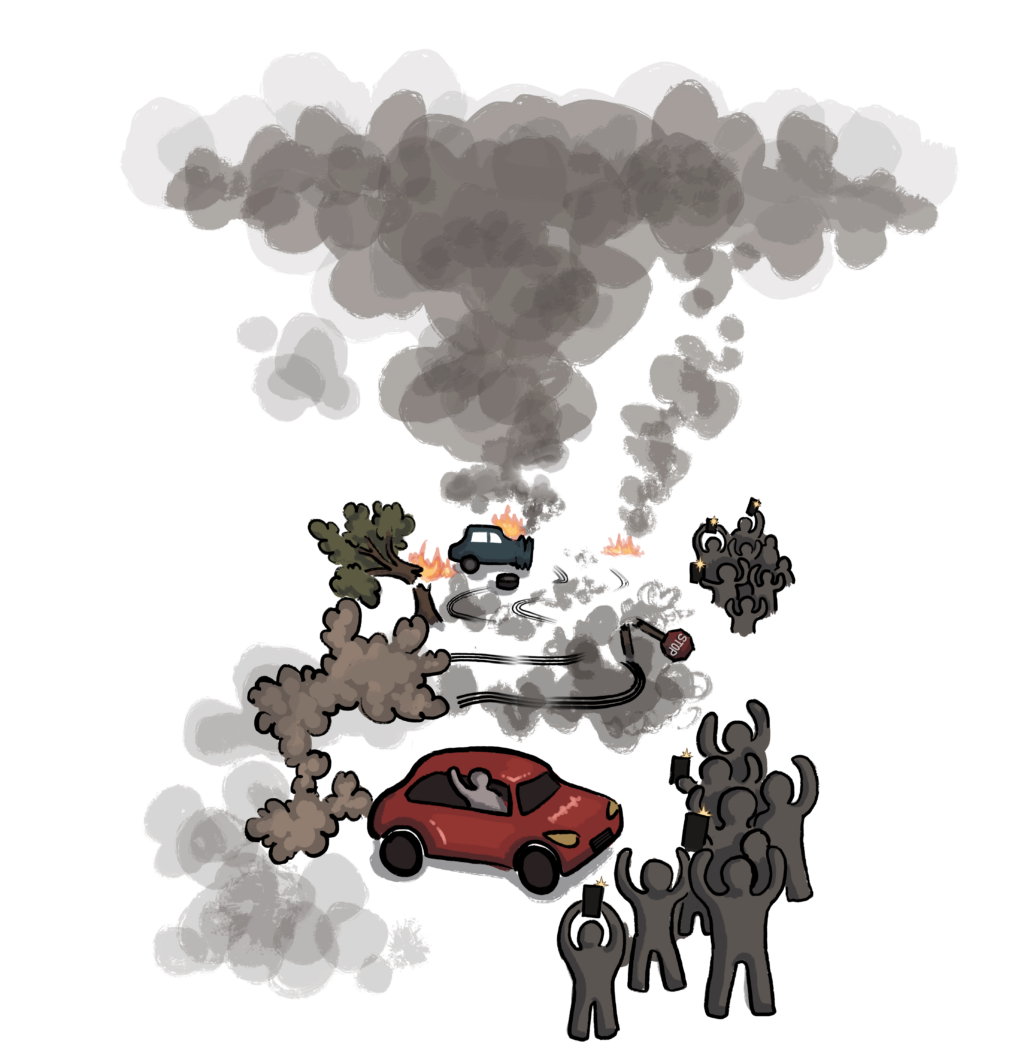
The video lasts just 20 seconds, but it contains all the elements necessary to command attention: tires screeching, smoke filling the air and a car drifting mere feet away from a crowd of cheering onlookers, mostly young people. It captures the sheer thrill associated with car drifting while blatantly omitting its dangers.
To drift a car, the driver must deliberately oversteer, forcing the car’s rear wheels to lose traction while remaining under control through a turn. Although street drifting traces its roots to professional drifting, there are key differences.
“Professional cars have a lot of mods that you couldn’t do on a street car,” said junior Adam Sahib. “A lot of the stuff they do, they could get arrested for. That is why they have professional drifting.”
Beyond car modifications or fancy upgrades that give a vehicle a standout look and improve its performance, street drifting and professional drifting differ in execution. Professional drifting happens in sanctioned environments, usually racetracks, under strict rules. Drivers are judged on control, angle and style rather than speed, and safety measures keep both cars and the audience protected.
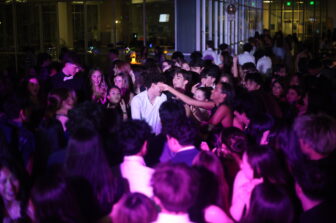
Many are already familiar with drifting, even if they do not recognize it by name. Terms like “donuts” or “burnouts” are often referenced casually. An informal gathering where drivers perform stunts like donuts and burnouts are called sideshows. As the crowd grows, participants use their vehicles to slow or block traffic, creating space for drivers to drift. Often starting with just a single car performing a few spins, word can spread quickly through social media posts or live locations, and within a matter of minutes, more cars and spectators arrive.
Sideshows appear nationally in urban environments, but originated in Oakland during the 1980s. To this day, Oakland is still an infamous hotspot for sideshows, making them easily accessible to Bay Area teens.
Especially for these Bay Area teens, social media plays a central role in how the culture spreads and evolves. Hashtags like #Sideshow and #Cardrift have amassed over 70,000 posts, and accounts like @oakland_sideshows possess over 3,000 followers. Platforms like Instagram reward spectacle: daring stunts, tight turns and dense smoke gain likes, shares and views, turning drifting into a performance crafted for an audience beyond those physically present.
“It’s more or less people that don’t know [about sideshows], just see it and have a sense that it’s cool,” Sahib said. “They see people doing all the actions, and they want to tag along, and they just get in it themselves.”
Street drifting’s appeal lies in its rush. The proximity to danger can create an immediate surge of adrenaline. The closer the driver gets, the louder the crowd cheers, creating a loop of excitement that pushes both drivers and onlookers further. In these moments, fear and excitement blur, creating a heightened yet hazardous emotional experience.
Beyond adrenaline, street drifting has an element of rebellion. Taking over public streets challenges authority, which can be attractive to teenagers who want to test boundaries. There is also a strong sense of community. Sideshows bring together people who have a shared interest in both cars and performance. For many, it offers a sense of belonging. Drifting can showcase skill, creativity and mechanical knowledge, and for many participants, it starts as genuine passion rather than recklessness.
Yet, street drifting carries undeniable risks. Drivers can lose control, property can be damaged and blocked traffic disrupts neighborhoods and affects civilians. Over the span of five years, the California Highway Patrol reports that street drifting and sideshows were linked to 264 crashes, resulting in 30 fatalities and 124 injury cases. Beyond the more obvious dangers and disruptions, loud vehicle noise results from sideshows. These disruptions can cause annoyance, loss of sleep and a feeling of unsafety in neighborhoods. In the average week, the city of San Francisco receives at least three reports of sideshow incidents after being alerted by the sound of loud engines and tires screeching.
“I saw … some lady that was driving around in her car, just minding her own business, and she happened to come across [a sideshow],” said senior Alex Nunez. “And the people that were in the takeover just destroyed her car for no reason. I found that really messed up.”
Incidents like these highlight why many car enthusiasts recommend safe, legal options for drifting.
“There’s a bunch of different tracks, like one in Sonoma, [where a] bunch of people go up there to track their cars and to race them up there legally,” Nunez said. “And there’s also a bunch of pits that people can actually go to for takeovers too, and they don’t have to just do it on the streets.”
Others worry that sideshows misrepresent the wider car community, attracting negative attention and painting all enthusiasts with the same brush.
“Three years ago, [sideshows] really gained a lot of traction and popularity in news and social media, and it was in a very negative way,” said senior Noel Padilla. “You had a lot of people who were getting hurt, and it just brought a lot of bad attention to car enthusiasts. The news portrayed it as the car community was doing it, but it was a very, very small portion, so it just put a bad light on people who love cars like myself and my father.”
Street drifting’s allure is undeniable. The challenge lies in balancing that appeal with safety, raising the question of whether the culture could exist without the inherent danger that makes it so magnetic.