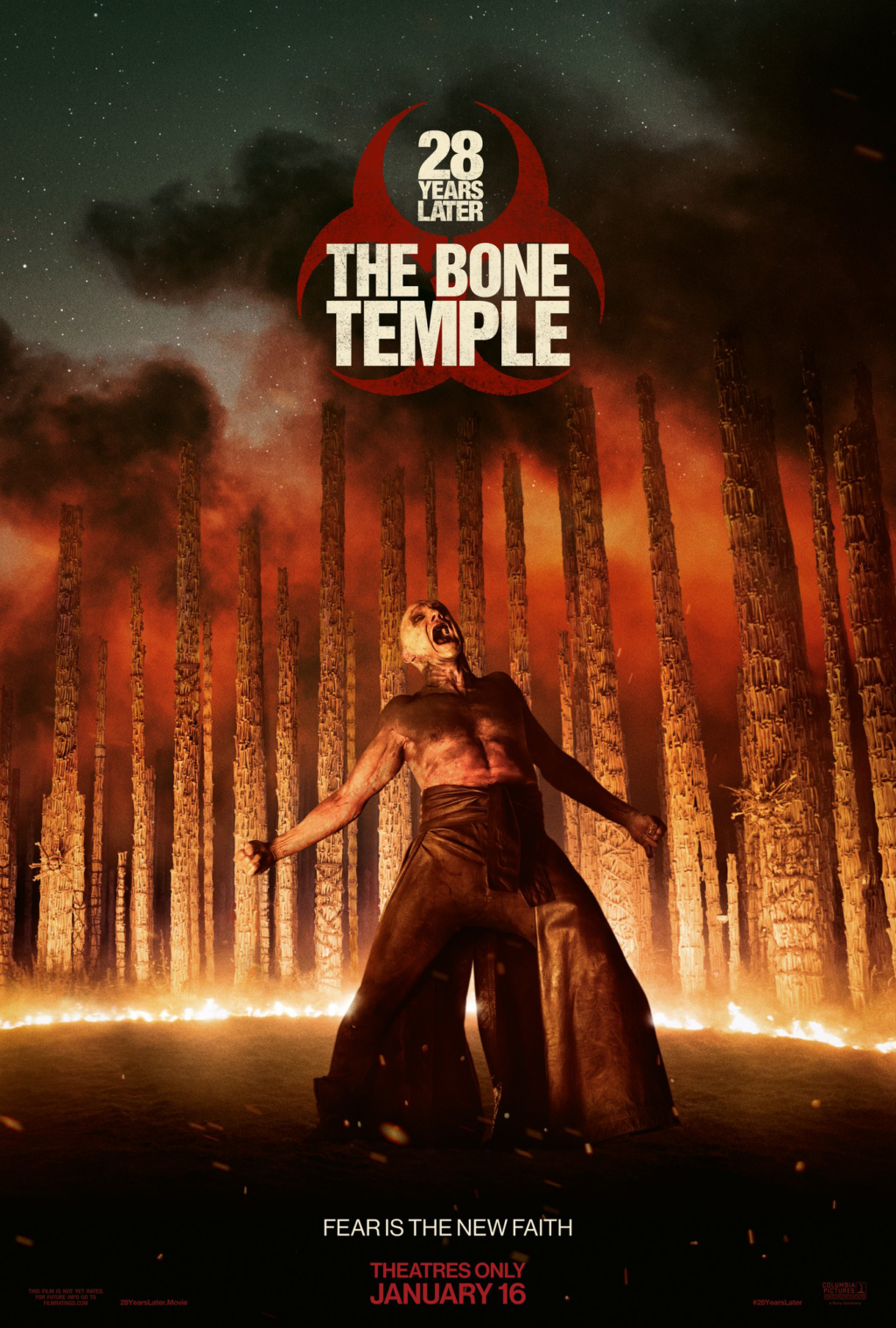
Courtesy of Columbia Pictures, Decibel Films and DNA Films
On Jan. 16, “28 Years Later: The Bone Temple” was released as the sequel in the zombie apocalypse franchise 28 Days Later. Following “28 Years Later,” the 2025 prequel, which focused on survival, loss and a young boy’s coming-of-age in a quarantined Britain, “28 Years Later: The Bone Temple” attempts to push the franchise into a darker, more philosophical direction.
The film takes place after the events of the previous movie, “28 Years Later,” and moves away from the relative safety of quarantine zones into the mainland, where hierarchical cults, extreme belief systems and human savagery run rampant. Instead of trying to survive, the movie portrays a group of people roaming the land and killing its people. This differentiates it from traditional zombie thrillers, where the objective is to survive, creating a darker theme of human selfishness.
“[The movie] talks about different societies and how they connect to our society, like different social classes,” said sophomore Ella Li.
However, even with its challenging the norm, the movie’s storyline was weak. The narrative often feels unclear and fragmented, giving the impression that there is no plot or overarching goal driving the film forward. The movie plays out in a way that feels confusing rather than purposeful, lacking the traditional Fichtean Curve of rising action, climax and resolution that most movies have.
“I was unclear on why Jimmy, [the cult leader], turned the way he did,” said sophomore Sofia Cabrera. “It wasn’t really well-explained if you hadn’t watched the prequel.”
Very few moments actually stick with the viewer as they walk out of the theater. That being said, there is one major exception: a very unusual scene involving the doctor in the movie performing a disturbing dance, accompanied by unsettling music. That moment popped from the otherwise blended story because it was so bizarre, making it so distinctive.
Furthermore, the pacing of the movie is very uneven. There were long stretches that moved very slowly, making it seem like the story was not advancing, while other moments happened very abruptly. This imbalance contributes to the film’s lack of structure and makes it feel longer than it actually is.
Despite a weak plot and rocky pacing, the performance of the actors was a strength. The characters are portrayed with intensity and conviction, making even the most unsettling or bizarre moments feel believable. Jack O’Connell’s portrayal of the cult leader Jimmy is particularly effective, bringing out strong emotional reactions from the audience.
In terms of tone, “28 Years Later: The Bone Temple” is bleak and deeply unsettling. The film focuses less on the infected and more on the dangerous belief systems humans create when society collapses.
“[The movie is] about corruption and humanity versus dehumanization, especially with how Jimmy lost himself because of the cult,” Cabrera said.
A major theme is how people use “the end of the world” to justify violence and bring distress among the survivors instead of the zombies — suggesting that humans, not the virus, are the true source of horror. While it is an important idea, it’s not always clear throughout the movie.
“Some parts [of the movie] were confusing,” Li said. “One of the characters just disappeared and there was no storyline for it.”
The sound design, however, is one of the more successful creative elements of the movie. Silence was used to create tension and unease. And when there was sound, it left the viewer unsettled. The soundtrack enhanced suspense, making the audience feel uneasy even when nothing important was really happening on the screen.
Overall, the movie did try to reach the height of its prequels, but it did not live up to the narrative strength of them, nor did it do the previous movies justice. Although it introduced ambitious themes and had strong performances, the film’s weak plot, confusing structure and uneven pacing prevented it from achieving its full potential. As a result, the movie earns a rating of one and a half out of five stars.