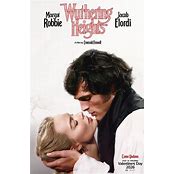
In 2026, Emily Brontë’s 1847 novel “Wuthering Heights” returns to the big screen just in time for Valentine’s Day, though whether it’s the right pick for a romantic night out depends entirely on one’s taste in love stories. Starring Jacob Elordi and Margot Robbie, the Feb. 13 release transforms Brontë’s tale of obsession and revenge into a spectacle that has sparked significant controversy.
“Wuthering Heights” remains one of the most recognizable and haunting romances in English literature. The novel follows the relationship between Catherine Earnshaw and Heathcliff, her servant and best friend. Its psychological intensity has secured its reputation as a literary masterpiece, prompting numerous film adaptations. The latest version seeks to repackage it for a new generation. Casting widely recognizable stars like Robbie and Elordi attracts Gen Z audiences who may be more drawn to big names than 19th-century fiction.
The most immediate controversy surrounds the casting of Elordi as Heathcliff. In Brontë’s novel, Heathcliff’s race is never explicitly mentioned, but Heathcliff is repeatedly described as dark-skinned and a socially excluded outsider. Casting the Australian Elordi has prompted criticism online before the film even premiered.
“Obviously, he’s not the original race of Heathcliff, but [Elordi] took the character really well,” said freshman Isla Beltzner.
The film sidesteps the racial implications that define Heathcliff’s outsider status, reframing him as brooding and mysterious rather than socially ostracized. Known for his height and his past roles as Noah Flynn in “The Kissing Booth,” Nate Jacobs in “Euphoria” and Elvis Presley in “Priscilla,” Elordi is easily recognizable. He has built a reputation of being exceptionally attractive, which has led some viewers to not care about this change. And although his on-screen presence is appealing, taking away the subtle nuance that has long been a layer in the masterpiece puts Emily Brontë to shame.
Robbie’s casting as Catherine Earnshaw, the female lead, drew less backlash, though her star status certainly influenced the role. Known for her commanding performances as Barbie and Harley Quinn, Robbie leans into Catherine’s volatility, delivering a portrayal that does Catherine’s personality justice.
Elordi and Robbie’s chemistry is undeniable. The camera lingers on charged glances and lingering touches, amplifying the sexual tension, at times.
“There was a lot [of tension that] you could see it through the screen,” said sophomore Amara Garcia. “I was getting so excited because I was like, ‘Oh my God. There’s so much tension.’ And they did an amazing job showing that.”
Robbie and Elordi’s passion seemed to leap off the screen, which came as a surprise due to their seven-year age gap. Some scenes were not part of Brontë’s original version, but the tension helped viewers stay engaged. The explicit moments may have been slightly uncomfortable, but they added to the drama of the film, leaving not one dull moment.
Brontë’s novel unfolds gradually, but by contrast, the film compresses events, foregrounding Heathcliff and Catherine’s romance while minimizing the broader plot.
“There was a plot, but there was also a lot of making out,” said sophomore Louise Martensson. “And it was just unnecessary.”
Because the romance was overemphasized, the absence of emotional depth in the relationship came as a disappointment. While it is difficult to transfer certain sentiments from a book to a movie, “Wuthering Heights” seemed to replace many details of Catherine and Heathcliffe’s relationship with physical displays of affection, making the climax of the movie, which should have been epic, lukewarm.
Visually, the film differs from the bleak Yorkshire moors that were described in the novel. Instead of muted grays, the cinematography included saturated hues. Some sets feature symbolic pops of color, which serve as fun easter eggs for book fans, but sometimes the bright colors looked vaguely tacky. This move was risky, given how many other aspects differ from the novel. Leaving the dreary aesthetic would have been more iconic, while also giving the film a more professional look.
The soundtrack has generated intense debate, particularly the inclusion of an original song by Charli XCX.
“The music … wasn’t bad,” Martensson said. “It’s just, why are we having Charli XCX write the music for a period piece?”
The song “I Think I’m Gonna Die in This House,” which garnered popularity on TikTok prior to the movie release, plays during the opening sequence. Its modern, synth-heavy production seemed to clash against the 19th-century setting.
“It’s so TikTok-ified that no one can take it seriously,” Martensson said. “Playing it in the first scene just makes zero sense.”
Despite feeling out of place in the setting, Charli XCX’s song set the tone surprisingly well. While some may argue that it clashes with the time period, the track added energy that traditional orchestration couldn’t achieve. Rather than being distracting, it proves that sometimes breaking the rules can make a movie more memorable, even if it made the first scene unintentionally funny.
“Wuthering Heights” had its ups and downs. While elements like the original music added excitement, changes such as Heathcliffe’s race change seemed to blatantly disregard Brontë’s artistic vision. Perhaps the worst aspect of the movie was the shortage of emotional resonance and the removal of key details, making this movie deserving of two out of five stars.