In recent years, the state of California government has made many efforts to restructure incarceration, shifting the focus from punishment to support and orientation to future success beyond the jail bars. While prisons are often portrayed as cramped, harsh environments, the reality of the system is much more complex — rehabilitation programs exist to support the diverse range of prisoners’ mental health and prevention of future crime relapsing.
The California prison system is managed by the California Department of Corrections and Rehabilitations, which is responsible for the implementation of shared cells, general rehabilitation programs and varying levels of security, among other arrangements. The system houses approximately 90,000 incarcerated adults in facilities across the state.
SHIFT TO REHABILITATION
In recent years, California has reduced overcrowding and shifted focus toward rehabilitation by increasing access to enhanced safety and providing mental health support instead of solely relying on punishment. Reforms have emphasized improving overall prison culture.
Change can be seen in San Quentin State Prison, which is being transformed into a rehabilitation-focused facility inspired by Nordic prison models. Their goal is to increase access to education, job training and mental health programs to reduce repeat offenses.
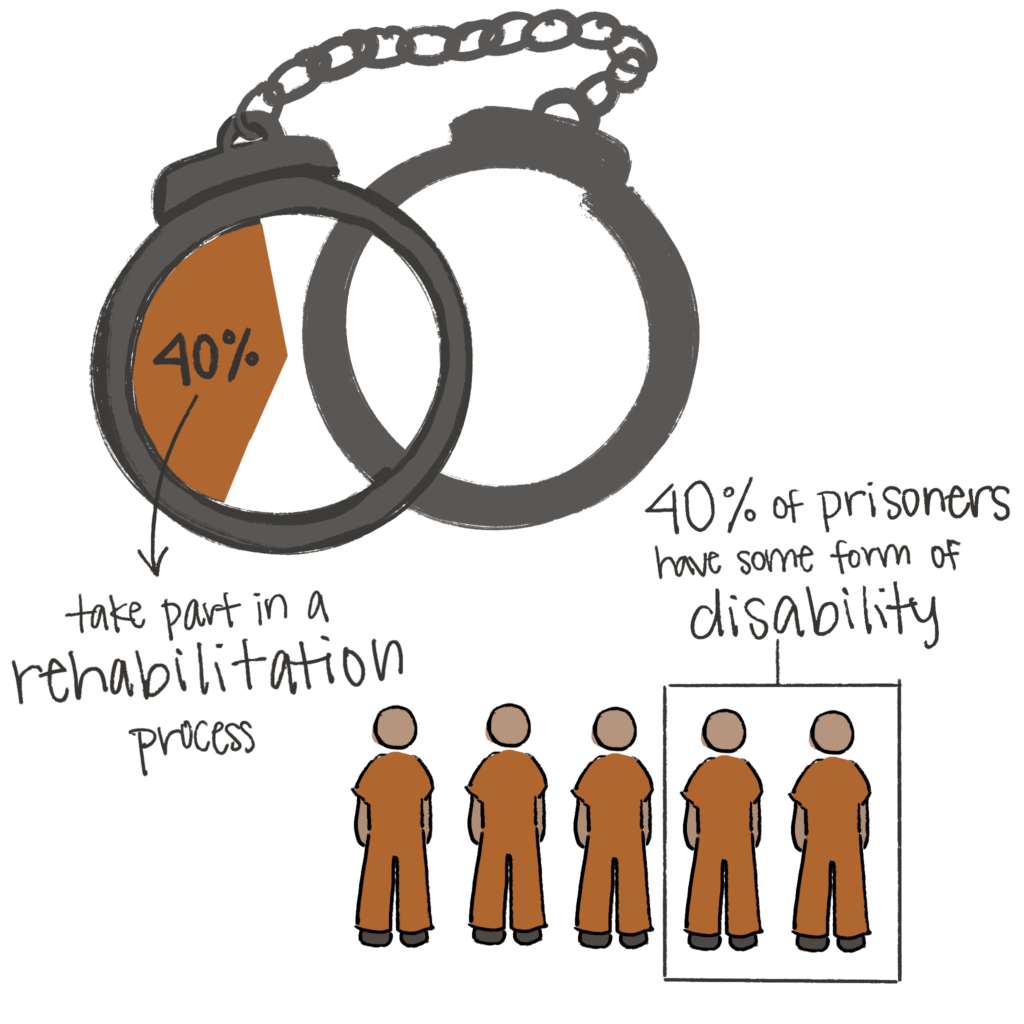
The rehabilitation process includes lessons in reading, math, employment, societal transitioning and financial literacy before inmates participate in parole planning and discuss their re-entry into society with prison staff. However, data from CalMatters shows that only around 40% of incarcerated individuals take part in these offerings, raising questions about their efficiency and necessity. That being said, low participation rates are also influenced by a lack of program availability, lack of funding or other conflicts of interest between prison administrators.
Additionally, formerly incarcerated individuals often face challenges reintegrating into society, including workforce discrimination. As a result, many return to crime, continuing the cycle of felony and punishment. 39.1% of people released from Californian prisons in fiscal year 2019-2020 were convicted of another crime in the next three years.
Another challenge currently being tackled is shared cells. Concerns about safety and mental health in shared cells have risen in recent years, as feelings of paranoia or anxiety may be common when faced with a potentially dangerous roommate.
“Being in an environment where other people have done the same [crimes] as you, doing something you shouldn’t have done, I don’t think that’s going to encourage change,” said junior Advika Singh. “Everyone’s end goal is to not stay in prison, so it’s easier if everyone is separate.”
As a result of such concerns, the new California Assembly Bill 1140, the Single-Occupancy Cell Pilot Program, will create single-occupancy cells beginning in 2026-2027. The plan aims to transfer 10% of the population in four prisons into individual cells. Supporters say this could improve safety and mental health, while critics question the cost and whether it addresses deeper systemic issues.
JUVENILE JUSTICE
While rehabilitation is also a key factor in the juvenile justice system, juvenile centers also aim to keep adolescents aligned with public school education. They also provide access to counselors, psychiatrists, nurses and recovery programs that focus on victim awareness, substance abuse treatment, anger management and career planning.
A strong focus on education allows juveniles to receive similar schooling and opportunities as non-incarcerated adolescents. Counties offer both high school and college level education experiences, placing emphasis on preparing for societal re-entry. These programs have seen clear success. A 2019 CalMatters article reported a 60% decrease in juvenile detention rates and a 73% decrease in arrest rates since 2007, thanks to programs emphasizing trauma counseling and rehabilitation rather than punitive treatment.
“[Secure Youth Treatment Facility] youths can complete high school [through] the Hillcrest School, which is run by the San Mateo County Office of Education,” said Johanna Rasmussen, San Mateo County Juvenile Justice & Delinquency Prevention Commission Commissioner. “We have graduations each year and we serve a lot of youth with special education needs [or even English as a Second Language] learners … They really excel in their education. The same is true of our kids in the juvenile hall … they don’t stay a long time, but they still go to school every day … We try to work with them on what their educational goals will be and if they are going to be there for enough time to enroll them in college.”
However, these opportunities are not as common for adult inmates, sparking discussion about how the system treats adolescents versus adults. Public support for adult rehabilitation is far less than that for juvenile programs.
“I wish that energy and excitement that people have for the idea of a rehabilitative juvenile carceral system could be transferred over to adult incarcerated individuals,” said Aragon alumna Angelina Parker, the Co-founder and Youth Director of Peer Point, a restorative county-wide program for suspended, expelled or arrested youth. “We could be spending some of that passion building better reentry programs, helping formerly incarcerated individuals find jobs or opening up scholarship opportunities for them to pursue further education and reintegrate with society … The better you can help a person reintegrate into society after they’ve been released, the lower their chances of recidivism, [a person’s relapse into convicting crimes], are in the future.”
TREATMENT OF MINORITIES
Additionally, the actual prison experience for minorities — including pregnant, LGBTQ+ or disabled individuals — contains support systems programs that vary in effectiveness.
The CDCR allows transgender, non-binary and intersex individuals to be housed in accordance to their gender identity, resulting in mixed experiences. Some report feeling safer and relieved, while others still face violence and discrimination. A study funded by the CDCR across six California men’s prisons found that 65% of LGBTQ+ inmates reported being sexually assaulted by another inmate.
For the juvenile system, the LGBTQ+ population is considered too small for support programs to be instituted.
“We don’t often have many self-identified LGBTQ+ youth, so we just don’t have any identified programs,” Rasmussen said. “That’s an area we definitely need to improve and the reason why there’s not a big focus is because the population is so minute and there’s so many other problems that need to be tackled.”
For disabled inmates, which is 40% of all prisoners according to a 2024 report from Disability Rights California, conditions like solitary confinement, where individuals lack human interaction for 22 to 24 hours, pose serious physical and mental health risks. Court-mandated improvements aim to provide more assistive technology within the year.
California Assembly Bill 1144 proposes allowing disabled inmates or inmates 55-years-old or older to reduce work hours or retire without punishment or reduced privileges. This would benefit the 20% of elderly inmates in California, who often face accelerated aging due to the stress of incarceration. Prisons also have difficulty managing this population’s high amounts of chronic illnesses like dementia, diabetes or HIV. Although early release is available for inmates 50 and older, some fear that violent offenders could be freed early.
CONCERNS AND EVOLUTION
The California prison system has come a long way from purely punitive treatment and is now working to provide support to those who need it, as well as focusing on rehabilitation and preparing inmates to re-enter society. However, the balance between punishment and rehabilitation remains debated.
“America has a high crime rate and a high incarceration rate and you can’t address one without the other,” Parker said. “One way to lower crime is to increase welfare and support services … but another way is through punishment. There is a lot of existing research that shows when you increase the certainty of punishment for a crime, the instances of that crime will drop a lot, but there’s also a lot of research that shows going through the carceral system might actually make it much more likely for someone to return after they’ve been released for a whole host of reasons … One main challenge that America has not yet solved is how to handle the dual and reciprocal relationship between crime and punishment.”
The juvenile detention system in particular continues to evolve, focusing on community-based rehabilitation. With the closure of the state-run Division of Juvenile Justice in 2023, counties now manage youth incarceration, implementing stricter probation limits while balancing rehabilitation with facility safety and security.
However, there are still changes that can be made. Most notably, the end of minors being tried in adult courts, preventing crimes from being committed in the first place and standardizing education in juvenile halls — where juveniles reside during transitional periods of the conviction process.
“The thing I care most deeply about is stopping juvenile transfers to adult court,” Rasmussen said. “It costs money, it creates a bigger public safety risk and it destroys the child’s life … Identifying early, in elementary school, [potential circumstances that could cause a child to commit a crime], creating a program for youth with juvenile hall commitments and eliminating juvenile transfers [is] my goal.”
California’s current prison system is complex and controversial, due to debates regarding safety, rehabilitation and minority conditions. Recent reforms and legislation have shifted focus toward preparing inmates life after release, offering more opportunities for self-improvement. While challenges remain — such as shared cells, solidarity confinement and program effectiveness — the system is gradually moving from disciplinary approaches toward support that aim to reduce recidivism and improve outcomes for incarcerated individuals.