Vanessa Chan
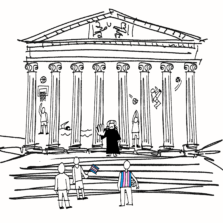
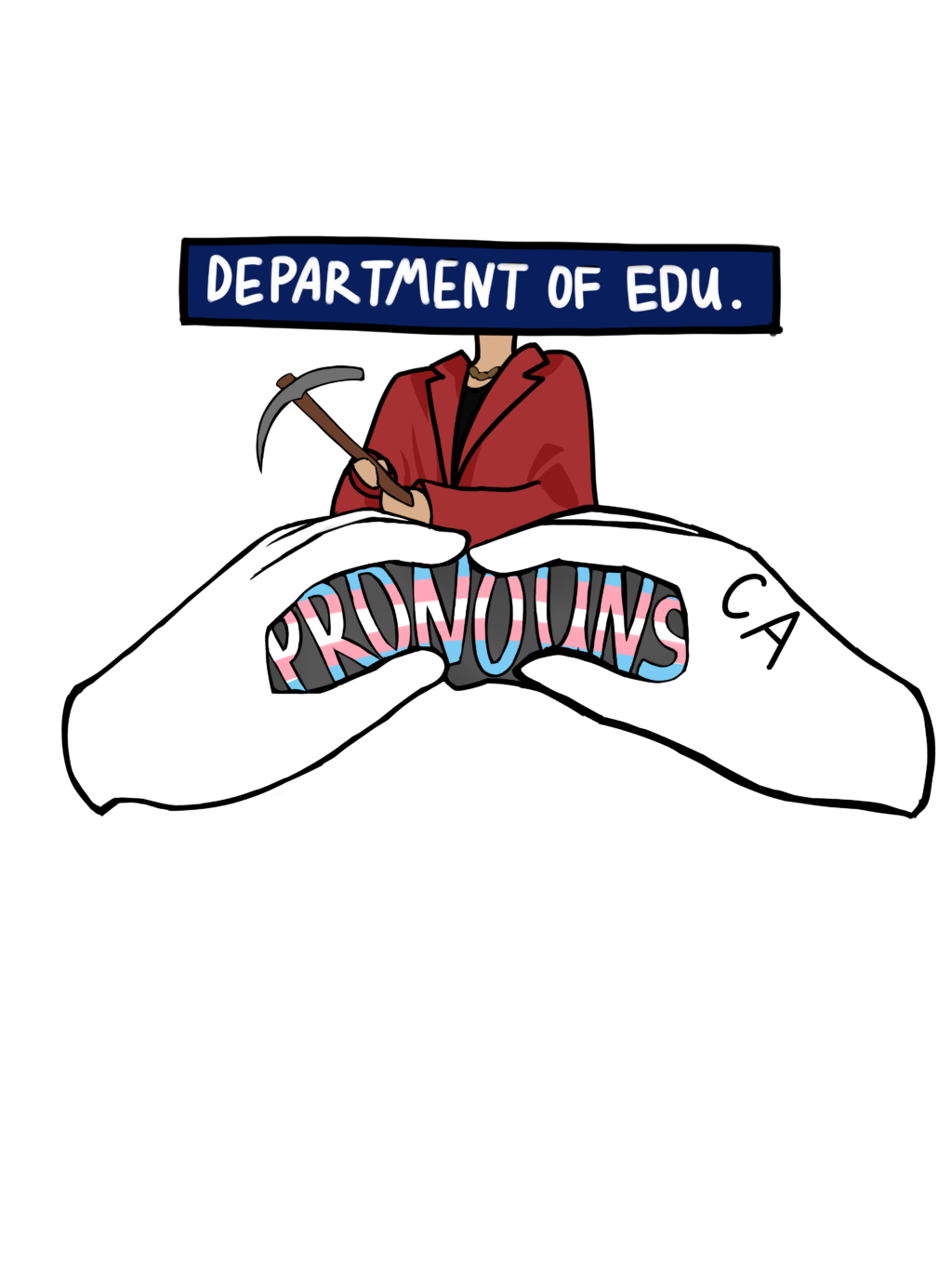
In July 2024, Gov. Gavin Newsom signed Assembly Bill 1955, prohibiting school districts from outing their students to their parental guardians. In March 2025, the U.S. Department of Education launched an investigation into violations of the California Department of Education for Family Education Rights and Privacy Act, which gives parents the right to view their children’s educational data. On March 2, the Supreme Court temporarily blocked the law, which is currently being reviewed in a lower court.
Outing is revealing the sexuality or gender of a person without their consent. However, the law was created to prevent schools from revealing the pronouns of non-cisgender students. Supporters of the law say that it protected students’ privacy.
“[The ban is] more for the protection of the students because there are students [for whom], if they are outed, it can become dangerous,” said Ligia Andrade Zúñiga, a San Mateo Union High School District board trustee. “Students have been abused or disowned from their families.”
With the ban blocked, some believed that students could be widely affected.
“I’m fortunate that my [family] is very supportive of me,” said sophomore Mckenna Lindberg. “[But] I have friends who … haven’t [come out to their parents] out of fear … and that’s what those laws protected. And now that [the law has been halted], that protection is no longer in place.”
In a press release following the investigation in March and before the Supreme Court ruling, Secretary of Education Linda McMahon said the federal government will hold California accountable and “restore parental rights.”
“It is not only immoral but also potentially in contradiction with federal law for California schools to hide crucial information about a student’s wellbeing from parents and guardians,” McMahon said when the investigation began. “The agency launched [the] investigation to ensure that students do not fall victim to a radical transgender ideology that often leads to family alienation.”
California was the first state to ban school districts from outing students to their guardians. Prior to this ban, seven or more out of the 937 school districts in California had notified parents if their child came out at their school.
Violation of FERPA can result in possible termination of billions of dollars in state education funding, which the DOE threatened unless the law was reversed. To resolve this, they proposed that the CDE notify all school districts that AB 1955 does not override FERPA, as federal laws take priority over state laws.
“We’re very fortunate because we only get two or three million [dollars in funding] from the federal government because we are a basic aid district, which means we rely mostly on property taxes,” Zúñiga said. “We have a lot more autonomy in our budget. [It is dangerous when the school is a] Title I school, which means they depend more on the federal government, [so] it’s a very high percentage of students that this will be affecting, and because of that, the majority of students will suffer.”
On Feb. 12, a federal judge issued a restraining order to temporarily block the withdrawal of funding. Attorney General Rob Bonta, who filed the lawsuit, argued that FERPA does not require schools to specifically out students to their parents, as the law does not mention gender identity. Questions of the law’s legality mainly center around whether parents have the right to view records containing information about students’ pronouns, as well as if some parents’ religious beliefs make the outing ban unconstitutional.
“This is a flagrant attempt by the [DOE] to intimidate the CDE and California’s local education agencies under the guise of enforcing FERPA,” Bonta said in a statement. “The Trump administration has produced no evidence that CDE is out of substantial compliance with FERPA or even a single instance where a school has failed to honor a parent’s request for student records. We will continue to fight to protect California’s students from unfair attacks.”
With similar lawsuits in Wisconsin, Massachusetts and Florida happening in December, three of the conservative Supreme Court justices have stated interest in hearing a case about a forced outing ban.