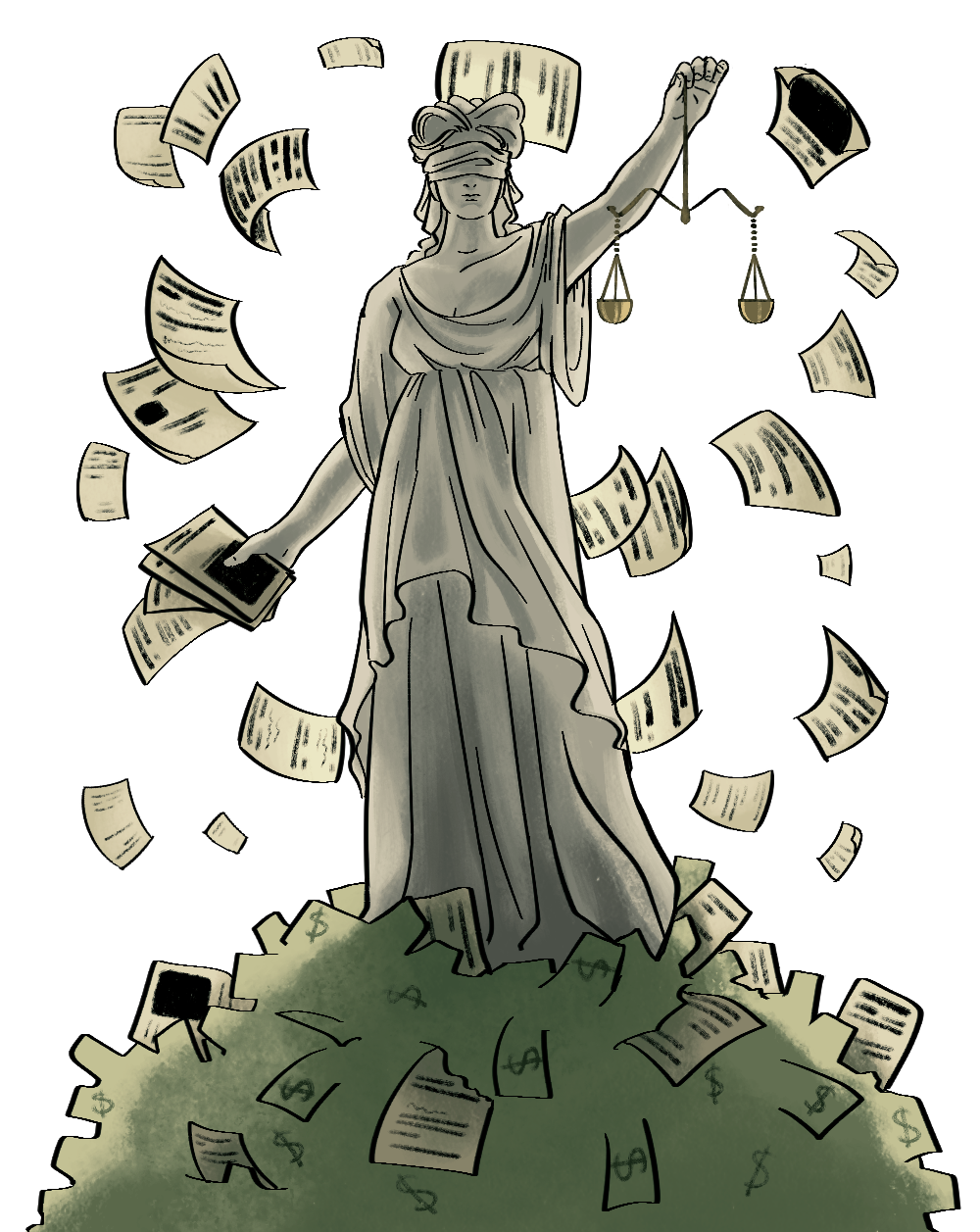
On Jan. 30, the Department of Justice released over 3 million additional pages under the investigation into the convicted sex offender Jeffrey Epstein.
These files, including 2,000 videos, 18,000 images and private email chains seized from Epstein’s devices provide further insight into both his previously covered up crimes from over 20 years ago, including sex trafficking and the prostitution of minors, and his life as acquaintance to many influential figures like billionaire Elon Musk, Meta CEO Mark Zuckerberg and President Donald Trump.
“People are very tired of seeing this … song and dance going on with [the investigation],” said junior Anjalika Khare. “[The officials] were holding the files above our heads and people got sick of that … [The investigation is] a circus, [with] the way Trump is also blatantly dismissing the files, saying, ‘Oh, this is not important. Can we move on to something else?’”
Trump, facing immense pressure from both Democrats and Republicans, signed the Epstein Files Transparency Act, which required the release of all the files so long as victims’ identity was obscured. The Transparency Act required the DOJ to make all non-exempt files public by Dec. 19, but they failed to meet this deadline, fueling anger among the public.
“The handling so far has been abysmal, to say the least,” said freshman Ryan Ford. “The president especially, and the higher-ups in Congress, have been flipping back and forth between the files existing and wanting to release them, or the files being a complete hoax … Either release it or don’t. Say they exist or say they don’t. Stop going back and forth depending on whether or not it helps your argument.”
Deputy Attorney General Todd Blanche said the delay was caused by the enormous volume of the files and the extensive redaction process, which was to ensure any identifying personal information about the victims or other such materials potentially jeopardizing the federal investigation was removed.
So far, however, the files follow no logical or chronological format, often featuring duplicates, and, much to the concern of victims and their families, haphazard redactions to different extents.
“The victims are not being brought to justice and the government is doing way too much to hide the perpetrators’ identities,” Khare said. “There are names being said but there is no action being taken against them. And that in itself is harming the victims, [by] causing more instability publicly.”
Following a recent lawsuit by the victims, the Department of Justice has agreed to remove any files jeopardizing the victims’ identities until any such details are properly redacted.
To many, the release of the new files confirm many suspicions about Epstein’s inner circle of the elite and wealthy.
“[The files] prove that those in power can get away with basically anything,” Khare said. “At this point you got a president of the United States who’s already been tried for felonies. You’ve got people like Bill Gates, other officials, CEOs, people who hold a bunch of money, people who have incredible influence over the social and political landscape, Elon Musk for example, [that don’t have] anything happening to them. That shows something very clear about society [and] it’s not very hopeful.”
As of now, the files do present some leads and confirm that many of Epstein’s connections maintained private communication even after his 2008 conviction, when he first pleaded guilty to a crimes. But most others present allegations and claims with no concrete evidence.
“[If the files are] more allegation-based, why aren’t we investigating harder?” said sophomore Rosie Mayor. “Why aren’t we going more in depth to confirm things? Why aren’t we trying to prove or deny the allegations?”
Many also believe the files prove some allegations regarding Epstein and his potential co-conspirators, especially Trump, may hold a level of truth.
“A lot of this stuff, it’s not hard to believe,” Mayor said. “If you see pictures of [Trump] and Epstein and … [if] he was [mentioned] 38,000 times in the redacted version, it’s a pattern of repetition. That leads me, and a lot of other people, [to] believe that obviously something is going on.”
Additionally, many of Trump’s opposition are wary of the declining interest of his supporters and the Make America Great Again movement in these files, despite previously supporting their release.
“Now that MAGA knows that … Donald Trump is in the Epstein files, they don’t want to admit their fault,” Ford said. “Because really, Trump being in the Epstein files has been one of the worst things to happen to their argument [supporting Trump]. Once they have found out that there is undeniable proof that he was involved [in Epstein’s crimes], they [will] deny it and be dismissive of it.”
Ultimately, many among the public want to see this investigation close in an appropriate way that not only brings the real events covered up by the Epstein files to light, but also delivers justice to the victims.
“Knowing that the people who caused you this trauma are going free, people who killed others are going free, [and that] people don’t care about this, I think that’s wrong,” Khare said. “The victims deserve to be free [and] justice deserves to be given to them.”