Winona Reif
According to the National Institutes of Health, sports injuries most commonly impact the musculoskeletal system, meaning that the majority of injured athletes receive either a fracture, dislocation, strain or sprain. While there are a few sports that are especially susceptible to injuries, they are a risk in every sport.
“Football definitely [sees the most injuries],” said athletic trainer Fredy Cedillo Martinez. “After that, I would say soccer. Everything else is basically around the same range.”
Injuries can occur under all sorts of conditions, even when playing sports non-competitively, and they may not immediately seem as serious as they truly are.
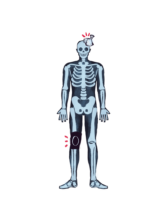
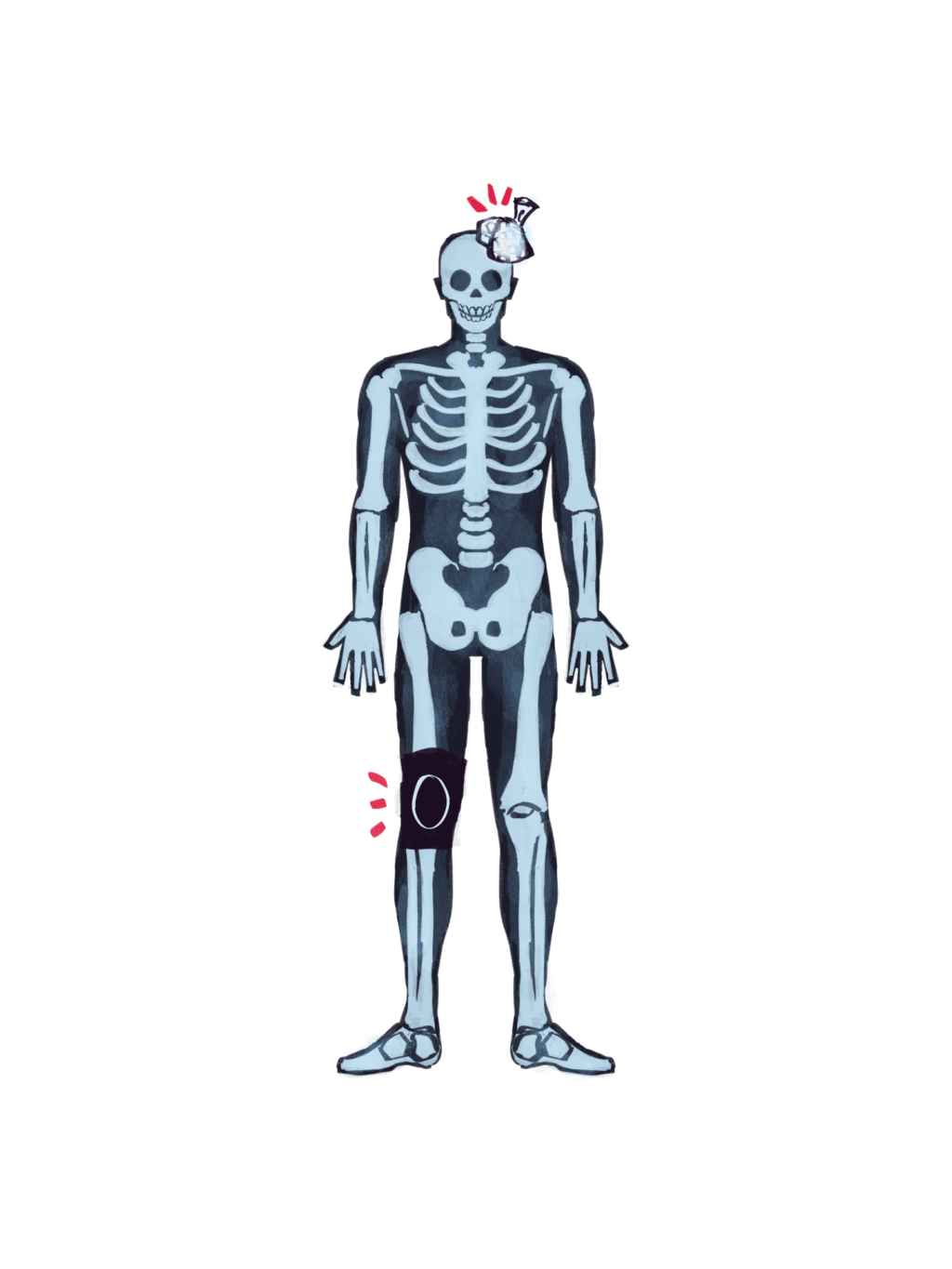
“I was playing tennis over the summer with my friend, and my knee kind of just started hurting, but it wasn’t to a point where I was alarmed, [so] I went a couple months with consistent knee pain,” said senior Hannah Qutteineh. “Eventually, my mom said I had to get an MRI, [and] I found out that I had a meniscus tear. That was surprising, because I was walking around and doing regular things with a torn meniscus, and I had no clue.”
For Qutteineh, the tear was a major setback not only in sports, but also in her ability to complete day-to-day activities.
“I was on a brace for three [or] two months,” Qutteineh said. “My biggest concern was not being able to do simple tasks, like going to work or walking from class to class.”
While there are many difficulties and struggles that come with an injury, several techniques exist that encourage a speedy recovery.
“If you’re in the early stages, make sure you’re icing, [doing] the appropriate compression, [and completing] whatever mobility exercises [you’re] provided with,” Martinez said. “If you do those at home, you’re more likely to advance quicker in your recovery than someone who does nothing at all.”
In fact, Cleveland Clinic reports that these steps provide immediate relief, as they help reduce inflammation, pain and bleeding in soft tissues.
Other than musculoskeletal injuries, the concussion is another commonly seen injury that can arise in most sports. During a basketball game, freshman Anna Zlogar received a concussion after taking a hard fall due to unsafe court conditions.
“I was going for a wide open layup, but … I slipped, falling on my left side and blacking out for five minutes,” Zlogar said. “[I got] a medium concussion, and I had a huge bump on the side of my head. The recovery [took] about a month.”
Zlogar reviews some less common recovery methods she used to shorten her time away from sports.
“I had this one thing where I would take a whole ice bath for five minutes,” Zlogar said. “It would help my muscles relax. Also, [I did] some serious heat therapy on my legs, and that would really help me get better.”
However, return can also be delayed when athletes make the wrong choices mid-recovery.
“[People] try to return too quickly,” Martinez said. “They think … that they’re good to do normal sport activities when [they] actually have to go through a whole protocol of being able to do every single motion of your body in order to return to sports.”
While athletes are away from their sport, it’s easy for them to get demotivated, but it’s very important that they don’t lose sight of their goal to recover and return.
“[I] try to change [the exercises] up weekly or daily, just so [the athletes] don’t go through that repetitive routine every day of doing the same thing,” Martinez said. “I come up with rehab exercises that are going to target the same goal, but in different ways.”
Sophomore and soccer player Kayla Sims reflects on what helped her stay motivated when she was injured.
“My teammates always encouraged me and [told me I’d] come back ten times stronger,” Sims said. “The mental part was really hard, but they helped me to push through it.”
As an athlete, preventing injuries calls for consistent body maintenance. Even when in perfectly good shape, taking these exercises seriously is essential.
“Make sure you are doing the proper training in order to sustain the requirements of your sport,” Martinez said. “Doing the proper recovery, sleeping well [and having good] nutrition all play an important role in injury prevention.”
After injured athletes fully heal and return to sports, their experience makes them more aware of their bodies. As someone who once attempted to go back before she was fully recovered, Qutteineh feels this profoundly.
“I thought I could handle [the pain], but I definitely couldn’t,” Qutteineh said. “[Now], I am more careful with my body and don’t push my knee too much.”
With proper care and persistence, most injuries can be overcome.
“Just keep going,” Zlogar said. “Don’t stop trying to get better, because trust me, it’s worth it.”