Vanessa Chan
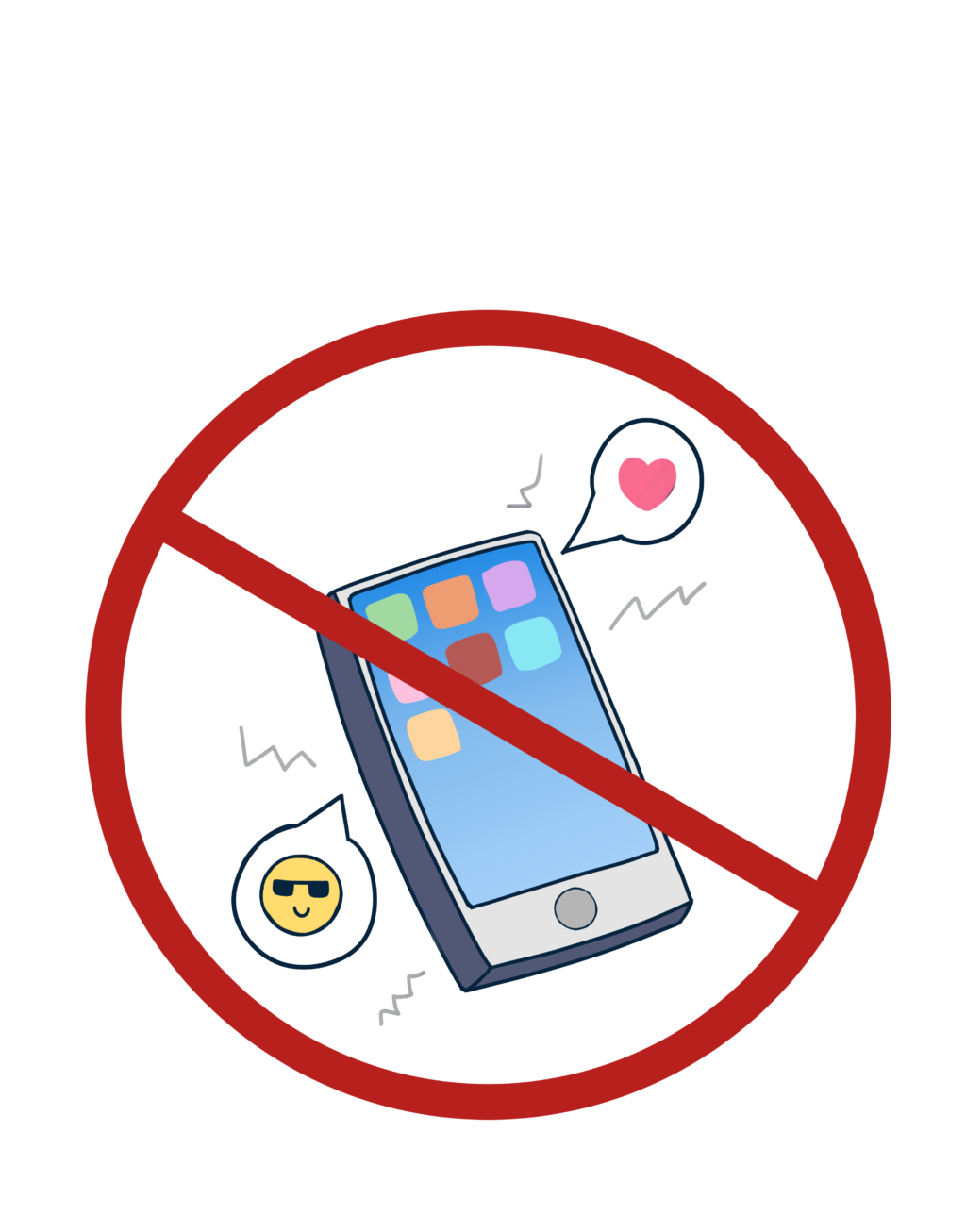
On March 26, the San Mateo Union High School District Board of Trustees voted unanimously to implement a district wide bell-to-bell phone policy starting the 2026-27 academic year. This decision was made in accordance with the Phone-Free School Act signed by Gov. Gavin Newsom in 2024, which requires school boards to adopt policies limiting or prohibiting phone use in schools before July 1, 2026.
The policy restricts phone use from the first bell to the end of the school day. Some exceptions will be made in specific circumstances, such as for students with approved accommodations or medical, technology or translation needs.
This was a significant departure from Booker’s recommendation, which suggested keeping the current phone policies, citing a relatively flexible framework to restrict phone use during classes that could be enforced to varying extents by school, while also reducing expenditure, infrastructure and training required to institute a phone ban policy.
“[Initially] I was not on board at all [with the phone ban policy],” said SMUHSD Trustee Ligia Andrade Zúñiga. “But reading through the supporting documentation that I received, the different mental health studies and then [talking to] a group of teachers and parents and some students about it, I leaned more towards [it].”
In fall 2024, the committee corroborated concerns related to student academic performance due to phone use, cyberbullying, impacts on socio-emotional development and lack of face-to-face interactions.
Additionally, two Panorama surveys in the 2025 spring and fall semesters gathered general opinions from teachers, parents, guardians and students regarding the current phone policies, and any problems encountered with it. 84.7% of students and 56.6% of parents/guardians agreed that the current policy restricting cell phones during classes, but not breaks, worked sufficiently.
“I appreciate the flexibility [of the current policy],” said junior Emily Ma. “[During] school hours, I often use my phone to contact [club] members, coordinate events for Leadership that are happening, … as well as to contact my parents in case I need to coordinate pick up times [or] ask them about something.”
In contrast, 66.1% of teachers favored a bell-to-bell phone policy, and some students, like freshman Isabella Proemsey, also acknowledge positive outcomes a phone ban could bring.
“[It’s] difficult when the teachers have to keep asking kids to put their phones away,” Proemsey said. “[If] they’re in the middle of a lesson or explaining something, [the teaching] gets really choppy.”
While the committee itself estimated that costs could require anywhere between $150,000 to $200,000 per year, following evaluation of various phone case models, the QuietCase model was recommended as best suited to the committee’s considerations, when considering affordability, durability and signal blocking strengths, while Yondrs emerged as the second choice.
A decision that the committee had a difficult time agreeing on was phone use during emergency situations.
“[In] an emergency, … parents will be contacted immediately,” said Dean Donna Krause. “There would be a phone blast that would go out …[Also] if there is an emergency, you don’t have time to [get your phones back].”
Krause noted that whether students would receive their phones back was still a pending decision.
Regardless, some students doubt the effectiveness of the protocol, especially if families depend on phones as a primary method of communication. According to the fall 2025 Panorama Survey, 48% of students reported using their phones throughout the school day to communicate with parents or guardians.
“[My] parents [are] not really into technology that much,” Vasquez said. “I’m usually the one telling them what to do and how all this school stuff works, [including] technology. So me calling or texting them would be way easier than them getting an email from the school, especially since their first language isn’t English.”
The Board also acknowledged concerns about hindering the development of crucial digital media literacy skills, especially in an era when navigating technology in a healthy manner is emphasized. Some students share this sentiment.
“When we exit the school environment, there won’t be anyone who’s collecting our phones from us and locking [them] away so that, as [adults], we’re focused on our studies or work,” Ma said. “And really it comes down to whether the individual has the motivation and the dedication to maintain that discipline. That’s a really important skill that we should be building up in school, learning how to rely on [our] own minds to resist those distractions.”
In response, the District also plans to implement a digital literacy curriculum alongside the policy, addressing social media and online safety, mental health impacts and healthy device boundaries. Additional details are still underway.
Overall, the new phone policy is intended to be a blanket policy across the district, with specific implementation varying by each site.
With mixed opinions and continual updates being made to the phone policy that will remain in effect for five years until its presumed next revision, the outcomes of these changes in SMUHSD remains to be seen.