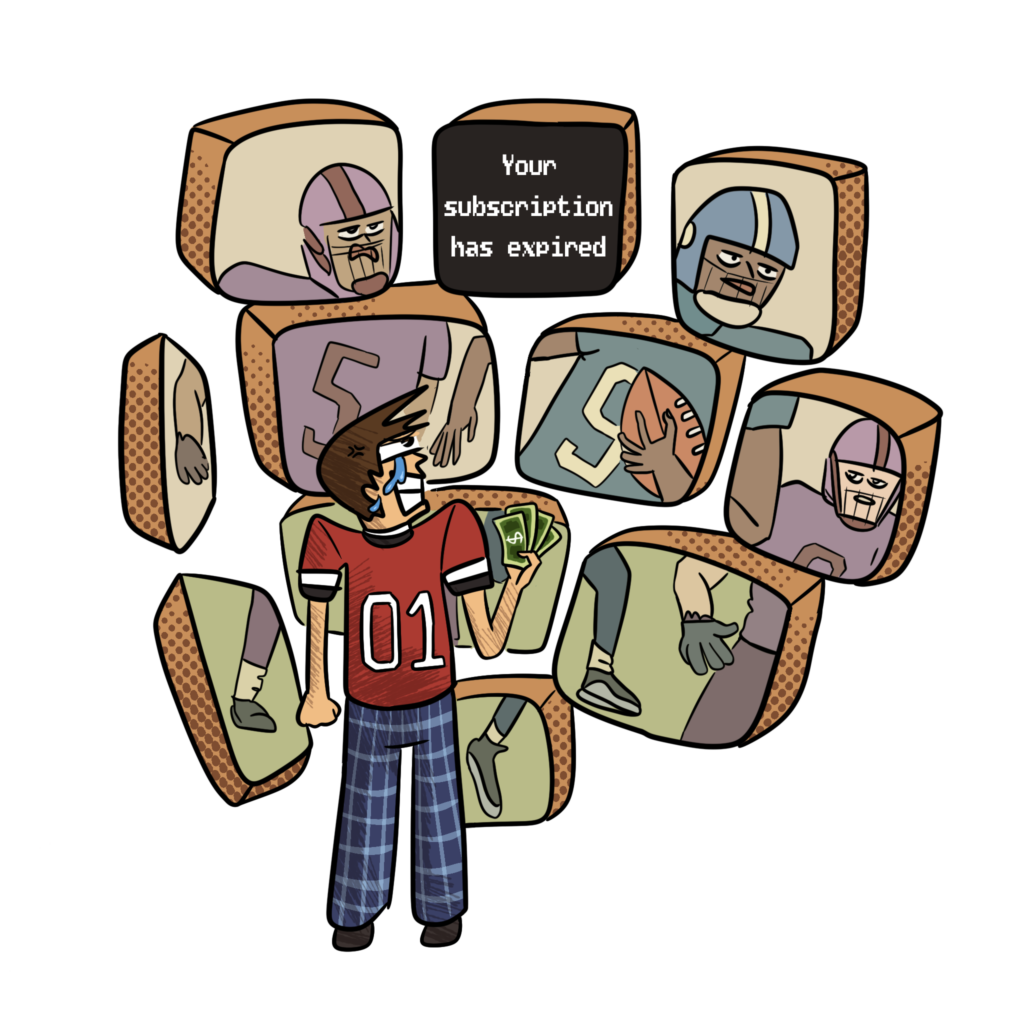
On Thursday, Sept. 10, the San Francisco 49ers opened their season in Melbourne, Australia in a marquee matchup against their rival Los Angeles Rams. For anyone who follows the National Football League, the game was a must-watch, featuring two powerhouse division rivals both expected to be Super Bowl contenders in February. However, for some fans, the must-watch matchup turned into a can’t-watch matchup, as the game was exclusively broadcast on Netflix. The streaming service owns the rights to five NFL games this year, including one the day before Thanksgiving, two on Christmas day and a potential playoff-altering Week 18 matchup in January, all big draws for fans around the country. Unfortunately, because they only air on streaming platforms, many people will be unable to watch these matches. However, fans should not be forced to pay for streaming services in order to watch these games.
Netflix isn’t the only platform with NFL games this year. Amazon Prime Video, which began paying for exclusive rights to stream Thursday Night Football in 2017, will continue to be the only place to see games that occur on Thursday evenings.
Die-hard sports fans now find themselves needing to pay multiple subscriptions to watch all of their team’s games in a season; however, devoted supporters of a team shouldn’t have to pay for several separate platforms to see their local franchise play.
The issue doesn’t stop at football. Major League Baseball games played Friday nights are exclusively streamed on Apple TV. Over the past few years, Netflix has been the only home of certain lucrative one-off events such as the MLB home opener and a pair of boxing matches between influencer-turned-fighter Jake Paul and former heavyweight champions Mike Tyson and Anthony Joshua, among other combat sport events.
Except for Major League Soccer, which streams all of its games on Apple TV, no major league United States sports offer a subscription that allows fans to watch matches in a season.
The 49ers will play one game on Prime Video and one game on Netflix this year, with the remainder of games airing on cable networks. The price of subscriptions to two streaming services, in addition to cable, begins to grow into a hefty monthly entertainment bill, especially just to watch one local team.
Apart from the cost, the need for multitudes of streaming services can quickly become a logistical issue for fans trying to watch games.
“The only event that I wanted to watch on Netflix was the MLB All-Star game,” said sophomore Timothy Low. “[It was] a hassle because I needed [find my] login information, [and] it’s hard to do that [sometimes]. I did [watch it] but I only saw the home run derby because it took me a while to get my login.”
Fans pay for merchandise, buy tickets to games and provide leagues and teams with the support that propels them to these TV and streaming deals in the first place.
Franchises, in turn, owe their fans for their commitment. Front offices work to build winning teams, and players work hard at practices each day. Owners, who see the greatest financial reward of anyone in the system, must uphold their end of the deal, by allowing their fans to watch games easily.
The average NFL team was valued at $7.1 billion in 2025, according to Forbes. On Aug. 12, the Los Angeles Lakers were sold for $12.5 billion, pushing the NBA’s average team valuation up to $6.68 billion.
Forcing fans to pay for a half-dozen services to watch games is a move made out of greed. Wealthy leagues do not need to strike deals with the highest bidder for every game.
“I get their purpose,” said junior Warren Atkinson. “They’re just trying to make more money doing this … [but] they should let their fans watch [games].”
Wealthy leagues should not be forcing fans to pay for multiple streaming platforms just to watch their favorite team. The practice creates financial and logistical problems for people who want to support their club. Leagues must put their fans before their profit and stop locking games behind streaming subscriptions.