Photos courtesy of Wikimedia Commons and Creative Commons
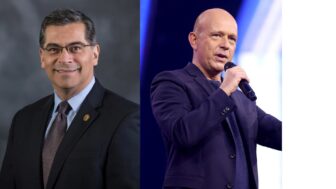
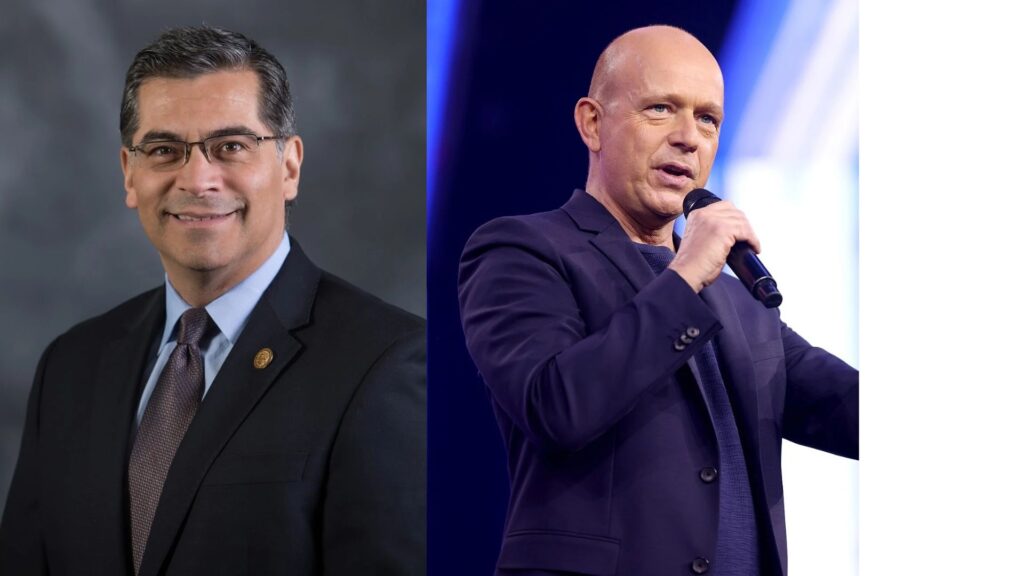
On Nov. 3, California voters chose Xavier Becerra, a Democrat, over Steve Hilton, a Republican, for governor. As of Nov. 5, Becerra has 65.8% of the vote and Hilton has 34.2%. In Aragon’s mock election, Becerra won 81.1% of the vote.
Becerra has served in the U.S. House of Representatives, as California Attorney General and U.S. Secretary of Health and Human Services under the administration of former President Joe Biden.
Hilton served as a top advisor to David Cameron in the U.K., who would later become Prime Minister. He is also a professional advertiser, taught at Stanford and previously hosted a program on Fox News. He has portrayed himself as not a “career politician.”
During several interviews and social media messages, Becerra reaffirmed his commitment to affordable healthcare in California, stating that it will be his main priority if he is elected. He aims to expand access and coverage to Californians, particularly people in underserved communities.
Specifically, Becerra has called for dedicating more state funds to universal healthcare coverage. In addition, Becerra also plans to focus on strengthening the healthcare workforce by investing in nurses, doctors and caretakers.
Becerra has said he intends to write executive orders for state agencies to provide continuous coverage for Californians unable to receive healthcare coverage due to federal funding cuts from the One Big Beautiful Bill Act. He has stated that he will direct state agencies to protect immigrants’ access to healthcare, maternal health support and protect reproductive rights. In addition, Becerra plans to evaluate the needs of rural communities and hospitals, and intervene to reduce closures.
However, some are concerned about the financial cost necessary to implement universal healthcare.
“My question is, how are you going to pay for it?” said Lee Miller, a political science professor at the College of San Mateo. “There’s a limited ability of the state to raise taxes because if they raise taxes too much on corporations, the corporations could just move their operations out of the state … It’s also very difficult to raise taxes in California because various constitutional provisions enacted by voters over the past half century or so … It’s a real challenging issue to solve in the state when the state doesn’t have a budget surplus where they have a bunch of extra money to spend.”
Hilton also discussed healthcare in his campaign, but had different plans for improvement. His plan included giving families more control over their child’s healthcare information, personalizing support for people with autism and prioritizing using technologies, such as wearables, sensors and AI, to aid medical professionals when reviewing data.
Some do not believe AI should have large involvement in medicine.
“AI can be helpful to a certain extent,” said Middle College senior Gia Ocon. “But to use AI in medicine [is questionable because] AI will never be smarter than [humans]. AI should not be used in a space where it needs human thought and [requires people] who went to college for degrees.”
Hilton believes that scientific information, alongside data shared from people with chronic conditions, can be used to help medical professionals evaluate changes in people’s conditions over time. He believes that the U.S. healthcare system is faulty due to the lack of in-depth time spent between doctors and patients. His plan involved creating a “People-First Healthcare Commission” which would create projects meant to evaluate, understand and alterhow California’s healthcare system works and prevent complex chronic diseases and illnesses. Doctors, universities, technology companies, privacy experts, scientists, parents and patients were to be on the Commission, with Hilton stating that those affected by chronic disease should determine which questions were asked and which issues would receive priority.
Another priority for Becerra is the high amounts of homelessness in California, which he has attributed to insufficient mental health treatment; he has said that he will implement every reform detailed in Proposition 1, which authorized bonds for housing and mental health support. Further, he states he will declare a state of emergency for housing and launch public outcome dashboards to track costs and housing retention.
Similar to his healthcare plan, Becerra finds prevention to be the most important solution, implementing rental assistance by creating a funding stream from California’s homelessness response and supporting eviction defense as well as foreclosure prevention. Becerra has also stated that he will expand shelter capacity and permanent housing.
During his campaign, Hilton said that he would end mass homelessness by the end of his first year in office. He planned on doing so by building homeless recovery centers, which would have included meals, beds, showers and medical staff to provide psychiatric help for those who need it.
“[Hilton’s] homelessness [policy was not] very realistic,” said junior Allison Lin. “Getting rid of [it] is not possible. I know he [wanted] to bring gas prices down, but you have to bring prices down [in other areas of life], especially housing prices.”
California has consistently leaned Democratic in past statewide elections, making Becerra’s win unsurprising for many. His win is still historic, though, as he is the first directly elected Latino governor of California.