Mi Nguyen
On July 1, changes made to the Free Application for Federal Student Aid for the 2026-27 school year went into effect as part of the One Big Beautiful Bill Act. The FAFSA is the primary federal aid application filled out by high school seniors, college undergraduates and graduates who are looking to qualify for student aid, student loans, scholarships and grants for funding higher education.
“It’s a graduation requirement to either fill out a financial aid application or opt out, so we work a lot with students, especially in senior year,” said Aragon Career and College Advisor Mary O’Reilly. “We encourage students to do it because [they] may not know that they may qualify for some financial aid, and this could help them with college access. [For] students where [college] may be a financial burden and something that they’re worried about [is] the money, this could open up some doors for them.”
Several students believe that the financial cost to attend college is unnecessarily high and can pose a significant barrier.
“[The high cost of college is] partially [because] schools need money to be able to fund themselves and to be able to do a lot of the really cool things that they do, but it’s also … [that] they [want] … to find ways to make people pay more because it means that they get more money,” said junior Mckenna Lindberg. “The [application process] of today’s schools makes the decision very hard, and it forces a lot of people who would have really enjoyed going to college into a situation where they are unable to go because of financial reasons.”
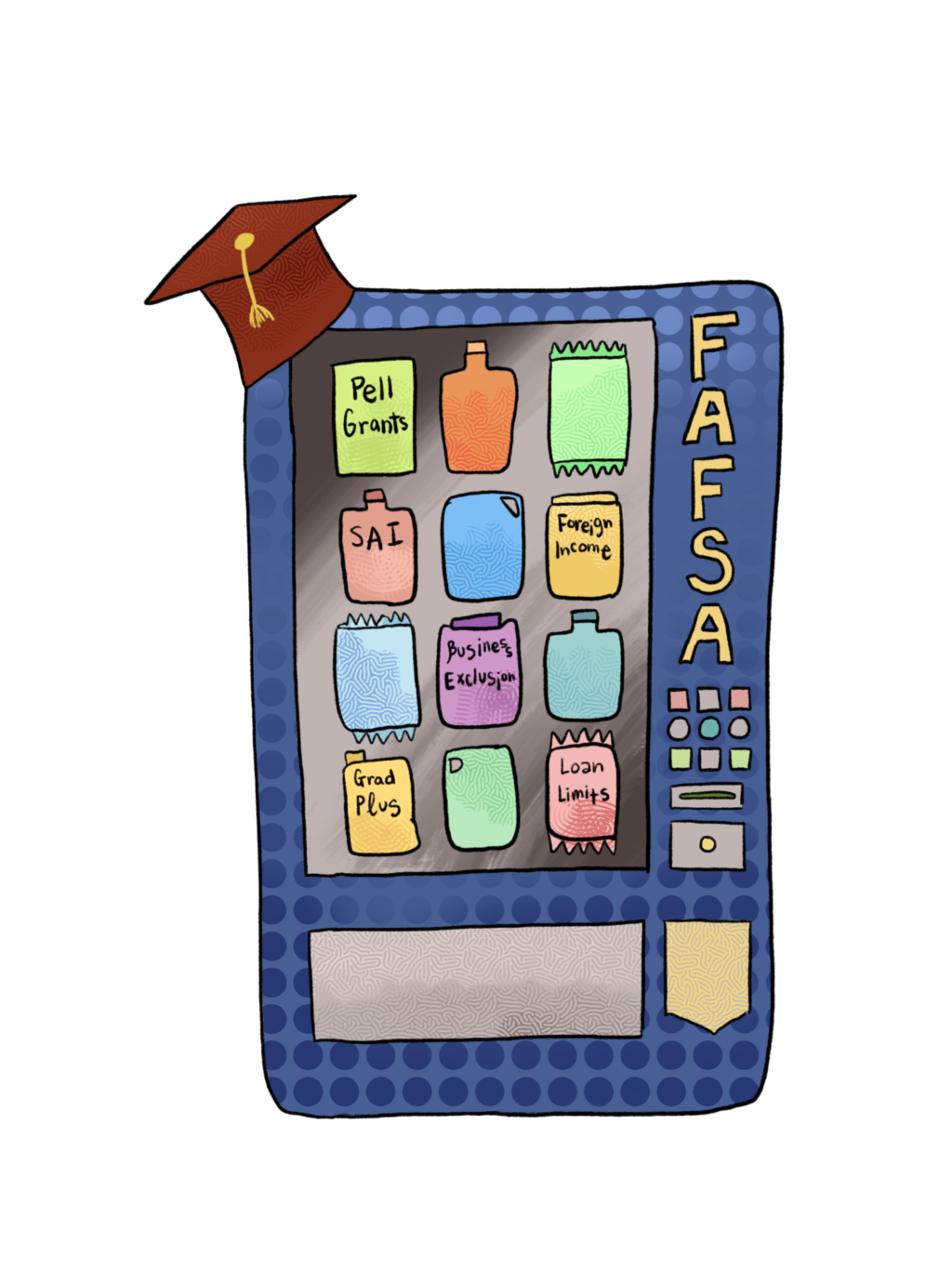
One of the biggest changes to the FAFSA application and requirements regards the Federal Pell Grant, which is need-based aid given to students without any necessity of repayment. Now, if the full cost of attendance is covered by non-federal scholarships and grants, students will no longer be eligible for a Pell Grant. Student-athletes on full ride-scholarships are one of the main groups affected by this change.
A student’s financial need is based on their individual Student Aid Index, which is a formula-based number spanning from -1500 to 999999 that is calculated based on a family’s total financial resources minus their living expenses. Pell Grant eligibility depends on the SAI amongst other factors like whether a student is part-time or full-time. Because a SAI of -1500 to 0 signifies that more financial need is necessary, a student is more likely to receive the maximum Pell Grant. Positive SAI values indicate a student’s eligibility for a reduced Pell Grant, with less likelihood of receiving a full Pell Grant. With the new legislation however, a cap to the SAI has been introduced.
According to the Federal Student Aid Handbook, a student cannot receive a Pell Grant if their SAI is equal to or more than double the maximum Pell Grant amount that can be awarded to a student that year. For example, this year, the maximum Pell Grant amount is $7,395 for 2026-27, and thus students with a SAI equal to or greater than 14,790 are ineligible for a Pell Grant.
This change, along with the mandated inclusion of foreign income when students list their income on the form and more weight placed on asset wealth, has closed the “Pellionaire Loophole,” a term coined to describe how low income students and families who possessed considerable assets were previously allowed to receive Pell Grants because disclosures were previously not required.
With many seniors starting to fill out the FAFSA forms this year, these alterations may affect the amount of grant money that will be given out to students and the amount of financial aid received.