Vanessa Chan
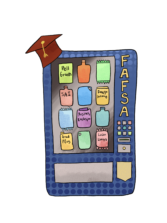
After a long day, a trip to the vending machine can feel necessary. Whether it’s a bag of Sun Chips or a pack of Pop-Tarts, many students don’t think twice before paying for a treat. Within seconds, the snack drops. No cash exits a wallet, and no coins clatter. There is a brief digital confirmation, and the transaction is complete. Moments like this are so common that they rarely invoke reflection, yet they represent a major shift in how people experience money.
Money appears in daily life so frequently that its nature is often glazed over. At its core, money only “works” because people collectively agree that it has value. Like numbers, it’s an abstract concept, something intangible that exists because society believes in it.
“For a long time, people used to barter for things, meaning trading one thing for another,” said Jon Felder, Economics and Advanced Standing Modern World History teacher. “And there were commodity monies, like gold or other precious metals or items that were accepted for money. But then people realized over time that carrying a bunch of gold around was very inconvenient, whereas paper and coins are really portable.”
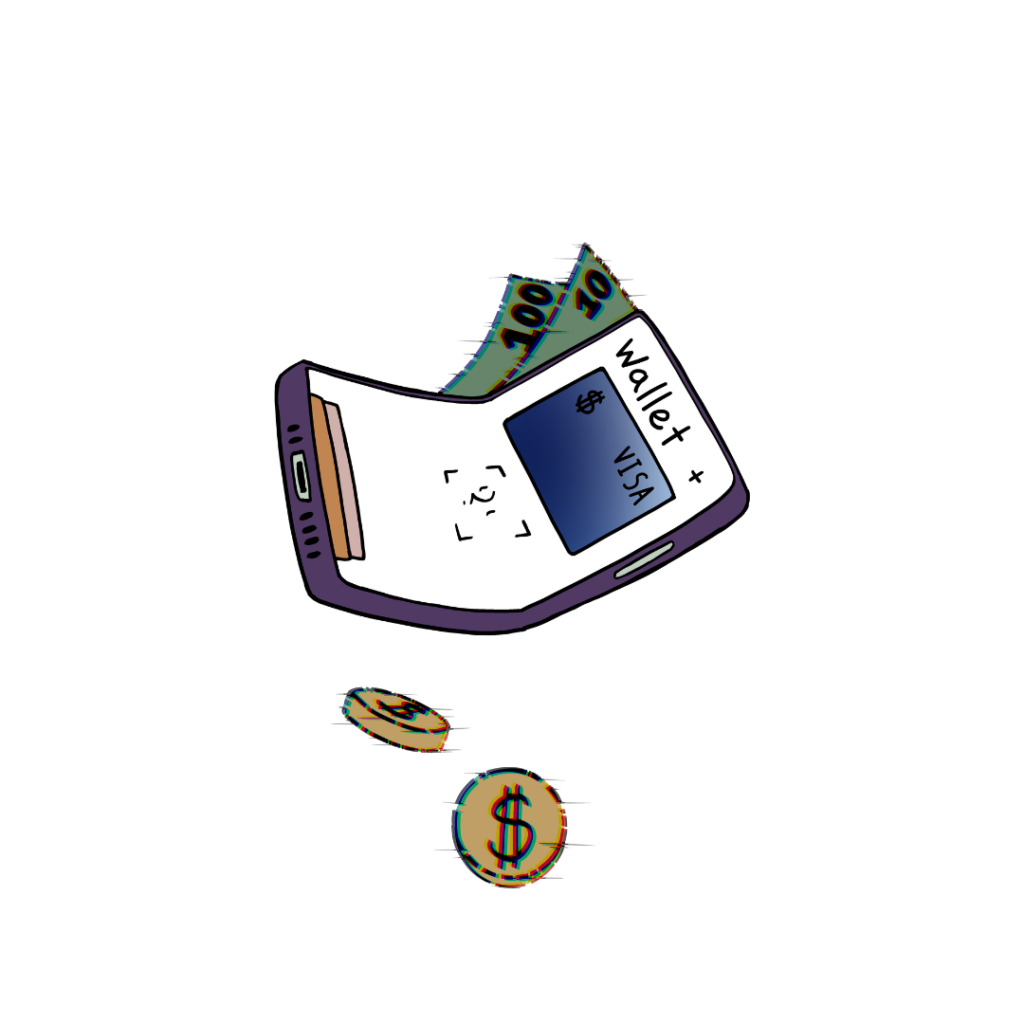
Money has taken on different forms, but the evolution highlights the fact that money has never been about the physical object itself, but about trust and shared belief. That shared belief underlies modern currency, even as its form changes. Today, the dramatic shift from cash to digital money marks a transformation in how people interact with value. Students at Aragon use platforms like Venmo and Apple Pay daily, often without thinking about the implications. Transactions that once required physical exchange now happen instantly and invisibly.
“I don’t check my digital cash often enough [to know] the amount of money that I have,” said senior Cameron Ngai. “Even though it’s a little weird not knowing how much cash I have on a daily basis in my wallet it’s maybe more convenient to have it all on an app”.
Many agree that digital balances bring an aspect of convenience to receiving or spending money, but without the tactile experience of holding cash, money becomes less real. This tension between convenience and awareness defines the modern relationship with money. But despite its convenience, digital currency is not universally embraced.
“I dislike that credit card companies gouge vendors with three to four percent fees per transaction,” said Kris Reiss, Compressed Math 2 and Computer Science teacher. “For small transactions, it ends up being more than three percent, so when I go to the farmers market, which I go to every weekend, you have awesome small vendors, and I carry cash, so I can just give them cash.”
The psychological effects of digital currency extend beyond simple awareness. When money becomes invisible, consumer behavior changes. In recent years, a phenomenon jokingly referred to as “girl math” has become popular. Girl math includes behaviors such as thinking something is basically free if it’s under a certain price, or justifying purchases as a “reward.”
“I would define girl math as: If you buy something, it doesn’t actually count as you buying anything,” said sophomore Donya Paz. “For example, if I buy something and return it, then I pretty much save money. Then, I have extra money to buy more things.”
While humorous, this sexist trope reveals a deeper pattern of physical cash purchases feeling less consequential, making it easier to justify unnecessary spending.
“What it is, is rationalizing your purchase,” Reiss said. “Every human that buys something they do not need is going to rationalize it, either not think about it or give some pseudo logic.”
Beyond humor, these habits reflect a shift in how people perceive spending. When payments are reduced to “just” a tap, the connection between purchase and financial loss becomes less immediate. Without the physical exchange of cash, the cost of spending feels more abstract, making it easier to justify purchases and, over time, increasing the likelihood of overspending.
Returning to the vending machine, the ease of a digital payment masks the complexity behind it. Even though money may no longer be something students willingly hold in their pockets, it continues to shape their choices, opportunities and priorities. Money works not because of what it is, but because of what people believe it to be, and that belief remains as powerful as ever.