Eva Ludwig
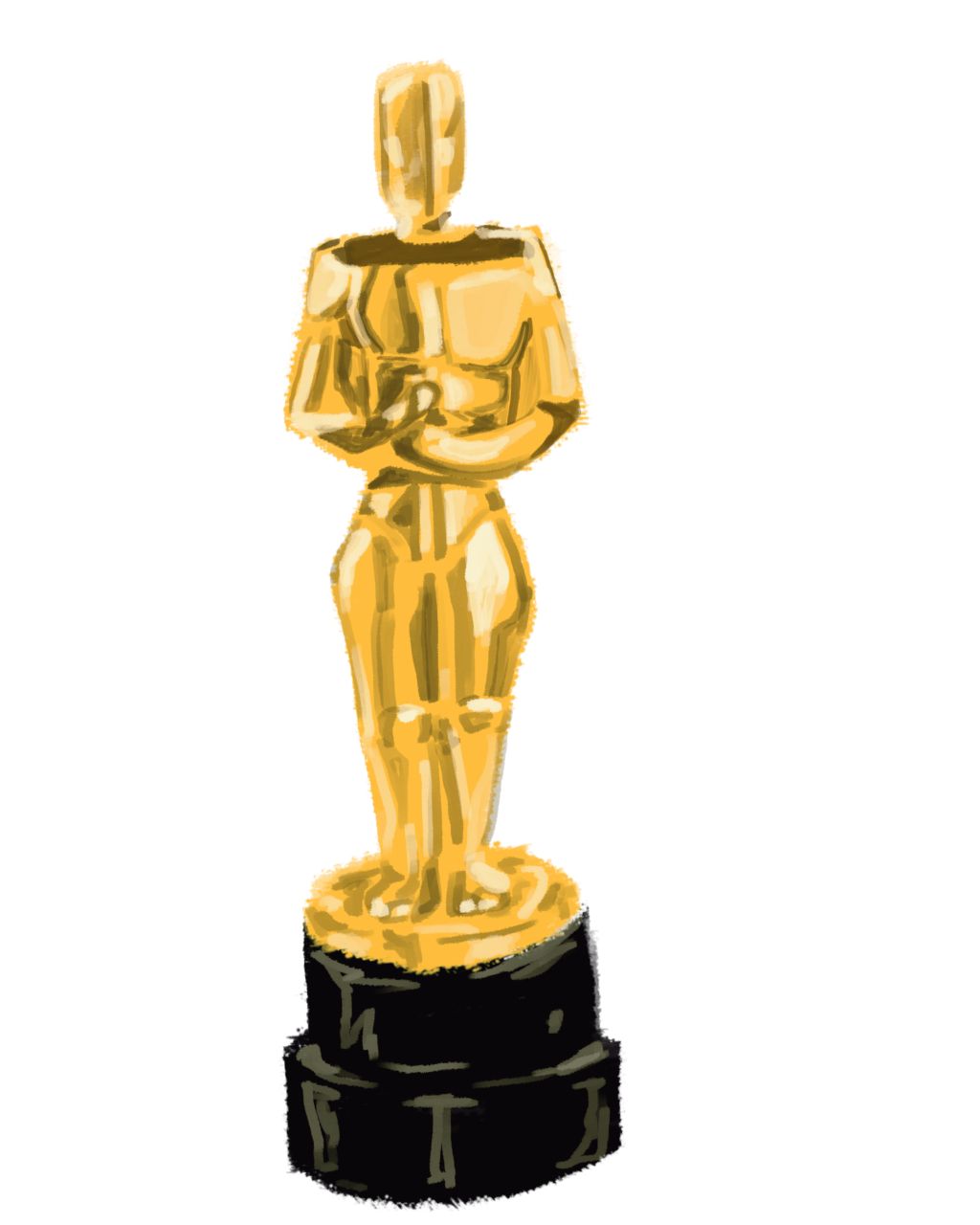
I’d spent the past few weeks watching major contenders and convincing myself I had a good sense of how the night would go, but as the camera panned across the nominees’ faces, I realized I wasn’t that confident about who would win. Going into the ceremony, I predicted Timothée Chalamet taking Best Actor, “One Battle After Another,” “Hamnet” and “Marty Supreme” all taking major categories, and “KPop Demon Hunters” winning Best Animated Feature Film and Best Original Song. Throughout the ceremony, I felt the Academy was deliberately pushing against expectations, creating a night much more unpredictable than what I had anticipated.
The hosting was a large part of that unpredictability. I thought the host Conan O’Brien was wonderful, as he was both sharp and confident. However, some of the pacing felt uneven, and some jokes landed while others didn’t. One of Conan’s most successful jokes was a joke about tightening security, directly jabbing at Timothée Chalamet’s controversial comments about opera and ballet. However, one joke that didn’t land was his joke about films like “Hamnet” and “Bugonia” sounding like lunch meats. The hosting and jokes did not make the ceremony worse, but it didn’t make it better either.
“Conan O’Brien is a great comedian,” said senior Rory Thomsen. “There were some pretty good jokes and he wasn’t afraid to poke fun at some of the attendees, [but] a lot of [his] speeches were pretty long.”
However, O’Brien’s personality did help keep the show from dragging on even more. I thought his style was what the ceremony needed to stay afloat.
“He’s sharp, self-deprecating,” said sophomore Mohan Sulur. “You need that kind of energy to survive a four-hour broadcast without losing your mind.”
I was pleasantly surprised with Michael B. Jordan’s win for Best Actor with “Sinners.” I thought Timothée Chalamet had all but locked the award up, so I was initially caught off guard. But the more I thought about Jordan’s win, the more it felt completely right. After years of being overlooked for his career-defining performances, this win felt like the industry finally acknowledged his impact on modern cinema. Michael B. Jordan’s acceptance speech turned what initially felt like an upset into one of the most deserved and memorable moments of the night.
“Michael B. Jordan finally holding that Oscar [and] the standing ovation felt so earned,” Sulur said. “It wasn’t just a win for the movie. It felt like a win for his whole career.”
There were also other exciting upsets, such as Amy Madigan’s Supporting Actress win for “Weapons.” It marked a rare historic recognition of a horror performance. However, I felt like she wasn’t on screen enough to develop a high-caliber performance and this was also the movie’s only nomination. It made me wonder whether the Academy was rewarding the performance itself or the cultural moment around it. There were also several brutal snubs, like when frontrunner Delroy Lindo in “Sinners” lost to Sean Penn in “One Battle After Another” for Best Supporting Actor. I thought that Lindo’s character was more layered and grounded in the story of his film, while Penn was more one-dimensional and did not hit as hard. Another brutal snub was with “Marty Supreme,” which entered the night with nine nominations, and walked away with zero wins, joining the list of worst shutouts in Oscar history. I felt that this highlighted the Academy’s distaste for the unlikable antihero, despite the greatness of the film itself.
“‘Marty Supreme’ not winning anything was a bit of a shock,” Thomsen said. “It had some pretty incredible cinematography and performances … and I would have liked to see it win something.”
One overlooked contender was “Hamnet.” Despite entering the night with five major nominations, it walked away with a single win for Best Actress, reflecting a broader trend of the Academy favoring spectacle over subtlety.
“‘Hamnet’ getting zero love in the big categories, it’s devastating,” Sulur said. “It felt like the Academy got blinded by ‘One Battle After Another’ hype and forgot that other movies actually exist.”
There were moments that made the night feel unscripted, historic and celebratory instead of a heavy tension of the awards race. Autumn Durald Arkapaw’s historic win for Best Cinematography, becoming the first woman ever to win the category, earned one of the loudest reactions of the night. Her work was visually stunning, and this win felt like a win for the entire industry. At the same time, the seventh tie in Oscar history happened in the Live Action Short category between “The Singers” and “Two People Exchanging Saliva.”
“I literally jumped off my couch,” Sulur said. “Seeing two winners on the stage for the same award is so rare. It was pure chaos in the best way.”
However, one awkward moment occurred when “KPop Demon Hunters” won Best Original Song, as the production team cut off the speech and went straight to the music. I felt this was very disrespectful; this was a technical blunder that traded a meaningful global milestone, and what could’ve been the most memorable speech, for five extra seconds of broadcast time.
“Cutting off ‘KPop Demon Hunters’ was so painful,” Sulur said. “You … invite a global sensation, then play the wrap-it-up music 30 seconds into a historic speech.”
By the end of the night, I realized my expectations for the Oscars had shifted. I don’t watch hoping the Academy will reflect my own tastes, I watch to see what the industry chooses to celebrate. Even when I disagree with the results, I’m still drawn in by the spectacle, the emotion and the stories behind each moment that is enough to keep us talking the next day.