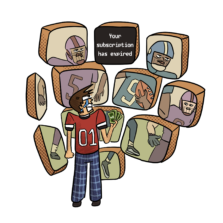
Freshman athletes spend hours every week balancing practices, homework and the pressure of adjusting to high school — yet unlike sophomores, they still are not allowed access to study hall. For many students, that policy no longer fully reflects the reality of how demanding freshman year has become.
A freshman athlete’s day often stretches far beyond regular school hours. Between classes, practices, homework and studying, many students are left with little time to recover before doing it all again the next morning.
“I’m in track and field, so there’s practice every day after school during the season, and it lasts until five or six,” said freshman Elise Wei.
That schedule can quickly become exhausting, especially when athletes are also required to participate in PE during the school day despite already training after school for hours at a time.
“I’m doing way more work in track and field than I’m doing in PE,” Wei said. “I deserve a study hall because I’m doing extra PE every day after school, and I have to do it again in PE.”
For freshmen, the issue is not just physical exhaustion. Ninth grade is already a transition year filled with new academic expectations, heavier workloads and pressure to manage time independently. Student-athletes often face an even steeper adjustment because their schedules leave far less flexibility than many of their peers.
“I feel more tired,” Wei said. “I’ve just been performing worse in PE to save energy for my sport.”
The current policy also feels inconsistent to some athletes because freshmen and sophomores in the same sport frequently train the same amount each day. A freshman on JV track spends the same two hours at practice as a sophomore athlete who already qualifies for study hall.
“If freshmen and sophomores are in the same sport, they’re doing the same amount of work, so freshmen definitely deserve the same breaks,” Wei said.
Still, the issue is more complicated than simply replacing PE with sports. Athletic director Steve Sell explained that the current study hall system already presents logistical challenges, even with only sophomores participating.
“We simply do not have the staffing or the space to be able to take all the freshmen and sophomores,” Sell said.
Sell also emphasized that PE is intended to expose students to a wider range of activities and lifelong fitness habits that may not come from participating in only one sport.
“Physical education is a valuable part of our school’s curriculum,” Sell said. “I think all the students need to take a full year of physical education.”
From his perspective, completing at least one full year of PE gives students experiences they might otherwise miss, especially because some athletes spend most of their time focused on a single activity year-round.
Sell also noted that balancing athletics and academics is often connected to broader scheduling choices students and families make entering high school.
“Kids and families want it all,” Sell said. “They want to load up their schedule.”
That concern is understandable. Many freshmen feel pressure to take advanced courses, participate in sports and build strong resumes as early as possible. But that pressure is also why study hall could still provide meaningful support. Freshmen are adjusting not only to harder classes, but also to managing their time independently for the first time.
Study hall would not eliminate stress completely, nor would it replace the value of PE. However, for student-athletes already spending hours each day training after school, having additional academic flexibility during freshman year makes balancing athletics and academics more manageable.
As athletics become more demanding, many freshmen athletes are already spending hours every day at practices, workouts and competitions outside of school. With students also adjusting to the workload and expectations of high school, giving freshmen access to study hall would help create a healthier balance between academics and athletics.