Matilda Bacani
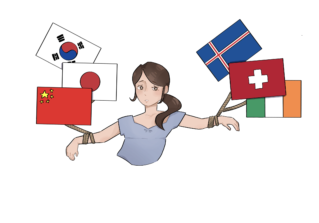
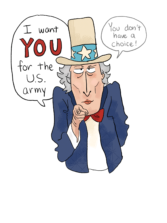
When somebody is asked “where are you from,” they will probably name a country that they most identify with, whether they were born there, live there now or have relatives who lived there. And yet, it is not expected for people to agree with every aspect of the country they identify with. While many people tie their identity to their country — and possibly its government — it seems many Americans, specifically, are unable to reconcile their government as different from their country. It stands to reason that a country should be at least a little bit tied to its government, and yet a country like America has much more to offer than a few people in high chairs making decisions. And that is the case for most countries.
“A country represents more than its government, [there are] stuff like culture and heritage, that can sometimes be a lot more than … what the government may be doing at a certain time,” said senior Gerardo Zaragoza Padilla.
Many people identify with a country because it’s where they grew up, it has people they love, beautiful geography and many other reasons besides politics. A country can mean a thousand different things to a thousand different people, and sometimes this interpretation is not easily explainable. Identity and patriotism go beyond specifics: they are feelings as well. And people should not be expected to explain their political affiliation or lack thereof simply because they originate from a country or feel particularly attached to it. Someone having patriotism does not necessarily mean, for example, that they support the war their country is in. Some even believe that, if a government does not properly involve representation from the people, than a population and the body it’s governed by should be separated as well.
“[T]here’s some countries which are obviously more run by the people than others … like North Korea which [is] not run by the people,” said junior Mark Gonzalez. “So you separate the government [from the people].”
However, critics like Gonzalez might view different countries with . That’s because some governments might be truly representative of their people, in which case the people and the government are aligned and therefore can be viewed in parallel. But that’s not true for all countries , which only adds to the idea of distinct lines and clarity between everything: government, people, country, patriotism, etc.
“To be patriotic is to be optimistic if you don’t like the current situation of the government and still hold closely the values that were originally set whether [or not] those are followed … by the government,” said junior Ben Marshal. “Most people are just trying to create a good life. Do work, have a family and the government makes decisions which some people do agree with and some people do not, and they’re just two separate things.”
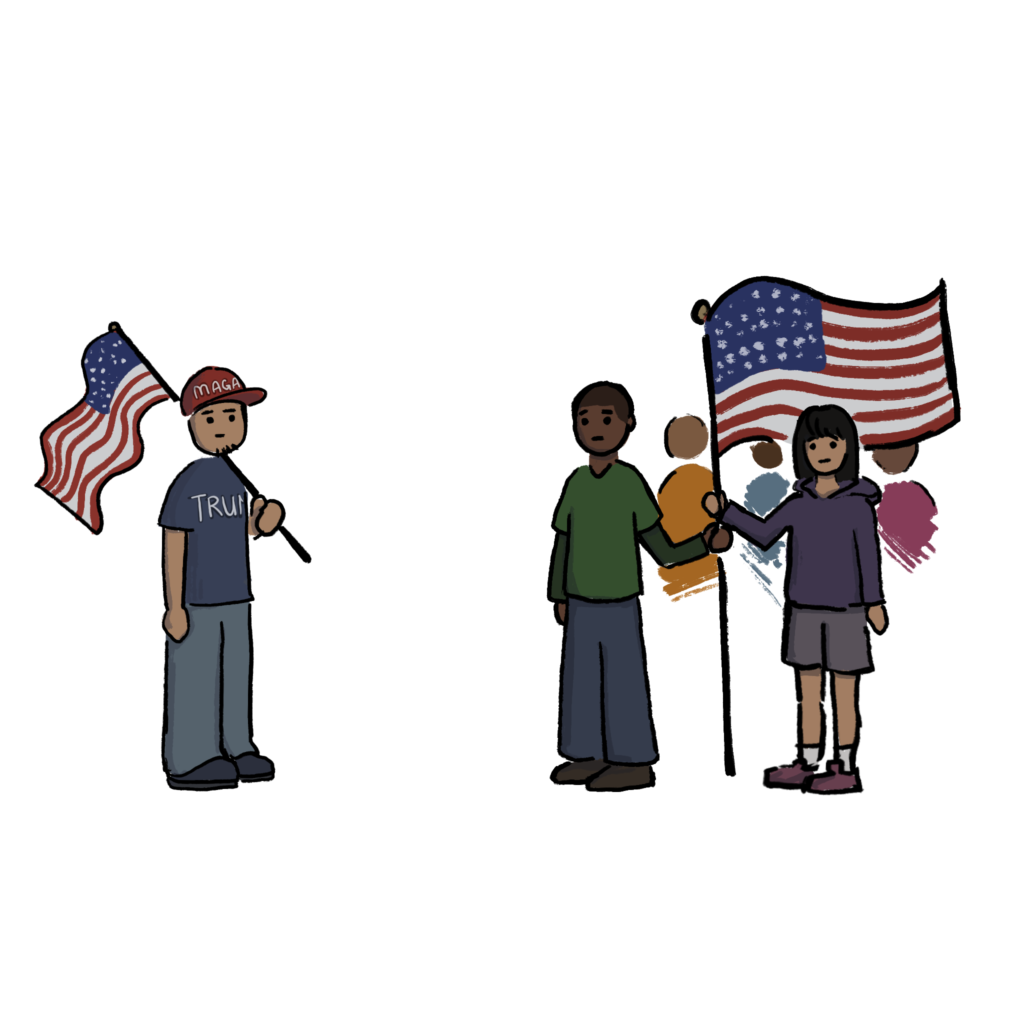
Similarly, just as it does not make sense to view a government as a complete representation of its country, one should not expect a country to completely represent each and every single person, or vice versa. Even countries at war, that may seem to someone to be fighting on the wrong side, are still just made up of people. Like the U.S.’s current crusade against Iran, it doesn’t matter which side you support, blaming the Iranian or American people is a futile misplacement of anger. People are unique, they cannot be generalized by the country they live in or the government they exist under.
It is important to find the humanity in people for who they are, and take their beliefs individually, instead of generalizing or making judgments. People living in or from a particular country do not have baseline beliefs that can be surmised from that information alone. And governments are often not representative of the people in the country they rule. Drawing the line means considering everything about a particular country, which for most people means drawing no line at all. A better question might be: why should we draw lines at all when we are all just human beings trying to live our best lives?