Winona Reif
Imagine going to the doctor in excruciating pain, only to be dismissed as overreacting. For many women, this is not hypothetical — it is a lived reality. Despite major advancements in healthcare, sexism in the medical industry continues to affect how women are treated, diagnosed and even how they are studied. From a lack of research on women’s health to limited access to period products, the system often falls short. Historically, these inequalities have led to serious consequences; however, progress is being made, and communities — starting with schools like Aragon — can play a role in supporting and advocating for change.
“You hear about [sexism in the medical industry] no matter what, online or in person or even at school, but you never really learn how to fix it or how to get more educated on the topic,” said freshman Jordan Kahane. “You just hear more stereotypes than real information.”
One of the biggest issues in the medical field is the lack of research focused on women. For many years, medical studies primarily used male subjects, meaning that treatments and knowledge were often based on how diseases affect men. However, men and women can experience symptoms differently. A well-known example is heart attacks. While men often feel chest pain, women are more likely to experience symptoms like nausea, fatigue or pain in the back or jaw. According to the American Heart Association, women — especially younger women — are more likely to have their symptoms misdiagnosed or dismissed because they do not match the traditional model based on male patients. A study in the Journal of the American Heart Association found that young female patients waited 29% longer for potential heart attack evaluation when compared to male counterparts, with an even longer wait for women of color. Because these differences were not widely studied or taught, many women have been ignored, with life-threatening consequences. This lack of research also affects other areas, such as chronic pain and hormonal conditions, leaving many women without clear answers or proper judgment.
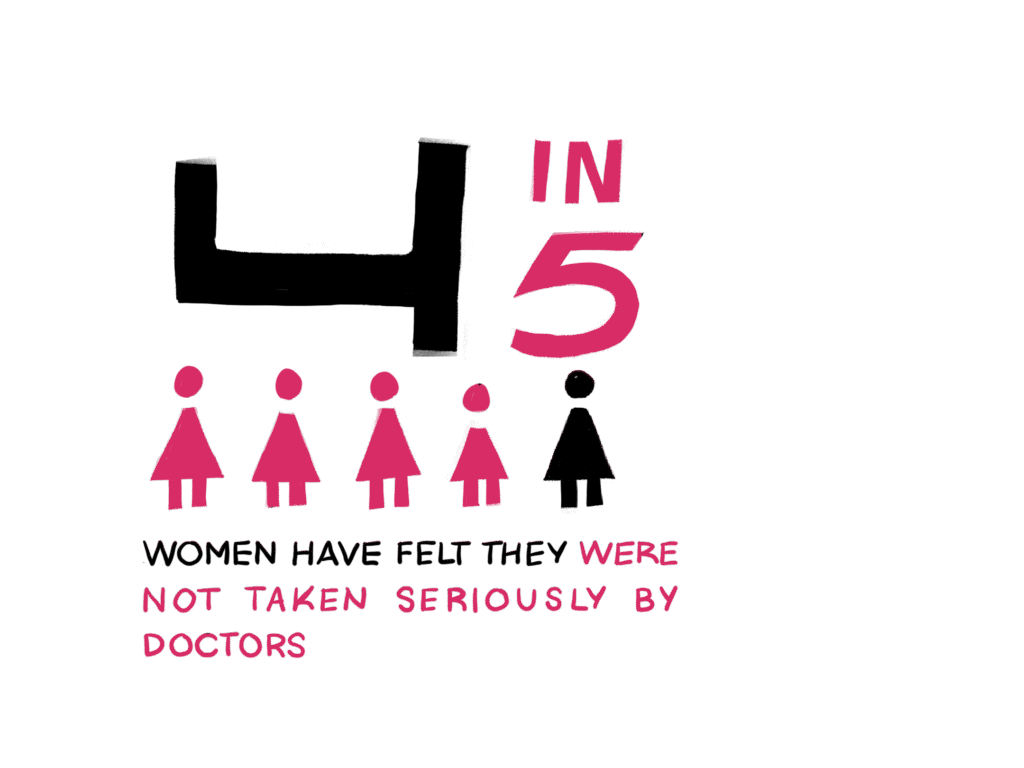
Another significant problem is how women’s pain is dismissed. Research and informative articles from Harvard Health, American Medical Women’s Association and multiple others sources have proven that women’s pain is most likely to be ignored and diagnosed as stress, anxiety or hormones. Many women have been accused of being “overdramatic” or “just emotional.” For example, 35-year-old Kerri Laird repeatedly sought medical help for severe fatigue, heart palpitations and difficulty swallowing, but doctors dismissed her symptoms as stress from being a “busy mom.” It was only after she insisted on further testing that she was diagnosed with thyroid cancer. Experiences like this may cause women to lose faith in the healthcare system. Over time, women become so disillusioned with the system that they no longer seek help when they need it, creating a serious problem that affects women on a large scale.
The consequences of these healthcare inequalities are severe. Misdiagnosis or delayed diagnosis could lead to serious health issues or death. In addition, mental health issues, such as anxiety or frustration due to not being taken seriously, are possible. Finally, financial issues could arise as a result of multiple visits to the doctor or untreated conditions. Altogether, these issues create a system that does not fully support women’s health.
In addition to problems faced by women in hospitals and healthcare clinics, women also face roadblocks when it comes to meeting their primary healthcare needs.
“I was at Great America the other day, and there was this woman running around frantically outside of the bathroom because there were no pads, and there was literally blood streaming down her pants,” said sophomore Zoe Farrigan. “She walked up to me [and said] ‘You got a pad?’ [and I was like, ‘oh yeah’, and literally whipped it out of my backpack.”
Menstruation products are often expensive and not always easily accessible, creating a significant issue for students in schools.
“They’re way more [expensive] than they should be, especially because some people can’t afford [menstruation products], and they’re such a necessity for so many people,” Kahane said. “So they should have some sort of system that makes it more accessible and less limited.”
Due to a lack of menstruation products being made available by schools in the U.S., many girls do not have reliable access to the menstruation products they need during the school day. As a result, limited availability combined with the stigma surrounding menstruation can make students feel too embarrassed to ask for help. This lack of access and support can lead to missed classes, discomfort and even skipping school altogether, negatively impacting both their education and well-being.
The roles that schools play in supporting students is crucial, especially at Aragon. By offering free menstrual products on campus, Aragon ensures that students are able to focus on their education without worrying about basic needs. In addition, access to nurses and counselors provides students with trusted resources when they have health concerns or feel unheard. By continuing to prioritize these resources, Aragon can create a more inclusive and responsive environment where all students feel cared for and empowered to succeed.
“I think [there are] more [period products] at school than in public places, because [they are] conveniently located in the different bathrooms in school,” said sophomore Naomi Dulac. “But in public places, [it’s] a lot [more] rare to find them.”
While these issues are still prominent, there have been advancements made in the treatment of women and people with biologically female body parts. The awareness of gender bias in healthcare has become more prominent, with more people speaking out about their experiences. For example, tennis player Serena Willaims has publicly shared that after giving birth, she repeatedly told medical staff she was experiencing serious symptoms of a blood clot, but her concerns were initially dismissed before she was finally treated. The movement toward menstrual equity has helped bring more awareness regarding the importance of period products.
“Our health class, or even other classes, should get more in detail about [becoming aware],” Kahane said. “Because I hear about it all the time outside of school, and I never feel educated enough on it.”
Sexism in the medical field is a complex, multifaceted issue, but it can not be overlooked. By listening to the stories of women, expanding research, and implementing more equitable policies, society can continue moving toward a more inclusive healthcare system.