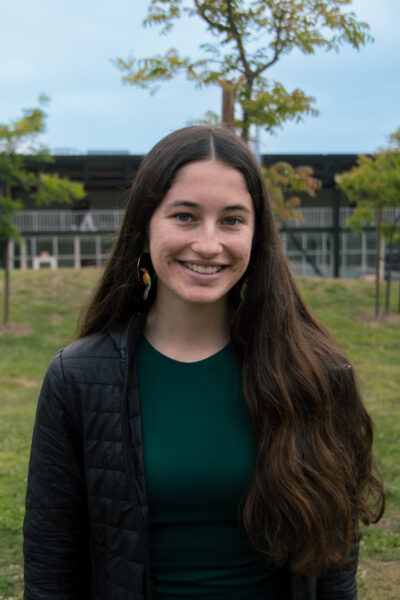
Sylvia Demeule: University of Geneva, Child Development
Reporting by: Rebecca Chen & Roy Kong
Why did you choose Switzerland?
It’s kind of always been my plan to go to Switzerland, because my dad’s family is from there, and initially, I wasn’t even supposed to go to high school here. I was supposed to move and then go to college there, because my parents want me to experience life there. It’s also cheaper from an education standpoint. So it was kind of always a plan … I decided to go with Geneva, specifically. My grandparents live in that city, so I’m familiar with it, and I know my way around.
Why did you choose child development?
It was hard for me to decide at first, but the second I thought of being a teacher, I just knew in my soul that was what I wanted to do. I’ve always appreciated academic environments, and I’ve enjoyed learning, and I enjoy helping others learn. [I] just felt it was right for me, and I didn’t even have to think that hard about it. I loved elementary school … At the core of it, I really wanted to learn, and I want to share that learning with other people … I’ve had so many incredible teachers who are in elementary school, but it’s a good form of inspiration to want to be like them and maybe incorporate activities hiding in elementary school.
Why did you choose to become an elementary school teacher?
I don’t want the stress of the older ones, but I don’t want to make kids upset with test scores and grades. I feel elementary is a very formative part of somebody’s life. You can really make a big impact, even if they don’t remember it that way; you can build good habits for the future and help them. And I’ve always gotten along really well with people a lot younger than me, and been interested with little crafts and the fun colors. I like that type of art.
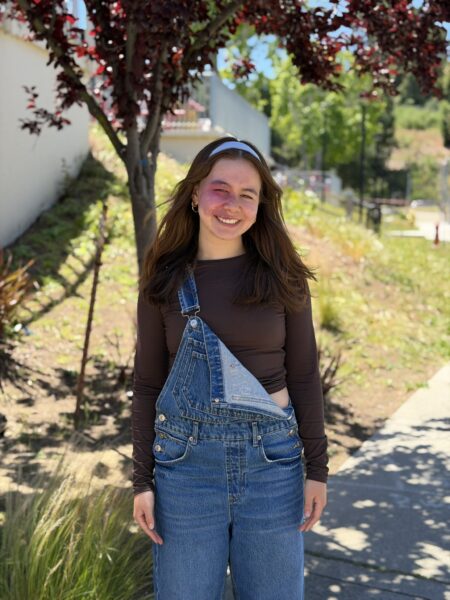
Charlotte Wang: University of British Columbia, Applied Biology
What major did you choose and how did you become interested in it?
I am an applied biology major, which is basically just biology [in] real world context, rather than just concepts. I picked that major because a lot of the things that I want to go into are subsets of biology, so either sports medicine or astrobiology or CRISPR research with cancer. They all kind of tie into biology. And I wanted my undergrad major to be pretty broad in general, so that I wasn’t stuck to one topic specifically, [or] if I wanted to change my mind later on. I’ve always been pretty interested in science my whole life.
What made you choose British Columbia for college?
It’s a really great school, and I used to live up there so I know a lot about it and about the area, and I really love Vancouver. I think it’s beautiful and that there’s so much to offer. It’s also just a [good] school. I’m not studying kinesiology, but I’m interested in kinesiology, [and] it [has] one of the best [kinesiology] programs. And tuition is pretty cheap for me. The area in general was one of the big things that attracted me to it. It’s San Francisco but prettier, in my opinion, and you get beaches and mountains, but also forests at the same time, which I love that so much. And it’s also a pretty big school.
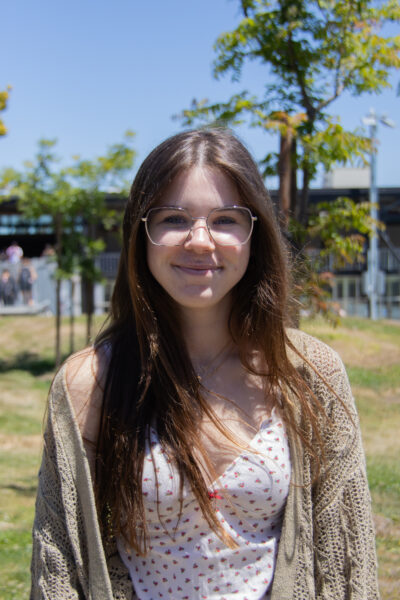
Anna Gubman: Fordham University, Theater Design and Production
How did your background in the theater lead to your decision?
My mom owns a hardware store, so I’ve always liked working with my hands and working with tools, and I’ve always liked set construction. I did stage through in middle school, but we didn’t really get to do that much, so when I found out that we had a tech class at Aragon … I took it sophomore year, and I just fell in love with it. I fell in love with the community. I fell in love with doing anything in it, and it’s something I want to do for the rest of my life … One day I painted three stages and I had a ball doing that … I just found it really satisfying. I really like Lego. So building a set is like really big Legos … I like the art of it a lot. I like how on your toes you have to be and how you have to be a quick thinker to fix things.
Why did you choose to major in theater design and production?
I ended up choosing it because I did it in high school. And I really loved it. I would work with adults, and they came in and helped out with things and taught me … I researched more about it and [learned] you can work in so many different fields with that major. Like, so many different things in entertainment. So I was like, this sounds pretty handy and maybe possibly couldn’t get fully replaced with AI because they actually need hands on people … If I’m gonna go to college and if everything else is gonna get replaced with AI, I might as well do something that I love.
What will the program at Fordham have you do?
They are going to have me learn pretty much all forms of technical theater. Right now, I’m mostly just doing sets and I do stage management, [both of] which I love, but I also really want to learn about lighting … I know nothing about sound. I know how to put a mic on, and that’s it … I think I have to take some acting classes, which I’m kind of terrified about, but we ball. They do a whole lot of different varieties of shows [like] black box shows, mainstage musicals, small plays, showcases … [There’s] a lot of opportunity, which I’m excited for.
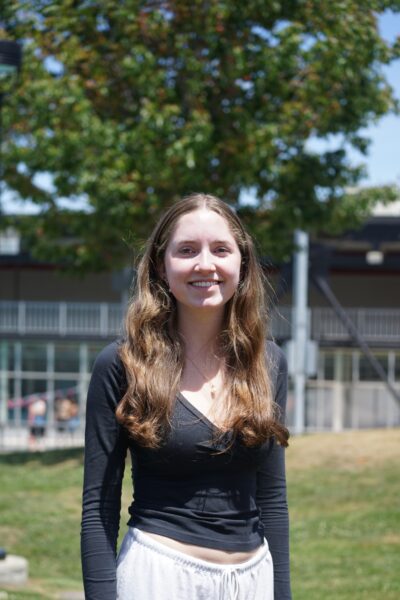
Libby Dioli: Auburn University, Flight
Why did you choose flight school?
I always wanted to be a pilot, and this was the best opportunity for me to be able to go from where I am now to the airlines. I’ve already done a lot of work with flying, and I almost have my private pilot’s license. Flying is just my passion … [Once] I was at a restaurant with [my sister] Anna and my dad and a whole flight crew walked in after getting back from the airport, because they had just finished a flight or something, and the captain was a female, and I thought it was really cool and inspiring. And since there’s not a ton of representation [for women] in the aviation industry, seeing another woman pilot was just a big moment for me, and then that kind of inspired me to want to pursue becoming a pilot.
How do normal classes work out with flight practice?
I mean, there are normal classes that you have to take. I know, [for] part of the major at Auburn that I’m doing, I’m gonna have to take some regular math classes and regular physics classes. But then there are also aviation-specific weather classes, aerodynamics classes or airport operations classes … The way Auburn does it is three days a week, you have time blocks where you’re flying, and then on top of [that], you’re also taking regular classes and the aviation classes in between.
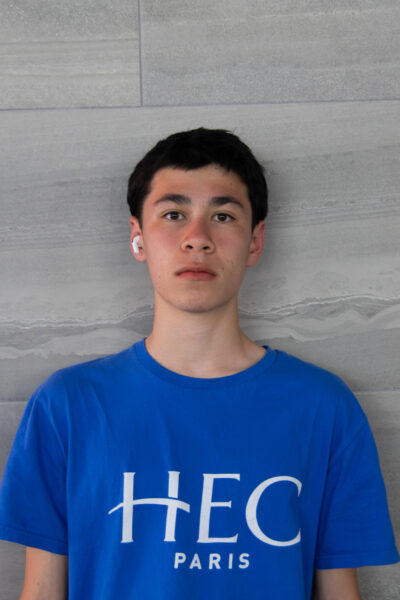
Lev Peretz: HEC Paris and Bocconi University, Data Science
What about Europe excites you?
The [HEC Paris and Bocconi University] campuses are a lot smaller, especially my campus, [so] it’s the real undergraduate experience. It’s one building versus the United States [where there are many on campus] … And especially for my program, I’m going to be with 100-ish people for three years, so I have a chance to get to know everyone better and make tighter connections, versus having different classes with different people every single day.
How did you decide on your major?
My major is composed of a bunch of different parts. It’s [artificial intelligence], data science and all [those similar fields]. But we have to choose a field that we’re specifically interested in, and I’m specifically interested in data science because I [like] watching sports, and I’d hear the commentators talk about underlying statistics and X, Y and Z. I started playing a bunch of simulation games … and so I started getting interested in data science, because there’s a lot of misunderstandings of what most common media says versus what people or what the underlying stats say.. In soccer, there’s something called the eye test, versus the stats test. You’ll look at a player dribbling the ball a lot, and you’ll say, ‘Oh, he’s a great player.’ He looks like he affects the game a lot, [but] when you go into the statistics of it and you see that, yeah, dribbling the ball might look cool on the surface, but is there any actual benefit that he’s adding to the team?
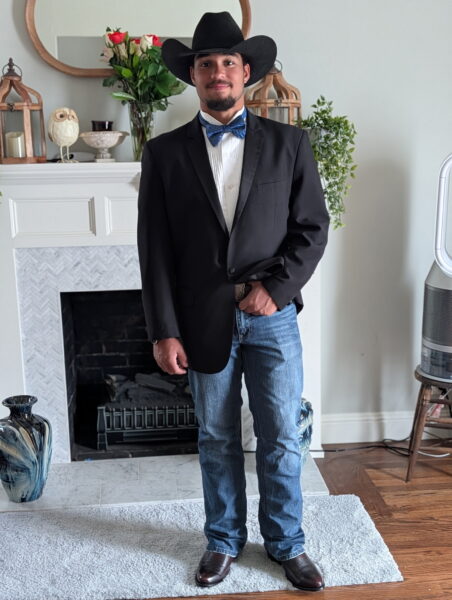
Noah Miller: US Marines
Why did you choose the Marines?
My family mainly wanted [me] to do it because [I’d] be first [generation] Marines. It’s interesting because it gives you job opportunities that you really never thought of. Like, you’d never think that the Marines will have electricians or construction workers, but they do. So it kind of opened my view to more stuff instead of just infantry.
Do you have a plan of what you want to do in the Marines?
I wanted to do infantry, but I just sadly got told that infantry is filled up right now, so they’re putting me at [reconnaissance], which is arguably more dangerous than infantry … [Recon is when] you go to places where there’s supposed to be a battle or go find missing stuff and you just never know what’s going to happen. It’s so unprepared.
How does the Marines program work?
What I’m in right now is called the delayed entry program, so you’re just working out every weekend, attending events and all that stuff. And then [in] boot camp, you get stationed in San Diego for three months. Then you go to … Marine Combat Training school. And I believe in Mississippi, you get stationed there for a month. And then depending on what job you choose in the Marines, you go to other places.
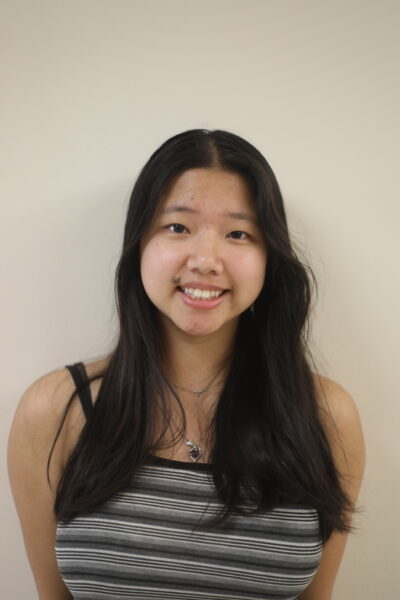
Chin-ray Kong: Johns Hopkins University, Pre-med
Why do you want to go into medicine?
I’ve had a lot of people around me who had a lot of medical issues, and I felt a little bit helpless, not being able to do anything. And my dad is a doctor as well, and sometimes when we’ve been flying on an airplane, and someone’s had an issue, he’s been able to step up and help, and I just felt that was very inspiring … The moment I wanted to start doing [medicine] was [when] my relative [started having] heart issues. It was really stressful. Afterwards, I felt more motivation to start getting involved, monitoring devices and blood glucose levels.
What are you looking forward to in college?
Hopkins has their whole Bloomberg medical school. It’s a really high-level medical school for this country, and they have a lot of overlapping programs for undergraduate students, and they also have research grants and opportunities to work with the teachers in their labs.