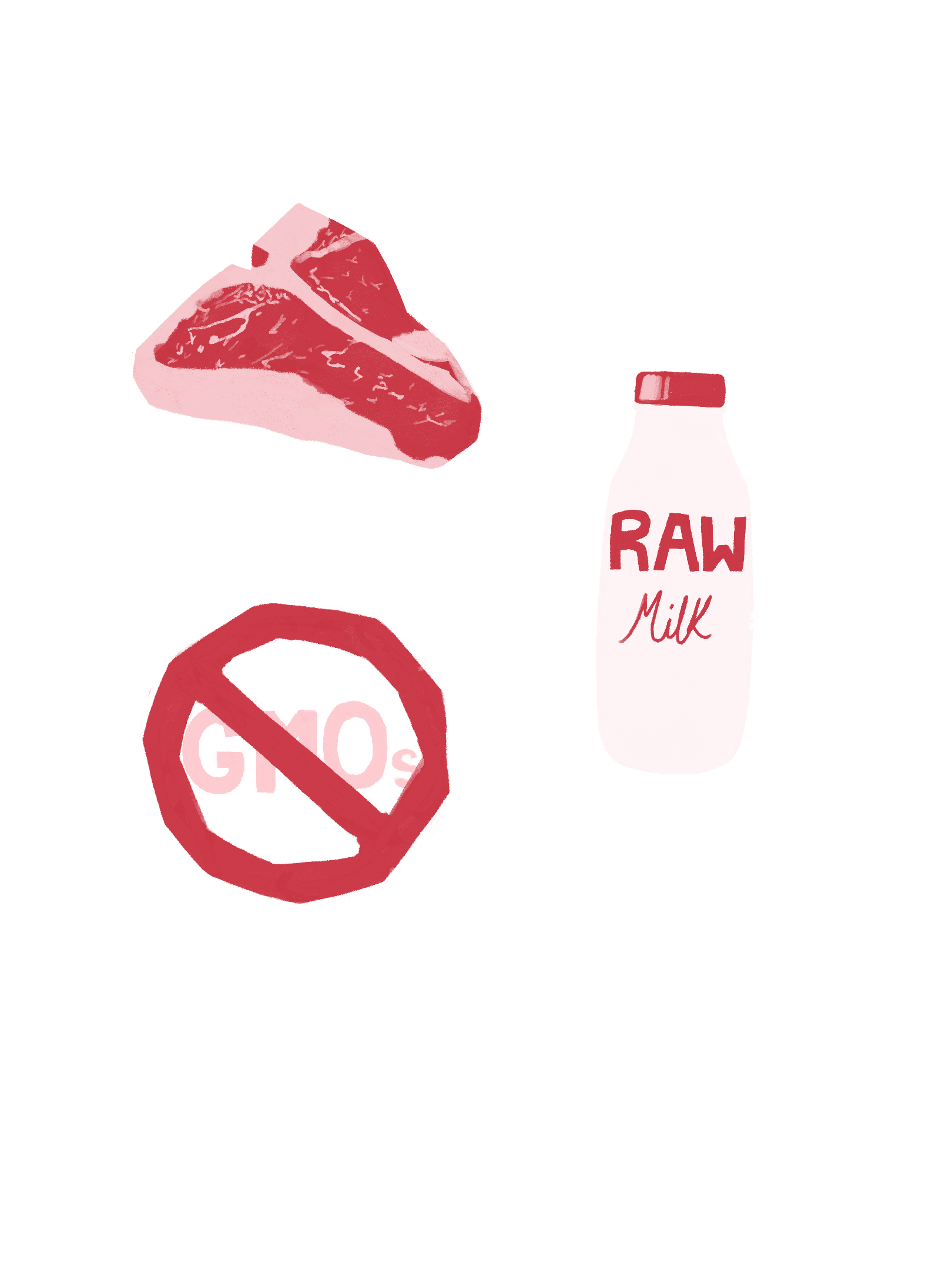
“Eat a meal like this with a godly woman,” said Owen Stubblebine, a health influencer whose content is driven around having a high-testosterone diet. His content — often centered on raw milk and meat-heavy meals — reflects a corner of the online fitness world in which food is not just tied to health, but to a return of eating “primal.”
“People will just add stuff to give it protein,” said senior Anthony Marilla. “it’s a buzzword. You see ‘30 grams of protein,’ you’re gonna want to eat it.”
High-protein meals parallel another trend: “natural eating.” But in the latter, the focus is less about what foods contain and more about what they seek to exclude.
One such example is Genetically Modified Organisms. Despite there being little scientific evidence on its dangers, GMOs have become a taboo topic of discussion when it comes to healthy eating. Many often believe GMOs are bad due to the presence of processing or “chemicals.” Critics of this idea, though, argue that the trend may oversimplify nutrition.
“I just assumed [GMOs were] bad, because everyone else made it sound like it was bad,” said San Mateo High School junior Neil Bhatkhande. “[I] never really thought about it.”
The various appeals used in marketing food has taken on various forms. While optimizing for protein seeks to build muscle and often involves the use of supplements, natural eating is associated with restriction and avoidance. Think of the “almond mom” stereotype. The “almond mom” promotes restrictive eating habits and places a heavy emphasis on dieting, wellness and maintaining a certain body image. The phrase has become a defining feature for a culture in which food choices are tied to perceived healthiness.
However, this also reflects a fast-growing preference for meals branded as minimally processed. Chains such as Sweetgreen and Mendocino Farms sit at the center of this trend, allowing for them to be seen as more trustworthy through supposed ingredient transparency.
“Smaller companies have to appeal [to smaller audiences], so they’d be more [careful] in their delivery of message[s],” Marilla said. “But these big companies can really just say whatever, and then you put it in your cart and they get money.”
Both restaurants are backed by venture capital investment and operate at a national scale, yet their branding is entirely built around small-farm imagery and ingredient transparency. The result is a food culture where “natural” does not refer to production methods, but about the branding and how easily consumers are fooled.
Preferences of clean eating connect to a wider cultural skepticism toward institutions. Many advocates of natural eating criticize artificial additives and industrial agriculture — industries that are heavily shaped by government regulation and large corporations. This has led to trust in government agencies and corporations lessening in recent years, especially with the COVID-19 pandemic intensifying public debates around health guidance.
“I’m all for government regulation, but I’m not very supportive of the government directly telling you what you should and shouldn’t eat,” Bhatkhande said. “I think it’s fair to be a little skeptical of everything because wherever there’s a system, there’s a way to take advantage of it.”
Raw milk represents another facet of this movement, and it is often framed as a rejection of government oversight and industrial manufacturing methods — in this case, pasteurization.
“Sure, you lose freshness [with processing] — but it comes with the benefit of not having horrendous diseases,” Bhatkhande said. “[Processing’s purpose is] making sure that the food doesn’t … kill you.”
Figures such as Robert F. Kennedy Jr., for example, have helped popularize concerns about food additives and industrial-scale agriculture. Although his opinions have been controversial, it’s contributed to the overall discussion regarding regulation and the role of government institutions in food production.
“[RFK Jr. is] in a position where he shouldn’t be saying stuff without proper scientific evidence to back it up, right?” Bhatkande said. “Otherwise, he’s just kind of giving his opinion.”
Overall, modern food trends reveal how consumers tie food to values and trust. Marketing often appeals to health and authenticity rather than scientific understanding alone. As skepticism towards corporations and government institutions grows, consumers tend to gravitate more toward food branded as “natural”.