Madeline Allen
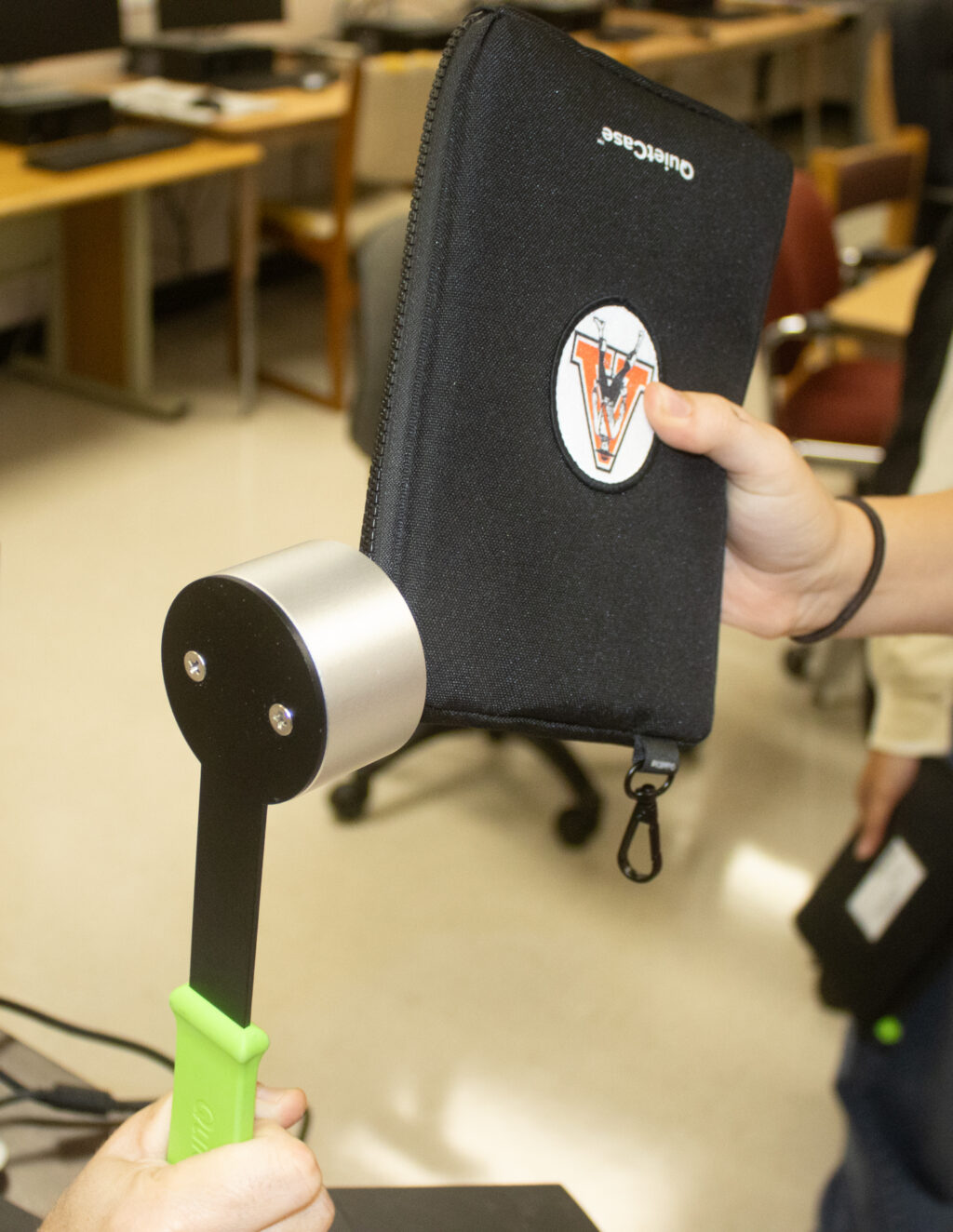
On Aug. 12, the San Mateo Union High School District’s phone and personal device policy went into effect. The policy mandates that all phones, smartwatches, AirPods and other mobile non-school-issued devices be placed in zippered locked pouches called QuietCases for the duration of the school day. It also requires that all students use their school-issued Chromebooks during class time, rather than personal devices.
“[The policy is] a bit too overarching,” said senior Vikram Patnaik. “It is mildly sensible to limit the phones [because they] have become addicting and a lot of people overuse them. But people don’t understand how dumb the watches are.”
The SMUHSD Board of Trustees formulated the phone policy in March, in compliance with the Phone-Free School Act. The act called for all California school districts to draw up a policy restricting phones during instructional time by July 2026.
Aragon began rolling out the phone policy in the first week of school. On Don’s Day, Assistant Principal David Moore and Principal Peter Alvarez gave grade-wide presentations on the policy. Though students were expected to lock their phones in QuietCases following Don’s Day, violations to the policy were not enforced until the second week.
“In theory, I like [the policy],” said Victoria Daniel, English and Advancement Via Individual Determination teacher. “[But] the execution of it has been … not as strong. The edict came down very late; we weren’t even sure we were going to get the phone pouches in time. The most confusion is over the fact that if students do not have class anymore [and are] still on our campus, they’re not supposed to have their phones out.”
The new policy allows students with 504 or Individualized Education Plans to work with their case manager or counselor if they need to be exempted. Students without phones were also told to get exemptions from the office.
Punishments for not complying with the policy range from confiscation by the teacher to permanently having to turn in phones to the office, depending on the number of violations.
Some have seen improvements in student engagement.
“I’ve heard positive feedback [of the phone policy] from staff,” said Assistant Principal David Moore. “Students at lunch and brunch are socializing more, which is healthy, and during class, they are less distracted.”
However, though the majority of students have complied with the policy, some have chosen not to.
“I’ve seen people break [QuietCases or] use different types of magnets to open them,” said sophomore Sophia Barizon. “Or, there’s ways [to] not [use] them properly. I’ve seen people show me how [to do] that.”
A concern for many is communication, especially in light of the May 22 emergency. “With [the need for] gun regulations or people getting into fights, schools aren’t safe enough to not have access to phones,” Barizon said. “What if the school is in a lockdown or barricade, and you’re not sure if you’re gonna make it, so you [need to] text your family, ‘I love you,’ one last time?”
However, Moore said that the noise emitted from phones could be harmful in a lockdown/barricade situation.
“If someone is coming on campus with that intent, they’re trying to cause harm as quickly as possible,” Moore said. “They’re gonna look for humans, or try to hear humans. If students are on their phone … there’s additional panic, and that might make targets easier [to locate].”
In order to make up for the lack of electronic entertainment, teachers have proposed opening the field to students at lunch. Moore also plans for the school to pay for any games that teachers might request for students to play in their classrooms at lunch.