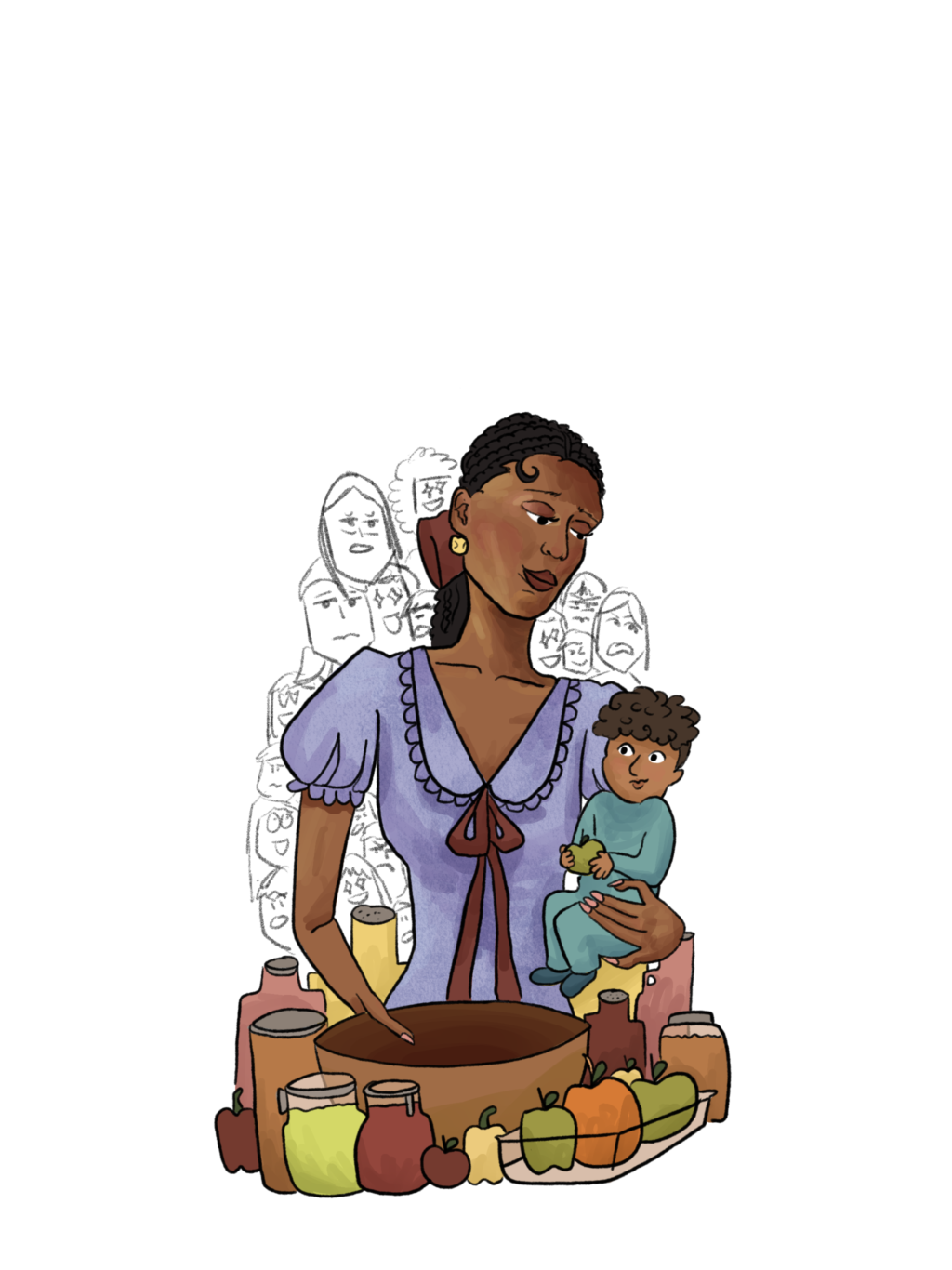
Imagine: you wake before the rest of the house, sunlight falling across the kitchen floor as you tie on an apron that perfectly matches your dress. By the time your husband leaves for work, the children have already eaten breakfast — homemade cereal. The laundry is neatly folded, and a loaf of sourdough bread is rising in the oven.
Then, somehow, it becomes a problem. The apron is no longer just an apron, and the kitchen is no longer just a kitchen. Suddenly, people are analyzing your life. They say that you have given up on ambition, settled for less and let yourself be trapped in a role women escaped decades ago. The peaceful little life you built starts to look, at least from the outside, like something that needs saving.
A “tradwife”, short for traditional wife, is a married woman who promotes traditional gender roles, fully submitting to their husbands and serving their family. They are not to be confused with a stay-at-home mother, who is the primary caregiver of her children and often completes household tasks.
Many tradwife influencers and their defenders have framed feminism as a convenient villain: a force determined to pull women out of their homes and into an exhausting, competitive workforce. But that portrayal relies on a pretty shallow understanding of feminism. Feminism doesn’t mean that every woman needs to pursue the same career-focused life, or that homemaking is embarrassing. It means women should be able to choose their roles without being told that one path defines them.
The tradwife has become one of social media’s most debated archetypes. On TikTok and Instagram, women wearing designer dresses make meals from scratch, clean impressive homes and document their mornings. The aesthetic is not difficult to understand. In a culture that can often treat exhaustion and burnout as proof of ambition, a slower life centered on home, family and routine can appear revolutionary, in a way.
Yet due to the popularity of the term, the label has become so broad that it is now applied to women simply because they post home cooking videos, recipes or other family content. Nara Smith, a content creator known for making meals from scratch, is the internet’s favorite example. Her videos, which often feature designer clothes and recipes that begin with homemade ingredients most people would buy store-bought, are regularly treated as proof that she promotes traditional gender roles.
Smith rejects that label. In a July episode of the “Call Her Daddy” podcast, she described herself as a working mother who contributes financially to her family. She said she and her husband split child care based on who is working, while he handles dishes and cleaning. Cooking, she said, is a hobby, but it is not her identity.
That does not mean people are wrong to question the messages behind the tradwife aesthetic. But it does mean that posting a recipe is not the same as arguing that women belong in the kitchen.
“Being a feminist is just about making your own choice,” said junior Rosie Mayor, Women of the World Club Vice President. “If you want to be a stay-at-home mom and not have a career, that’s your choice. You can make that choice because of feminism.”
That is the part of this conversation that often gets lost online. Feminism is not a handbook for how women should live. It is the belief that women deserve equal social, political, and economic power, including the power to decide whether they want to be a doctor, a mother, both or neither. Still, choice is more complicated than it sounds.
Mayor said she sees the tradwife ideal as more concerning when it involves dependence.
“The way I view a tradwife is someone who submits to their husband,” she said. “They rely on them to make money, and they provide more of the housework, like the cooking and cleaning.”
Financial dependence does not mean a stay-at-home parent is weak, incapable, or unfulfilled. The concern, however, is when dependence becomes submission.
“Tradwife is more about submission,” said junior Naomi Dulac, Women of the World Club President. “You are submitting to your husband.”
That is where feminism should draw a line: not at femininity, domesticity or motherhood, but at the belief that women are naturally meant to be subordinate. Choosing to bake Goldfish rather than buy them at a store is not anti-feminist. Believing women should be financially dependent on men is.
Social media simplifies this, flattening complex women into symbols: the career woman, the stay-at-home mom, the girlboss or the tradwife. Smith can be a mother, a homemaker, a model and an independently successful content creator all at once. The internet’s need to force her into a single box says more about its discomfort with complicated women than it does about her.