50 pounds.
The weight of the mattress Columbia University student Emma Sulkowicz carried across campus for months in 2015. Her senior thesis, “Mattress Performance (Carry That Weight),” was an act of protest following her allegation that she had been sexually assaulted by another student. Her alleged rapist would go on to graduate. More than a decade later, another university has become the center of a similar discussion.
At Cornell University, a former student identified as Jane Doe filed a lawsuit in September alleging that seven members of the Chi Phi fraternity house on campus sexually assaulted her at a party in October 2024. According to the complaint, Doe had already consumed drinks before arriving at the fraternity house. Two fraternity members, Matthew Ingalls and Jonathan Newell, allegedly pressured her into taking ketamine, using marijuana and consuming additional alcohol.
The lawsuit claims that she became increasingly incapacitated as the night continued and that other fraternity members were invited to get “free pussy” via Snapchat group chat. Men in the group chat would allegedly go on to enter the room and sexually assault Doe. In a six-page summary of Doe’s report sent to the district attorney’s office, her statement that she “was 100 percent … raped” was excluded.
The criminal investigation has been reopened, and the seven men named in the lawsuit have denied wrongdoing as of October 2026.
Responding to backlash due to a lack of accountability for the alleged rapists, Cornell University conducted its own investigation and disciplined several Chi Phi fraternity members, yet no criminal charges were filed at the time. Several students disciplined by the university were reportedly required to write a reflective statement, a consequence that has drawn criticism from those who felt that it did not adequately address the seriousness of the allegations.
“I was horrified, but not terribly surprised,” said Advanced Placement Literature teacher Genevieve Schwartz. “There is a deep culture … in which women are objectified and seen as possessions, things to be had.”
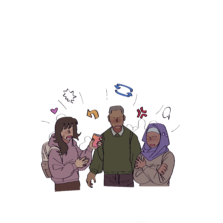
The response to the Cornell case spread quickly to social media. Under the hashtag #IAmJaneDoe, women across social media platforms such as TikTok and Instagram began identifying with Jane Doe through their experiences with harassment and assault.
As stories began to circulate online, women questioned how universities respond when someone reports sexual violence. When Schwartz was a residential advisor in college, she experienced this lack of safety.
“One of the girls [on my floor] said, ‘there’s somebody in the bathroom,’ and a young man was crouching in one of the stalls,” Schwartz said. “I said to him, ‘You need to leave immediately. We’re about to call the police,’ and he threw the door open and shoved me against the bathroom wall. I went immediately to the head of the dorm, and from what we heard, there was not enough evidence to figure out who it was.”
Schwartz’s experience emphasizes a reality that spans generations; the historical tendency of institutions to drop investigations due to a self-imposed “lack of evidence.” For the current generation of students watching the Cornell case unfold, it feels like a continuation of this exact cycle.
“It’s just sad that so many women can relate to this scenario, and then to also hear about how [Cornell] didn’t do much about it, or didn’t support them in a way that [was meaningful],” said junior Sophie Gunstream. “All these women have had similar experiences.”
In the Cornell case, the university’s Title IX investigation and its handling of Doe’s report became part of the public discuss+ion. Gunstream argued that the stigma surrounding sexual abuse can make survivors feel that coming forward will change how others view them.
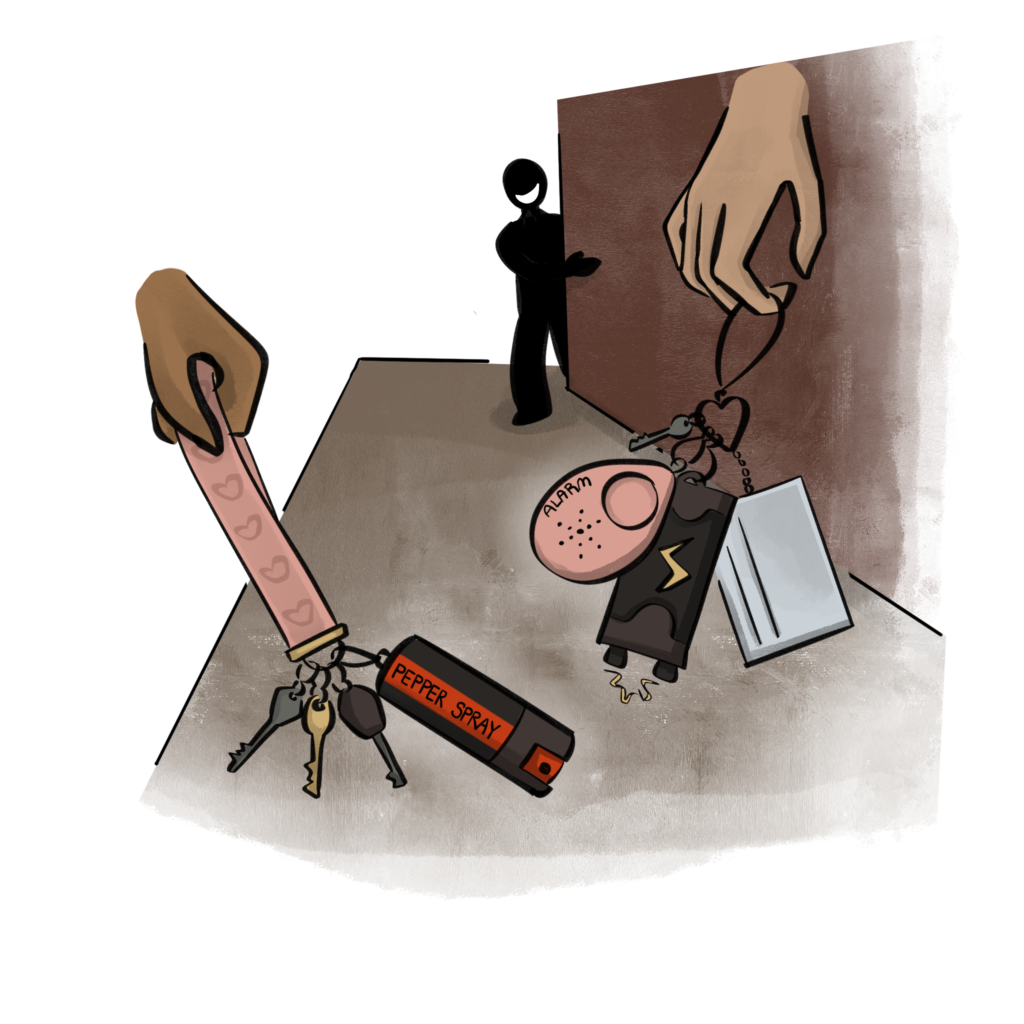
“Society [places blame on the woman], like you’re gonna be tainted,” Gunstream said. “[Aragon’s] anonymous alerting system would make it easier [to report instances], but coming forward and talking about it, that would be hard for anyone.”
But often when coming forward, conversations shift away from what the real trauma victims undergo to whether the assault happened in the first place.
“Is it a possibility that there are false accusations?” Schwartz said. “Of course, there’s always a possibility, but that’s often weaponized as a way to underwrite stories. We know now the effect of trauma on a victim of sexual assault. It takes time to fully metabolize what is happening.”
Young women are often taught to question their own reactions, leading some to struggle recognizing when someone has crossed a boundary.
“You’re stuck in this moment where you’re trying to evaluate what’s just been said to you,” Schwartz said. “Did it cross a line? Is it in the gray area? There are all these questions. Am I misinterpreting this?”
Today, years after Sulkowicz carried her mattress across Columbia, young women continue to navigate the same questions of safety and accountability.