Dahlia Sehlig
Nepotism, the practice of favoring family members in political positions, has long existed in governments worldwide. In politics, it refers to officials appointing or supporting relatives for government roles. While some view it as trust and experience, many see it as a threat to fairness and democracy.
Nepotism is often subtly built into the political system. A major factor is name recognition, where familiar last names influence voters. A study by Jacobson and Carson showed that 92% of United States House incumbents’ last names were recognized by voters compared to 55% of challengers.
“[People] don’t even really care about who you are as a person,” said sophomore Noelle Mantisas. “They just care about the people that they associate you with, like your last name.”
In addition, political families tend to have stronger networks, including donors, advisors and party connections. These advantages make it easier for family members to enter politics and succeed. Informal mentorship also plays a role, as children of politicians often grow up learning about government firsthand, gaining insights that outsiders may not have.
Historically, nepotism comes from monarchies and aristocracies, where power stayed within families. Even in modern democracies, influence often remains concentrated due to wealth, connections and recognition, forming political dynasties. This shows how nepotism is partly systemic, since political structures and traditions allow inherited influence to continue over time.
“It started when people had these family members, and they wanted to also get positions like that,” said freshman Samuel Wang. “And then they work through their family members and are able to get higher positions than if they didn’t have their family members.”
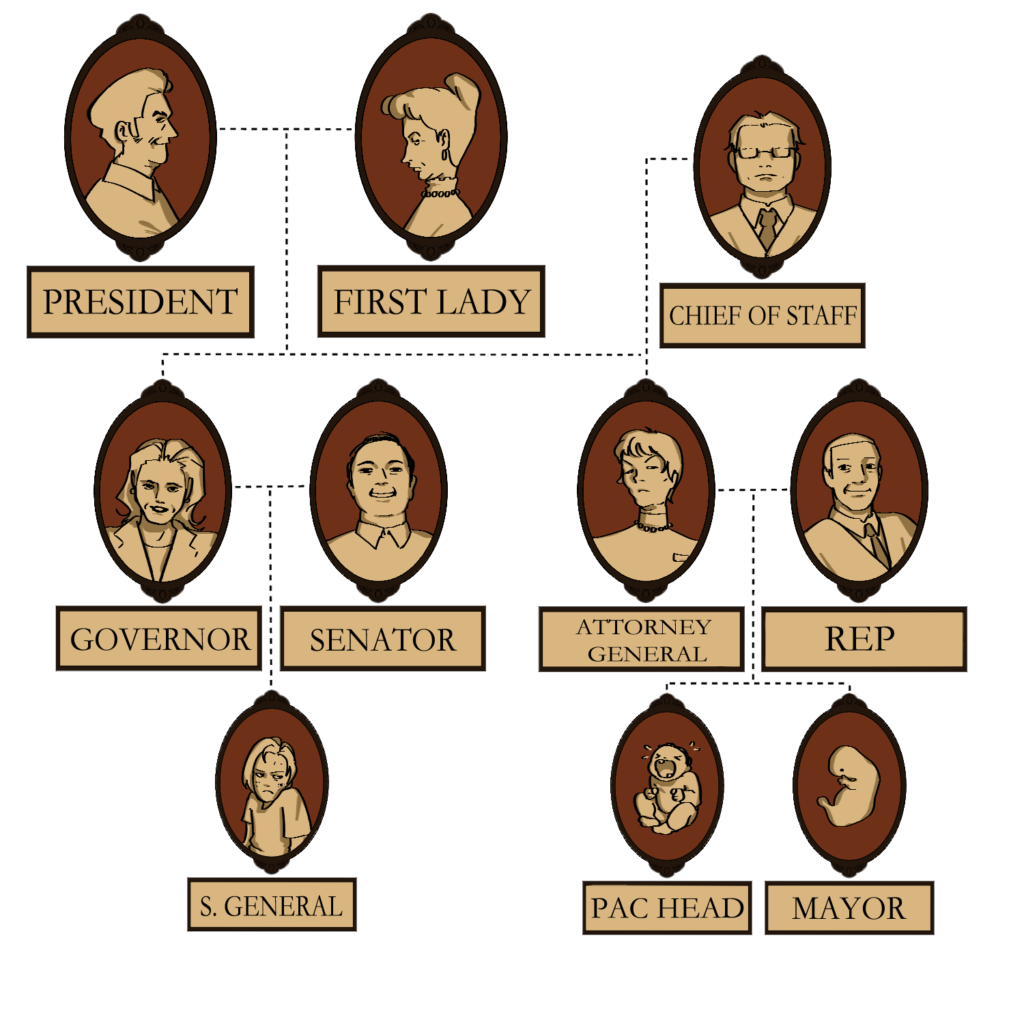
Examples include John F. Kennedy appointing Robert F. Kennedy as Attorney General, Ulysses S. Grant filling about 40% of positions with relatives and Japan’s Prime Minister Fumio Kishida appointing his son as aide. Jared Kushner and Ivanka Trump also held senior roles in the Trump administration. These cases show how political power can repeatedly stay within certain families, creating concentrated control among a small group of political dynasties rather than being evenly distributed across society.
Supporters of nepotism argue that it can have real benefits. One key advantage is loyalty. Family members may feel a strong responsibility to protect their relative’s reputation and legacy, making them more committed and dependable to the family’s mission.
“[Nepotism] could definitely have loyalty, sticking with what your other family members do, and maybe what you’re expected to do,” said junior Brainer Bocaj.
However, members of political families do not always share the same values. An example in recent years is Ronna McDaniel, U.S. Sen. Mitt Romney’s niece, who supported Trump and aligned herself with his campaign and Republican leadership despite his attacks on her uncle.
Nepotism can also lower leadership quality when unqualified relatives are appointed, leading to ineffective governance. For example, Kushner and Ivanka Trump held senior White House roles despite limited experience.
It also weakens public trust and reinforces inequality, as qualified candidates without connections may be overlooked. This creates a system where opportunity is not fully based on merit, reinforcing existing power structures that favor established political families over the general population.
“People should be appointed based on merit qualities … [because] what are the chances that the person most skilled for the job is your own son-in-law?” said sophomore Ada Peretz.
Additionally, it reduces diversity of ideas and limits innovation, since families often share similar perspectives. Political families like the Bushes and Kennedys show how political views are passed down.
“[Nepotism in politics] is not very fair, because there are other people out there, there are more diverse voices out there that can be represented,” said sophomore Alison Wu.
While laws can limit nepotism, informal advantages remain, showing how it is both systemic and self-perpetuating across generations.
“It’s not just about passing one law, but it’s also about how the government functions,” Manitsas said. “The best way to stop nepotism requires a combination of strict laws, radical transparency and independent oversight.”
Ultimately, nepotism in politics raises important questions about fairness and effectiveness. On one hand, some individuals in political families work hard and are well-prepared for leadership. On the other hand, others may gain opportunities that more qualified candidates never receive. While nepotism can be efficient and loyal, it also risks lowering public trust and limiting equal opportunity.